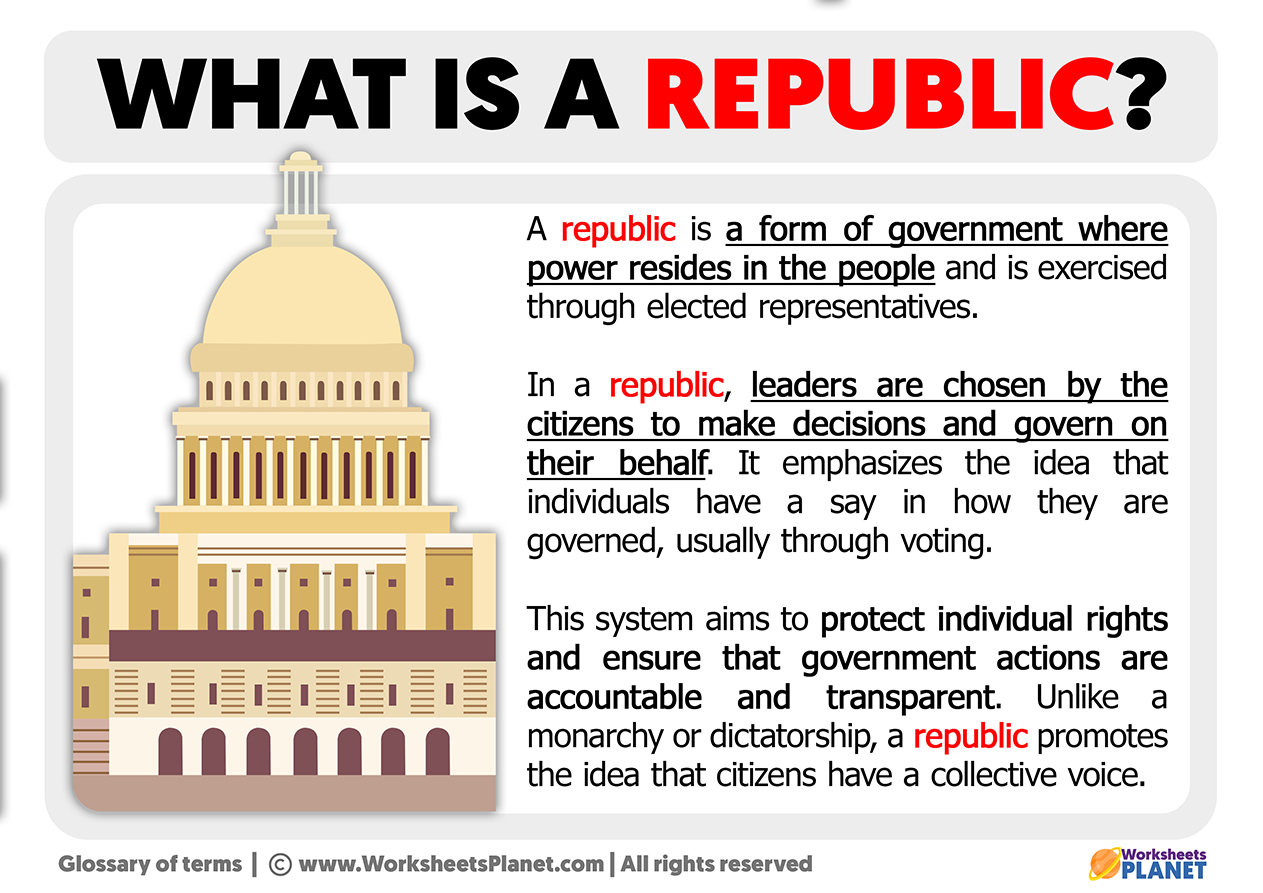
Fluorescent lights hum over leather chairs in the press briefing room. Coffee goes cold in paper cups. Outside, heavy marble steps hold the weight of two hundred and fifty years of arguments, compromises, fragile pacts, and hard-won restraint.
Then a sentence drops into the microphones that sounds less like governance and more like scripture.
The nation would not exist right now without one man. That is the claim. Not a policy argument. Not a debate over tax brackets or border patrol staffing. A claim of origin. A declaration that a constitutional republic—built on checks, balances, and the radical idea that no single human being is indispensable—owes its very breath to one leader, backed by a pledge of absolute loyalty from the new White House Chief of Staff, Stephen Miller.
Listen closely to the phrasing. Absolute. Not principled. Not conditional on oath or law. Absolute.
Every citizen who has watched a political speech and felt a strange, hollow tug in their chest knows the moment. You sit on a worn sofa at ten at night. A child sleeps down the hall. The television glows blue against the drywall, casting shadows across half-folded laundry. You are not a cable news pundit. You are not a staffer chasing a press pass. You are someone trying to pay a mortgage, keep an aging parent's prescriptions sorted, and figure out whether the country your kids inherit will feel recognizable.
Politics often feels like noise from a distant highway. Cars rush past; you hear the tires hiss on wet asphalt, yet you rarely see the drivers' faces. Then a phrase cuts through the static and makes the floorboards vibrate.
To understand why a pledge of absolute loyalty matters far beyond the West Wing, consider a hypothetical scenario involving two small-town mechanics named David and Sam—a fictional illustration of how loyalty works when stakes turn personal. David owns the shop on Fourth Street. Sam has worked there twelve years, knows every clunk in a rusted transmission, and can tune an engine by ear. Over time, David starts cutting corners on brake pads to pad his margins. Sam notices. If Sam treats his loyalty as conditional—loyal to the craft, to safety, to the customers who trust their lives to the brakes—he pushes back, even at the risk of his paycheck. If Sam pledges absolute loyalty to David above all else, he signs off on bad brakes and tells himself the shop would fold without the boss anyway.
That is a hypothetical story about a garage. The stakes in Washington are measured in executive orders, judicial appointments, emergency declarations, and the quiet norms that keep a government from treating citizens like subjects.
When a senior aide—especially one stepping into the role of Chief of Staff, the gatekeeper who controls who enters the room and which options reach the desk—frames loyalty as absolute and ties the existence of the United States to a single individual, the center of gravity shifts. In a constitutional system, power is rented, not owned. Officials swear an oath to support and defend the Constitution against all enemies, foreign and domestic. They do not swear an oath to a person.
Yet history shows how easily that line blurs.
The Temptation of the Indispensable Man
History has a recurring fever. It spikes whenever people feel exhausted, threatened, or economically squeezed.
Charles de Gaulle once observed that statesmen often speak of themselves as though they were destiny. Even leaders who saved nations from ruin sometimes began to confuse their own survival with the survival of the state. Go back further—to the late Roman Republic, to crises in twentieth-century Europe—and you see a familiar pattern. A system stalls. Gridlock frustrates millions. Grievances pile up like snow against a barn door. Into that quiet desperation steps a figure who promises sheer force, decisive action, and total defiance of entrenched institutions.
Supporters do not always embrace authoritarianism out of malice. Often they embrace it out of fatigue.
I have stood in rooms where people spoke with genuine relief about a strongman leader. You could hear the weariness in their voices—folks who worked double shifts at logistics warehouses or watched local clinics close while politicians traded talking points on split screens. When institutions feel slow, distant, or indifferent, an uncompromising leader feels like a battering ram. If the ram breaks through, supporters cheer. They rarely pause to ask what happens when the ram is aimed at something they care about tomorrow.
Stephen Miller has long been one of the sharpest, most polarizing architects of that uncompromising style. From his early days on Capitol Hill to senior roles in the Trump orbit, Miller has operated with a clear worldview: politics is a zero-sum struggle, institutional niceties are traps for the naive, and loyalty to the movement's leader is the primary test of commitment. Elevating a figure with that exact philosophy to White House Chief of Staff signals an intention to tighten discipline, eliminate internal friction, and align the machinery of government around one commanding voice.
Think of the Chief of Staff's desk as a switchboard at midnight. Every call from every agency—defense, intelligence, treasury, justice, homeland security—routes through that office. Who gets five minutes? Who gets drafted into a speech? Which warning gets buried under a stack of memos? A switchboard operator who treats one voice as sacred can turn a multi-party conversation into a monologue.
That is a metaphor—comparing a political office to a telephone switchboard—and like any metaphor, it simplifies messy human dynamics. Real governance involves hundreds of thousands of civil servants, courts, governors, and members of Congress who do not simply vanish when a single aide pledges fealty.
Still, direction matters. Culture starts at the top and seeps into every hallway.
What Loyalty Actually Costs
Words carry weight even when people dismiss them as political theater.
When an aide says the United States would not exist right now without Donald Trump, two things happen at once. First, it inflates a political leader into a founding myth, placing him alongside—or above—generations of soldiers, organizers, judges, and ordinary citizens who kept the republic standing through civil war, depression, cold war, and pandemic. Second, it reframes dissent as ingratitude or even existential treason. If a nation owes its existence to one person, questioning that person starts to look like attacking the nation itself.
That logic is dangerous. It is also seductive.
Let us be honest: modern politics is confusing, loud, and often unsettling. Many voters look at legacy institutions—media outlets, federal agencies, universities, party establishments—and feel those institutions failed them. When someone promises to tear down complacency and fight relentlessly for their side, it is easy to see why millions clap. Doubting that promise can feel lonely, especially when friends, neighbors, and online feeds demand total alignment.
Even seasoned observers sometimes struggle to separate bluster from blueprint. Is a grandiloquent pledge of absolute loyalty meant for the cameras, or does it describe how decisions will actually be made behind closed doors?
We can test that question against observable behavior rather than guesswork. Watch three things in the weeks and months ahead:
- Personnel and dissent. Does the Chief of Staff's office welcome hard pushback from career experts and legal advisors, or does it reward compliance above candor?
- Institutional guardrails. When court rulings, statutory limits, or inspector general reviews push back against executive plans, are they respected as lawful checks, or treated as illegitimate obstacles?
- Public accountability. Are citizens given clear, verifiable facts about policy outcomes, or are critics simply labeled enemies of the country?
Those questions are straightforward. Anyone can track the answers without needing a decoder ring.
The Quiet Stakes Behind Loud Rhetoric
Grand speeches rarely stay on the podium. They travel.
Imagine a hypothetical scenario involving Maya, a high school history teacher in a mid-sized city—a composite figure created to show how national rhetoric lands in everyday life. Maya teaches teenagers who argue about everything from TikTok trends to immigration raids. One morning, a student asks whether the Constitution even matters anymore if a leader can bend every rule and call anyone who objects a traitor. Maya stands at the whiteboard with a dry-erase marker in hand. If she tells the class that loyalty to a leader beats the rule of law, she is teaching obedience, not citizenship. If she tells them the system is broken beyond repair, she breeds cynicism. She has to walk a narrow line: showing them how laws work, why limits exist, and why free people are supposed to question power rather than worship it.
Maya's classroom is invented, yet teachers across the country face versions of that moment every week.
A republic does not run on paper alone. Paper is patient; ink dries and stays put. A republic runs on habits. It runs on the habit of accepting an election result you dislike. It runs on the habit of letting a judge rule against your side without blowing up the courthouse. It runs on the habit of public servants telling the truth even when the truth is unwelcome in the Oval Office.
Absolute loyalty cuts directly against those habits.
Consider the difference between loyalty to a cause and loyalty to a person. A cause—say, securing a border, reviving domestic manufacturing, or cutting regulations—can be debated, measured, adjusted, or abandoned when facts change. Loyalty to a person has no built-in brake. If the person changes their mind, reverses a promise, or crosses a line you once opposed, absolute loyalty tells you to follow anyway.
Over time, that hollows out character. People who once held convictions start rationalizing contradictions. Yesterday's principle becomes today's inconvenience.
Nobody wakes up planning to surrender their independent judgment. It happens gradually. One compromise makes sense because the rival seems worse. Another passes because the stakes feel urgent. Before long, defending every excess becomes a badge of belonging.
Why Ordinary Citizens Hold More Leverage Than They Think
It is easy to feel small when powerful figures trade sweeping declarations in Washington.
Press conferences look scripted. Cable panels shout past one another. Algorithms reward outrage and punish nuance. Watching from a kitchen table or a commuter train, you might wonder what one ordinary person could possibly change.
More than you might think.
Democracies rarely collapse overnight in a single dramatic scene; they erode when citizens check out, or when they treat politics like a sports team where fouls by your own players count as brilliant strategy. Conversely, republics stay sturdy when ordinary people insist on basic standards regardless of who holds power.
That does not mean agreeing on every policy. People can fiercely disagree on tariffs, border enforcement, energy policy, or federal spending and still agree on a simpler foundation: no president is the author of the nation's existence, and no official's highest duty is personal fealty over the rule of law.
Speaking plainly in conversations with neighbors, family, and coworkers helps keep that foundation visible. When someone says a leader is untouchable or that loyalty overrides everything else, a calm, grounded pushback—not a screaming match, just a clear reminder of how self-government works—breaks the spell of inevitability.
Local elections matter too. School boards, county clerks, state legislators, and local judges shape daily life far more directly than most national headlines, and they operate closer to where citizens can actually be seen and heard. Paying attention there turns vague anxiety into practical citizenship.
Above all, keep your mind your own. You do not owe blind devotion to any politician, party, or movement. You are a citizen, not a subject.
A marble column outside a government building can stand for centuries without saying a word. It holds up the roof because stone takes the load evenly, without favoritism or fear. A free country works the same way: not because one pillar claims to be the whole building, but because millions of ordinary people refuse to let the roof cave in.