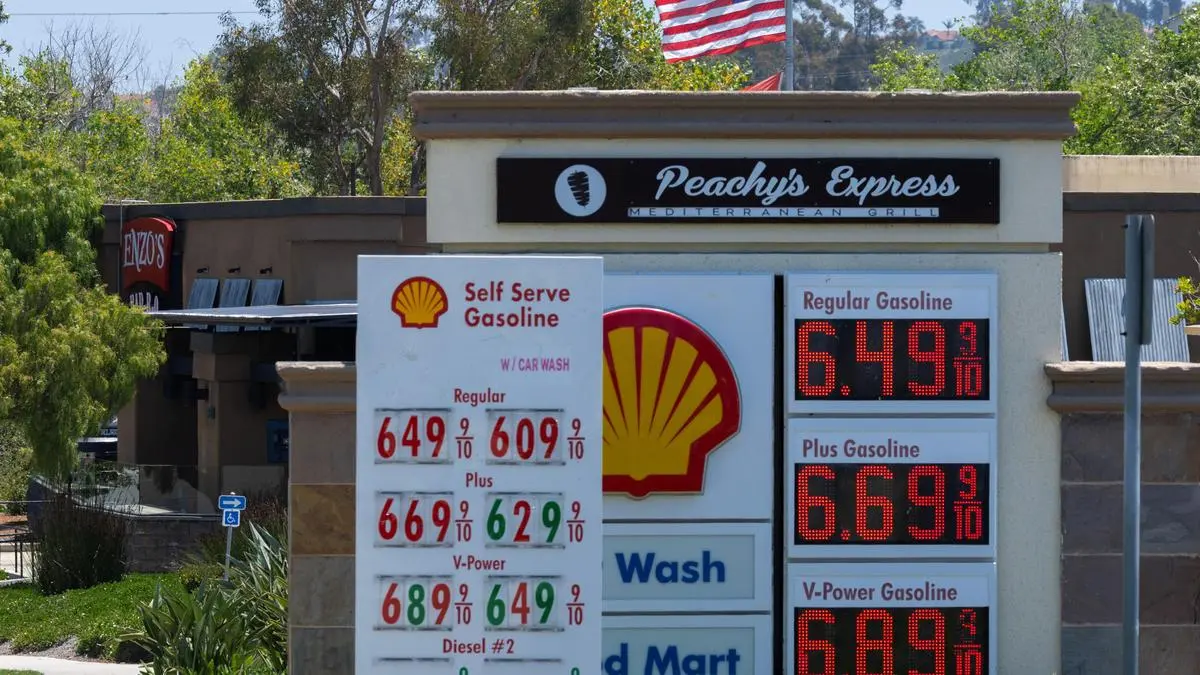
The global energy supply chain operates on a principle of structural interconnectedness, where localized resource conservation in one hemisphere directly induces supply shocks in another. The current escalation of retail gasoline prices in California to an average of $6.14 per gallon is not merely a localized regulatory issue, nor is it solely the result of generic inflationary pressures. Instead, it represents the downstream macroeconomic consequence of an emergency regulatory intervention by the Indian government. Faced with a critical deficit in Liquefied Petroleum Gas (LPG) driven by the near-closure of the Strait of Hormuz, New Delhi has mandated that domestic refiners maximize cooking fuel output. This policy choice has forced a structural shift in refinery yields, severely curtailing the production of alkylates—a premium, specialized blending component essential for meeting California’s stringent environmental fuel specifications.
To understand how an agricultural or household policy decision in New Delhi dictates the marginal cost of a gallon of fuel in Los Angeles, one must map the precise technical linkages between global hydrocarbon logistics, refinery process engineering, and regional environmental mandates.
The Asymmetric Supply Shock: The Strait of Hormuz Chokepoint
The root of the systemic imbalance lies in the maritime transit vulnerability of the Indian energy sector. India ranks as the world's most populous nation, and its domestic household infrastructure relies fundamentally on LPG (predominantly a pressurized mixture of propane and butane) as its primary cooking fuel. The structural vulnerability of this dependency is defined by two data points:
- Import Reliance: India imports approximately 60% of its total domestic LPG consumption.
- Geographic Concentration: Prior to the current West Asian conflict, over 90% of those seaborne imports traversed the Strait of Hormuz.
The near-closure of the Strait of Hormuz by Iran has severed this supply line, creating an immediate domestic deficit. While the Indian government maintains a 45-day strategic buffer of LPG, a protracted disruption forces a pivot from inventory drawdown to emergency domestic production. Because LPG is politically sensitive and vital for social stability, the Ministry of Petroleum and Natural Gas enacted an emergency directive forcing state-run and private refiners—including Reliance Industries at the Jamnagar complex, the world's largest refining facility—to maximize the yield of domestic LPG.
The Refinery Yield Tradeoff: Propane-Butane Reallocation
Refinery configurations operate within strict physical limits dictated by a zero-sum material balance. When a refinery is directed to maximize a specific light olefin or liquefied gas product, it must alter the operational parameters of its Fluid Catalytic Cracking (FCC) units and alkylation plants.
Under normal operating conditions, light hydrocarbons such as isobutane, butylene, and propylene are routed directly to an alkylation unit. This chemical process combines low-molecular-weight olefins with isobutane in the presence of an acid catalyst (hydrofluoric or sulfuric acid) to synthesize alkylate. Alkylate is a highly prized premium gasoline blending stock characterized by a high octane rating, zero aromatics, zero olefins, and an exceptionally low Reid Vapor Pressure (RVP).
However, when the mandate shifts to maximize LPG output to replace missing imports, the feedstock distribution undergoes a structural reallocation:
$$ \text{Total FCC Light Olefins} = \text{LPG Allocation (Propane/Butane)} + \text{Alkylation Feedstock} $$
To increase the volume of marketable LPG, refiners divert essential propane and butane streams directly into the domestic fuel pool rather than utilizing them as feedstocks or pressurized components within the alkylation value chain. The direct mechanical consequence of this operational shift is a steep decline in alkylate production capacity. Data from April 2026 confirms that India's total export volumes of alkylates dropped to their lowest levels since October 2023, driven by this domestic prioritization of cooking gas.
The California Conundrum: CARBOB Isolation and Regulatory Rigor
The reduction in Indian alkylate exports would be manageable in a friction-free, uniform global market. However, California operates as a regulatory fuel island, rendering it uniquely vulnerable to supply chain anomalies in the Pacific basin.
The California Air Resources Board (CARB) enforces the California Reformulated Gasoline (CaRFG3) standard, which dictates the composition of California Reformulated Gasoline Blendstock for Oxygenate Blending (CARBOB). To mitigate tropospheric ozone formation and smog in major metropolitan basins, CARBOB rules impose rigid ceilings on vapor pressure, sulfur content, aromatics, and olefin percentages.
| Fuel Property | Conventional US Gasoline | CARB/CARBOB Specification |
|---|---|---|
| Reid Vapor Pressure (RVP) | Up to 9.0 psi (seasonal) | Strictly capped at 6.7–7.0 psi (summer) |
| Aromatics Content | Variable (often >25%) | Max 22% by volume |
| Olefins Content | Variable | Max 4.1% by volume |
| Benzene Content | Max 0.62% | Max 0.70% |
To meet these tight limits—especially the low RVP requirement during the high-demand summer driving season—refiners cannot simply use standard components like butane, which has a very high vapor pressure. Instead, they rely heavily on alkylate as a primary blending agent. Alkylate acts as a clean-burning balancing agent, allowing refiners to suppress RVP while maintaining the high octane levels required by modern engines.
The Multi-Tiered Squeeze on Pacific Basin Logistics
California’s dependence on Indian alkylates is exacerbated by a broader breakdown in Pacific refining capacity. The closure of the Strait of Hormuz has not only restricted India's LPG imports; it has cut off broader Asian refining hubs (such as those in South Korea, Japan, and Singapore) from roughly one-fifth of the global crude supply.
Consequently, Asian merchant refiners have scaled back utilization rates and lowered their total motor fuel export volumes due to crude input constraints. California has historically relied on these Asian refiners to supplement its domestic production when local refineries undergo scheduled maintenance or unexpected outages.
This creates a compounding supply bottleneck:
- Crude Deficit: Asian merchant refiners reduce total fuel output due to missing Middle Eastern crude inputs.
- Component Deficit: Indian refiners reduce alkylate manufacturing to preserve domestic LPG.
- Domestic Isolation: California’s strict CARB specifications prevent it from seamlessly importing standard, non-compliant gasoline from the US Gulf Coast or Midwest via domestic pipelines, as there is no direct pipeline infrastructure capable of transporting finished CARBOB over the Rocky Mountains. All external supply must arrive via maritime tankers.
With fewer imports of both finished CARBOB from Asia and the critical blending components like alkylate from India, California's regional inventories have fallen well below historical five-year averages. With summer driving demand accelerating, the marginal cost of the remaining compliant supply has spiked sharply, pushing pump prices past $6.14 per gallon, with projections from market analysts indicating a trajectory toward $6.50 per gallon if structural relief does not materialize.
Strategic Implications and Institutional Bottlenecks
The structural rigidities of this crisis reveal the limitations of standard economic interventions. For the State of California, the immediate policy lever available is the issuance of an emergency fuel specification waiver by the administration. Such a waiver would temporarily ease CARB standards, allowing the sale of higher-RVP winter-blend gasoline or conventional gasoline imported from other domestic regions.
However, state energy officials are cautious. Relaxing air quality standards during peak summer months carries significant political and environmental risks, particularly regarding air quality degradation in the Central Valley and Los Angeles basins. Furthermore, a waiver does not fix the underlying physical shortage of refined products in the Pacific basin; it merely shifts the blending requirements.
For corporate fuel buyers, logistics managers, and downstream distributors, navigating this supply breakdown requires abandoning the assumption of fluid global trade. The direct connection between Indian household cooking fuel and California transport costs demonstrates that regional regulatory barriers turn localized supply choices into broader market disruptions.
The optimal strategic response for West Coast fuel procurement teams requires immediate supply-source diversification. Organizations must shift their procurement focus away from Pacific basin merchant refiners and instead secure long-term contracts with European or complex US Gulf Coast refiners capable of manufacturing CARBOB-compliant components, routing them via the Panama Canal despite higher freight premiums. Relying on spot-market imports from Asian refiners is no longer a viable approach while Indian refining capacity remains constrained by domestic energy conservation mandates.
The video below outlines how the structural shifts in global energy flows and the crisis in the Middle East have driven up commercial fuel and energy costs, reflecting the broader economic disruptions affecting international trade.
Fuel Price Tsunami | The Price Shock: ₹1000 LPG Spike Explained | News9