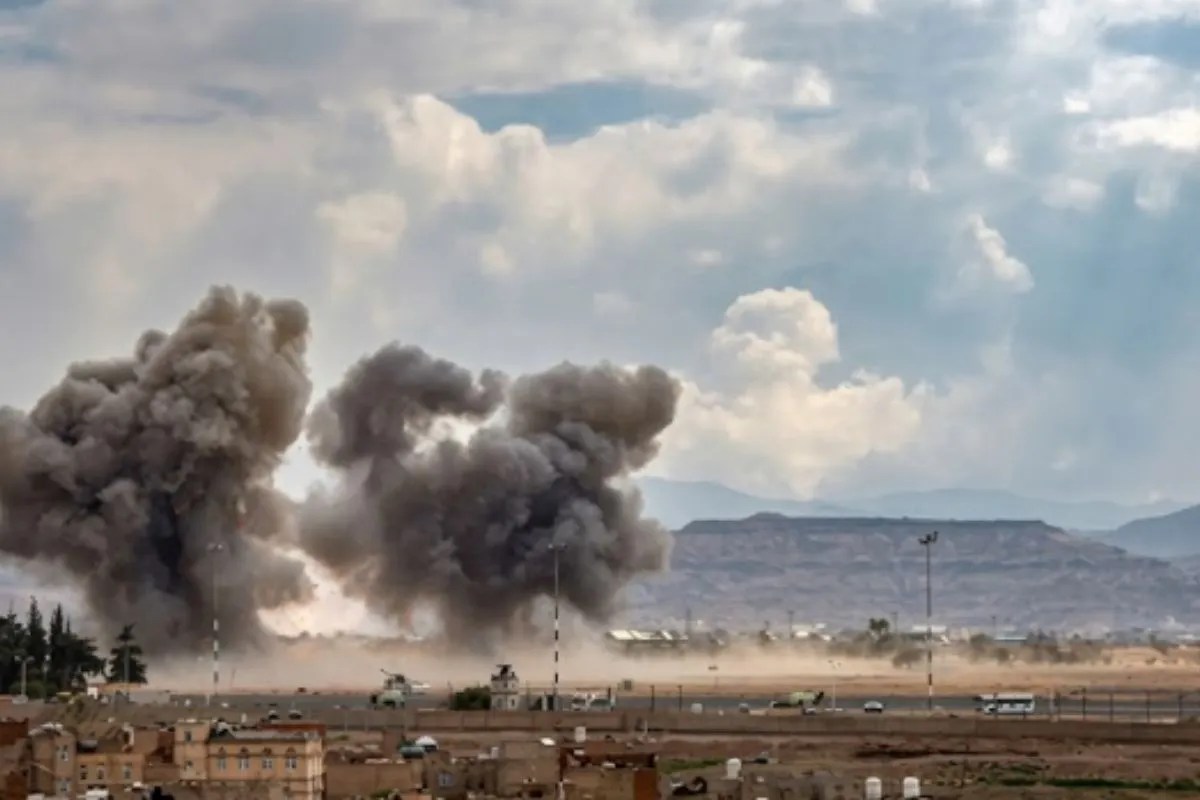
Houthi attacks along the Bab-el-Mandeb Strait have systematically reshaped global maritime logistics, forcing Kuwait and neighboring Gulf nations to overhaul their commercial shipping operations. As missile strikes and drone interceptions become routine along key maritime routes, the threat to commercial vessels navigating the Red Sea has moved from a localized security issue to a major disruption of international commerce. Kuwait's recent strategic pivot to safeguard its maritime supply chains highlights a harsh reality for global trade. Maritime security in one of the world's most vital chokepoints is no longer guaranteed by conventional naval presence alone.
The immediate reaction to rising security risks in the Red Sea has followed a predictable pattern. Major shipping lines reroute vessels around the Cape of Good Hope, adding roughly 10 to 14 days to transit times between Asia and Europe. Fuel consumption spikes. Freight rates soar. Insurance premiums for vessels daring to cross the Suez Canal jump overnight. But beneath these obvious economic consequences lies a deeper, more troubling structural shift that regional players like Kuwait are scrambling to manage.
The Flawed Logic of Regional Containment
For months, global trade authorities operated under the assumption that naval task forces could secure the corridor without fundamentally disrupting trade flow. That assumption failed. The economics of modern asymmetric warfare favor the aggressor. A low-cost drone or modified anti-ship missile costing a few thousand dollars requires an interceptor missile priced in the millions. Naval task forces can protect individual military assets and escort select high-priority vessels, but they cannot offer a blanket guarantee to thousands of commercial container ships, bulk carriers, and oil tankers traversing the narrow waters daily.
Kuwait's decision to alter shipping protocols and diversify supply routes reflects an understanding that waiting for full maritime security to return is a losing strategy. For a nation heavily dependent on oil exports and food imports, prolonged transit delays directly translate to domestic price volatility and logistical bottlenecks at home ports.
The Cape Route Distortions
diverting trade around Africa sounds straightforward on a map. In practice, it creates massive logistical friction across every tier of the supply chain.
- Port Congestion: African ports along the emergency route lack the infrastructure, crane capacity, and bunkering facilities required to handle the sudden influx of mega-container ships.
- Container Misplacement: Empty containers end up stuck at destination ports thousands of miles away from manufacturing hubs in Asia, creating localized shortages that drive up manufacturing costs.
- Fuel Costs: Long-distance transit consumes immense volumes of bunker fuel, sharply increasing carbon emissions while squeezing shipping margins.
Why Suez Dependent Economies Face Double Vulnerability
The geopolitical tension in the Red Sea exposes a critical vulnerability in how Gulf states and global markets manage risk. Egypt loses billions in Suez Canal transit fees, while importing states absorb higher landed costs for raw materials, machinery, and consumer goods.
Kuwait sits in an exceptionally delicate position. While it exports crude oil directly through the Arabian Gulf and the Strait of Hormuz, its non-oil supply chain relies heavily on Suez-bound container transport for equipment, consumer items, and industrial inputs. When European and Mediterranean suppliers delay shipments or attach hefty war-risk surcharges to freight, Kuwaiti importers bear the brunt of the cost increase.
The strategic dilemma is clear. Relying strictly on traditional maritime lanes leaves supply chains exposed to asymmetric threats that cannot be easily neutralized by standard diplomatic or military maneuvers.
Re-engineering Gulf Logistics
To mitigate these disruptions, regional logistics hubs are forced to build redundancy directly into their supply networks rather than depending on just-in-time delivery models.
- Overland Freight Bridges: Transporting goods by truck from ports in Oman or the United Arab Emirates directly into Kuwait bypassing the Red Sea entirely.
- Buffer Inventory Expansion: Moving away from lean inventory systems to hold critical food and industrial reserves locally.
- Dual-Sourcing Protocols: Shifting procurement from European suppliers toward Asian markets where maritime routes avoid the Bab-el-Mandeb Strait altogether.
Overland transport offers speed and bypasses troubled waters, yet it cannot match the massive volume capacity of ocean freight. A single modern container ship carries the equivalent of thousands of semi-truck loads. Land routes serve as a temporary release valve, not a permanent replacement for open ocean shipping lanes.
The Long-Term Realities of Chokepoint Dependence
The Red Sea crisis is not an isolated event. It represents a broader shift in global trade dynamics where narrow maritime passages represent high-risk bottlenecks. The Bab-el-Mandeb Strait, the Strait of Hormuz, and the Malacca Strait remain the world's most critical economic arteries, yet they remain exposed to regional conflicts and political leverage.
Kuwait's proactive adjustments demonstrate that state actors are moving beyond temporary crisis management. They are restructuring supply logistics around the expectation of persistent instability. As maritime insurance carriers continually re-evaluate risk zones and commercial fleets calculate the escalating costs of passage, the global shipping architecture is permanently shifting. The era of low-cost, frictionless ocean transport through high-risk chokepoints has effectively drawn to a close, forcing nations to pay a premium for security, distance, and time.