The glow of a trading terminal at four in the morning isn’t a warm light. It’s a harsh, clinical blue that makes your skin look sallow and your coffee taste like battery acid. For Elias, a mid-level portfolio manager in Manhattan, that blue light turned a violent shade of crimson the moment the headlines about the Middle East flickered across his screen.
Geopolitical tension isn't a textbook definition when you’re watching billions of dollars in valuation evaporate before the sun even rises. It’s a physical weight. It’s the sound of a heartbeat in your ears. When the specter of a broader conflict between Israel and Iran begins to loom, the market doesn’t wait for a formal declaration. It reacts with the primal instinct of a cornered animal. It bolts.
But here is the irony that keeps people like Elias awake: the market is a terrible judge of character. In its rush to find safety in oil and defense contractors, it tramples over the very companies that are actually winning. We are watching a mass exodus from high-quality stocks based on a fear that, while geographically grounded, is financially misplaced.
The Collateral Damage of the War Room
When the drums of war beat, the "Risk-Off" switch is flipped. Investors scramble into "safe havens." They buy gold. They buy Lockheed Martin. They buy crude oil futures. This is the standard playbook, written in the soot of a dozen previous conflicts. But for every dollar that flows into a missile manufacturer, a dollar is yanked out of a company that actually makes the world move.
Consider the "hypothetical" case of Sarah, a retail investor who spent three years carefully building a position in high-growth tech and consumer discretionary brands. She sees the news. She sees the red arrows. She doesn’t see the quarterly earnings reports or the debt-to-equity ratios. She sees a threat to her retirement. So, she hits 'sell.'
Multiply Sarah by ten million, and you have the current state of the market.
This panic creates a bizarre distortion. We are seeing companies with fortress-like balance sheets—businesses that have nothing to do with the Strait of Hormuz—getting sold off as if their warehouses were located in the middle of a desert skirmish. Jim Cramer recently pointed out this exact phenomenon. The fear of an Iran-Israel escalation is crushing stocks that, by all logical measures, should be celebrated as the champions of the current economy.
The Tech Titans in the Trenches
Take a look at the semiconductor sector. Not the speculative, "maybe-someday" startups, but the giants. These are the companies providing the brains for everything from the phone in your pocket to the server farms that run the global banking system.
When war fears rise, the knee-jerk reaction is to dump tech. The logic—if you can call it that—is that a global conflict will disrupt supply chains and shrink consumer spending. But wait. If the world becomes more volatile, do we use less technology? If energy prices spike, do companies stop their push toward automation and AI-driven efficiency?
No. They double down.
The invisible stakes here involve the structural shift of the global economy. We are currently in the middle of an industrial revolution powered by silicon. Whether there is peace or conflict, the demand for high-end processing power is a runaway train. Yet, the moment a drone is sighted over a foreign capital, these stocks are treated like speculative junk. It is a fundamental disconnect between the scary evening news and the reality of how global commerce functions in 2026.
The Consumer Irony
Then there are the brands we use every single day. The companies that have managed to pass on inflation costs to consumers without losing a single customer. These are the "winners" Cramer refers to—the ones with "pricing power."
Imagine a family sitting at a kitchen table. Gas prices are up twenty cents because of the "war premium" on oil. They might cancel a vacation. They might hold off on buying a new car. But are they going to stop using the software they need for work? Are they going to stop buying the specific, brand-name goods they trust?
History suggests they won't.
During periods of high tension, consumers retreat to what is known and what is necessary. The companies that provide those necessities are currently being discounted because of a macro-narrative that doesn't apply to them. It’s like selling your house because the neighbor three blocks over has a leaky faucet. It’s an overreaction born of a desire for control in an uncontrollable world.
The Oil Trap
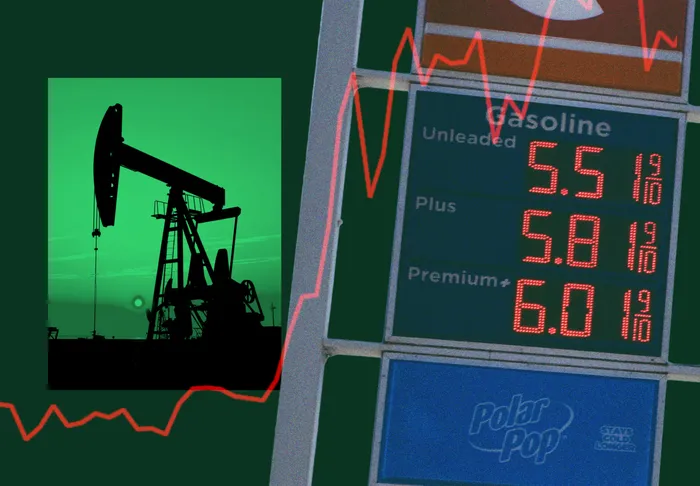
The most dangerous part of this narrative is the obsession with crude. Yes, war in the Middle East usually means a spike in oil. And yes, that usually acts as a tax on the consumer. But we aren't living in 1973.
The energy landscape has shifted. The United States is a massive producer. Renewables are a growing part of the grid. While a spike in Brent Crude is never "good," it no longer has the power to break the back of the American economy the way it once did.
The "invisible cost" of the Iran war fears is that investors are paying a premium for oil stocks that may be peaking, while they flee from growth stocks that are getting cheaper by the minute. They are buying the top of the fear and selling the bottom of the quality.
Watching the Horizon Through a Fog
It is difficult to be the person buying when the rest of the world is shouting "fire." It feels wrong. It feels like you’re ignoring the suffering of real people in a conflict zone. But the market isn't a moral barometer; it’s a machine designed to price future cash flows.
When we look at the companies being "crushed" right now, we aren't looking at businesses in decline. We are looking at businesses in a temporary shadow. The shadow is cast by a cloud of geopolitical dust, but the sun is still shining on their business models.
Elias, back at his terminal in New York, eventually stopped looking at the red numbers. He started looking at the "why." He looked at a specific cloud computing giant that had just posted record margins, yet was down 4% on the day because of a headline about a missile battery.
He didn't see a crisis. He saw a gift.
The human element of investing is often our greatest weakness. We are wired to run when we see others running. We are wired to fear the dark. But in the cold, clinical world of the stock market, the bravest thing you can do is stand still while everyone else is sprinting for the exits.
The stocks that "should be winners" are still winners. Their factories are still running. Their code is still being written. Their customers are still clicking "buy." The only thing that has changed is the price tag we’ve put on them out of a sense of collective dread.
At some point, the headlines will change. The dust will settle, as it always does, into a new and uneasy silence. When that happens, the market will look around, realize it overreacted, and start the long, expensive climb back up to where these companies belonged all along. The only question is who will be holding the shares when the screen finally turns green again.
The blue light of the terminal doesn't seem so harsh when you realize the red isn't blood—it’s just a sale.