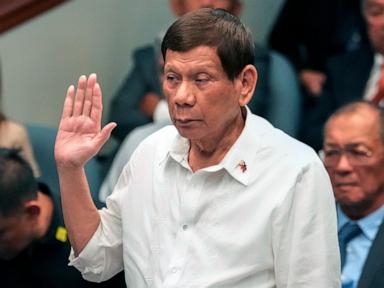
Former Philippine President Rodrigo Duterte faces an extraordinary reckoning at the International Criminal Court in The Hague, marking a seismic shift in international accountability. For years, the architect of the violent Philippine drug war operated with complete impunity, daring global bodies to challenge his domestic authority. Now, the geopolitical architecture that once shielded authoritarian leaders from external prosecution is fracturing under the weight of documented evidence, survivor testimonies, and relentless investigative work by human rights advocates.
The journey toward this courtroom did not begin with diplomatic consensus. It began in the overcrowded morgues of Manila and Davao City, where thousands of victims fell under the banner of an extrajudicial campaign euphemistically labeled as Operation Double Barrel. The core premise relied on state-sanctioned violence masquerading as law enforcement, creating a climate of fear that paralyzed local judicial oversight. When domestic courts failed to provide recourse, families, legal scholars, and international investigators spent years compiling the paper trail that ultimately pierced sovereign immunity.
The Anatomy of Accountability
To understand why this proceeding matters beyond the borders of the Philippines, one must examine the mechanics of international jurisprudence regarding head-of-state liability. For decades, leaders accused of widespread human rights violations exploited the doctrine of state sovereignty as an impenetrable shield. They calculated that domestic police forces would protect them and that foreign governments would prioritize trade and geopolitical positioning over justice.
Rodrigo Duterte tested this calculation to its absolute limit. During his presidency, he openly boasted about ordering killings, threatened investigators, and officially withdrew the Philippines from the Rome Statute in 2019, believing the maneuver would erase the jurisdiction of the International Criminal Court over crimes committed during his tenure.
Yet international law contains provisions specifically designed to counter such tactical withdrawals. Crimes against humanity committed while a state was party to the treaty remain subject to prosecution regardless of subsequent diplomatic exits. Prosecutors in The Hague methodically established that the alleged atrocities constituted a widespread and systematic attack against a civilian population, satisfying the strict legal thresholds required for formal charges.
The Domestic Fallout and Political Shockwaves
Back in Manila, the proceedings in The Hague have triggered a profound political realignment. The fragile alliance between the Duterte dynasty and the current administration under President Ferdinand Marcos Jr. has frayed into open rivalry. While Marcos initially signaled resistance against foreign intervention in domestic affairs, shifting political alliances and the pragmatic need to repair international credibility have altered the landscape.
Local civil society organizations, once operating under the constant threat of state harassment, have found renewed momentum. Lawyers who spent years gathering ballistic reports, medical records, and eyewitness accounts now see their documentation scrutinized by international prosecutors. The contrast between the defiant rhetoric previously broadcast from Malacañang and the cold reality of a courtroom dock exposes the vulnerability of leaders who mistake temporary political dominance for permanent immunity.
The Broader Global Precedent
The implications of this trial extend far beyond Southeast Asia. As democratic norms face pressure globally, leaders in various regions watch The Hague closely to gauge whether accountability remains a viable mechanism for checking executive overreach. If an entrenched leader who commanded immense domestic popularity and operated with absolute territorial control can be hauled before an international tribunal, the deterrent effect ripples across other authoritarian regimes.
Critics frequently point out the limitations of international courts—their sluggish pace, their dependence on state cooperation for arrests, and the inherent difficulties of gathering evidence in hostile territories. These criticisms carry weight. Justice delivered years after the fact offers cold comfort to families who buried their children during the peak of the crackdown. The process is painfully slow, legally intricate, and vulnerable to geopolitical interference.
Nevertheless, the mere existence of these proceedings alters the calculus of power. Dictators and strongmen can no longer assume that stepping down from office guarantees a quiet retirement funded by state assets. The boundaries of international law are being redrawn in real time, shaped by the courage of local witnesses who refused to let state violence be normalized into silence.
The courtroom in The Hague stands as a physical manifestation of a stubborn truth. Power built on the systematic destruction of human rights eventually encounters a reckoning that no executive order, nationalist rhetoric, or diplomatic maneuver can permanently deflect.



