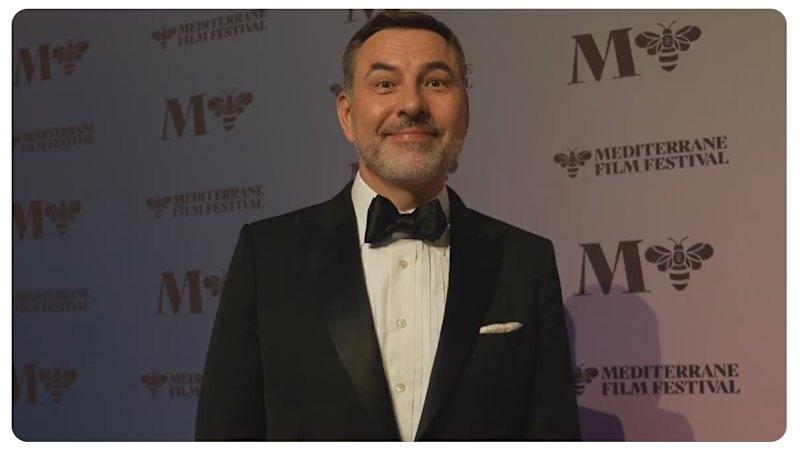
Rumors about British comedy stars rarely stay quiet for long, especially when serious misconduct allegations enter the picture. If you've been scrolling through social media or reading British tabloids over the last couple of years, you've almost certainly seen headlines claiming that British actor David Walliams was accused of grooming women and girls for sex.
Let's cut straight through the noise.
There's a massive difference between verified public controversies, leaked backstage audio, and unsubstantiated internet rumors. When a headline accuses a high-profile children's author and television judge of grooming, people understandably want to know what is real, what is documented, and where those specific claims actually came from.
I've spent years tracking British entertainment media, libel laws, and how celebrity controversies mutate online. Honestly, the way the David Walliams story evolved from a very real, documented scandal into extreme, unverified viral claims is a textbook case of how modern rumor mills operate.
Where the David Walliams Controversies Actually Started
To understand why people are searching for grooming allegations against David Walliams, you have to look at the timeline of events that genuinely damaged his career between 2022 and 2024. None of those official, documented scandals involved police investigations or proven charges of grooming underage girls. They involved deeply inappropriate backstage behavior, a controversial comedy routine, and a high-profile legal battle.
In November 2022, The Guardian published leaked transcripts from filming breaks on Britain's Got Talent dating back to January 2020. During those breaks at the London Palladium, Walliams was caught on a live microphone making derogatory and sexually explicit comments about contestants.
In one instance, he referred to an older male contestant using a derogatory three-letter expletive repeatedly after the man had engaged in light banter with the judging panel. In another, after a female contestant walked off stage, Walliams said she was "like the slightly boring girl you meet in the pub that thinks you want to f** them, but you don't." He added, "I know, she's just like: 'Oh, f** off!' I was saying, she thinks you want to f** her, but you don't. It's the last thing on your mind, but she's like: 'Yep, I bet you do!' 'No I don't!' I had a bit of a b**r, but now it's going, it's now shriveled up inside my body."
Walliams issued a formal apology right away, calling them private conversations that were never intended to be broadcast. Within weeks, he stepped down from his role as a judge on Britain's Got Talent after a decade on the panel.
Then came the legal fallout. In late 2023, Walliams sued Fremantle, the production company behind Britain's Got Talent, alleging a severe breach of UK data protection laws because his private conversations had been recorded, transcribed, and leaked. That lawsuit was eventually settled out of court in November 2023, with Fremantle issuing an apology for the unauthorized leak.
Why Grooming Rumors Began Circulating Online
So if the Britain's Got Talent scandal was about derogatory remarks toward adult contestants, how did the narrative morph into "David Walliams accused of grooming women and girls for sex"?
You can trace that jump directly to three converging factors in British pop culture and social media:
- Resurfaced Little Britain sketches and live stage bits. Walliams and his comedy partner Matt Lucas built an empire in the early 2000s on shock humor, blackface, and boundary-pushing caricatures. Clips from live stage tours—specifically a recurring bit where Walliams would bring young male audience members on stage and simulate pulling down their trousers—resurfaced on TikTok and X (formerly Twitter) in 2023. Out of context, those 15-year-old clips looked bizarre and predatory to younger viewers who didn't grow up watching 2000s British sketch comedy.
- His career as a children's author. Walliams isn't just a comedian; he's one of the best-selling children's authors in the UK, having sold tens of millions of books like Gangsta Granny and The Boy in the Dress. Whenever an entertainer who works closely with kids faces any kind of sexualized scandal—even one involving adult reality TV contestants—internet speculation almost automatically jumps to worst-case scenarios involving minors.
- Anonymous blind items and clickbait aggregators. Following the Russell Brand documentary (Dispatches) in September 2023, British social media went into overdrive trying to predict which other major UK comedy star would be exposed next. Anonymous accounts on X, Reddit threads, and low-tier content farms began recycling old gossip, combining rumors about Walliams' dating life with exaggerated claims about young fans.
When clickbait websites scrape those social media rumors and package them with sensational headlines, search engines pick them up. Suddenly, an unverified rumor starts looking like breaking news.
Separating Verified Facts From Internet Speculation
In the United Kingdom, defamation and libel laws are notoriously strict. Unlike in the United States, where public figures have to prove "actual malice" to win a defamation suit, UK law puts the burden of proof heavily on the publisher. If a major British newspaper—like The Guardian, The Times, or the BBC—had credible, vetted evidence that David Walliams had groomed underage girls, it would be front-page news backed by legal teams, victim testimonies, and police statements.
That hasn't happened.
There have been no criminal charges, no arrests, and no verified investigative reports from mainstream British journalism substantiating claims that Walliams groomed girls for sex. What has been publicly documented is a pattern of crude, offensive workplace remarks and past comedy routines that aged terribly.
What Critics and Industry Insiders Actually Said
Even without criminal allegations, plenty of people inside the British television and publishing industries criticized Walliams' behavior. When The Guardian broke the Britain's Got Talent story, union leaders at Equity and Bectu pointed out that crew members and contestants deserve a safe, respectful environment without a multimillionaire judge making sexually explicit jokes into a hot mic.
Around the same time, some former acquaintances and minor media personalities came forward in tabloid interviews to describe Walliams as "sleazy" or overly persistent when flirting with younger adult women in London's celebrity circuit. Katherine Ryan, a prominent comedian in the UK, famously hinted on podcasts and television interviews about an unnamed "predator" in British comedy, which sparked endless online guessing games. Ryan never publicly named Walliams, and she explicitly stated she couldn't name the person for legal reasons, yet internet sleuths routinely attached his name to her comments alongside several other male comedians.
In the publishing world, Walliams also faced heavy criticism—not for grooming, but for the content of his children's books. Authors and critics argued that several of his titles relied on fat-shaming, lazy racial stereotypes, and mean-spirited humor. In 2021, HarperCollins actually revised one of his short stories, "Brian Wong Who Was Never, Ever Wrong," from The World's Worst Children after complaints that it reinforced harmful anti-Chinese stereotypes.
The Anatomy of Clickbait Misinformation
Why do articles with titles claiming an actor was "accused of grooming women, girls for sex" keep popping up on obscure domains? It comes down to programmatic ad revenue and search engine manipulation.
Content farms monitor trending names. When a celebrity's name spikes in search volume—whether because of a book release, a court settlement, or a viral TikTok clip—automated networks spin up articles using high-emotion keywords like "accused," "grooming," "arrested," or "exposed." They rely on the fact that most readers only scan the headline, share it in outrage, and never check whether an actual police report or credible journalistic investigation exists behind the claim.
Think about how dangerous that blurring of lines actually is. When genuine survivors of abuse and grooming come forward against powerful figures—as seen in major, thoroughly investigated cases across the entertainment industry—those stories rely on rigorous fact-checking, corroborating witnesses, and legal accountability. Lumping unverified internet gossip into the same category as proven criminal abuse muddies the water for everyone.
How to Verify Celebrity Allegations Before Sharing
If you come across a shocking headline about David Walliams or any other public figure, you don't need a journalism degree to fact-check it in under two minutes. Here is how you can separate real reporting from fabricated or exaggerated clickbait:
- Check the UK Broadsheets and Public Broadcasters. For any British celebrity, look immediately at BBC News, The Guardian, The Times, The Telegraph, or Sky News. Because of strict UK media regulations (like Ofcom and IPSO), these outlets will immediately report on formal police investigations, arrests, or verified multi-source exposés—and they won't publish unverified social media rumors.
- Look for Primary Legal or Official Documents. Real scandals leave paper trails. In the Britain's Got Talent controversy, there were verbatim transcripts, an official apology statement from Walliams' representatives, and High Court filings in London when he sued Fremantle. If an article can't cite a court filing, a named journalist's investigation, or an official statement, treat it as rumor.
- Inspect the Source Domain. Pay attention to where the headline lives. If an explosive accusation only appears on obscure blogs, newly registered domains, or aggregator sites with no masthead or named editors, it's almost certainly scraped from social media speculation rather than actual reporting.
- Watch Out for Conflated Timelines. Many misleading articles take a real event from years ago—like Walliams apologizing for his 2020 Britain's Got Talent remarks—and frame it alongside recent unrelated rumors to make it look like a brand-new criminal development. Always check the dates of the underlying facts.
David Walliams' public image has undeniably taken a massive hit over the last few years, largely due to his own recorded words backstage and shifting cultural standards around comedy. Stick to the documented facts: he lost a premier television job over crude, sexually explicit comments caught on a studio microphone, settled a data privacy lawsuit with the show's producers, and continues to face scrutiny over his past comedic material. Anything beyond that remains unverified internet noise until backed by credible evidence.