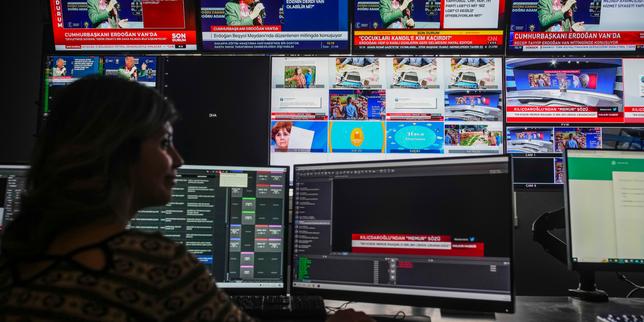
Dawn raids don't usually leave room for subtlety. On October 14, 2026, police descended on the Istanbul headquarters of Halk TV, Turkey's highest-profile private opposition news channel, and pulled the plug on live broadcasts. Within hours, a court-appointed trustee stepped in, leaving millions of viewers staring at a darkened screen.
Chairman Cafer Mahiroğlu called it a dark day for Turkey. That phrase captures the gut punch of the moment, yet it doesn't tell the whole story. Taking over a major broadcaster isn't just about silencing a single newsroom; it reshapes how millions of citizens read politics, corruption, and power. Read more on a connected subject: this related article.
How the Halk TV Seizure Unfolded
Early on October 14, police moved into Halk TV's Istanbul building as part of a judicial probe targeting owner Cafer Mahiroğlu. Authorities placed companies linked to Mahiroğlu under state receivership through Turkey's Savings Deposit Insurance Fund, known as TMSF, and appointed a trustee to oversee operations.
Broadcasts went off the air on both television and YouTube. Staff on the ground described tense standoffs as management tried to negotiate continued broadcasting with the incoming administrator committee, only for transmissions to be halted. Further reporting by The New York Times highlights similar views on the subject.
Timing made the move look even sharper to critics. The raid landed on the exact day Istanbul Mayor Ekrem İmamoğlu began his defense in a high-stakes trial stemming from detentions that started in March 2025. Whether by design or coincidence, viewers lost one of their main windows into opposition politics right as a defining courtroom battle reached a critical stage.
Officials framed the action around corporate and business investigations tied to the owner rather than editorial content. Press freedom groups weren't buying that separation. The International Federation of Journalists and the European Federation of Journalists warned that using business probes to lock journalists out of a newsroom and halt broadcasts punishes the public's right to know.
Why State Trustees Change Everything
If you haven't followed Turkish media politics closely, the word "trustee" might sound dry or purely technical. In practice, installing a kayyum or TMSF receiver flips a news organization on its head overnight.
Instead of fine-tuning a broadcast license or issuing a temporary suspension over a specific program, receivership hands financial and managerial control over to state-linked administrators. Once a trustee sits in the driver's seat, editorial independence faces immediate pressure. Even when reporters are allowed back into a building or a stream comes back online later, the room changes. Producers know who controls budgets, contracts, and access.
Legal watchdogs have pointed out a glaring tension here. Under Article 28 of Turkey's constitution, the press is free and cannot be censored. Groups like the Committee to Protect Journalists and the Norwegian Helsinki Committee argue that if prosecutors suspect financial crimes, targeted legal steps exist that don't require shutting down an entire newsroom.
When a court appoints a state administrator over a major broadcaster during a major political trial, the line between corporate law and political control gets awfully thin.
From the government's side, supporters argue that no business owner or media outlet sits above legal scrutiny, especially when prosecutors allege financial misconduct or when officials accuse opposition channels of spreading falsehoods. That clash of narratives is why these episodes spark such fierce arguments at home and abroad.
A Wider Squeeze on Independent Voices
Halk TV didn't get hit in a vacuum. It sat inside a broader wave of pressure targeting independent outlets, journalists, and opposition figures across Turkey.
Let's look at the pattern around Halk TV's takeover:
- Other broadcasters and sites felt the squeeze: Tele1 had previously seen a TMSF trustee appointed in October 2025. Access to the independent news website T24 was blocked inside Turkey at the end of September 2026.
- The investment fund scandal raised the stakes: Reporting and commentary around a massive investment fund scandal drew sharp pushback, including house arrests for well-known journalists like İsmail Saymaz and Murat Ağırel in mid-October 2026, alongside civil defamation suits brought by the ruling party.
- Sözcü TV followed weeks later: Just over a month after Halk TV, on November 17, 2026, police raided Sözcü TV's Istanbul headquarters, detained executives, and appointed a TMSF trustee to the channel and its website—even as the print newspaper Sözcü kept publishing and hit back on its front page.
International benchmarks reflect how steep that slide has been. Reporters Without Borders placed Turkey 163rd out of 180 countries and territories in its 2026 World Press Freedom Index, with estimates suggesting roughly 90 percent of national media sits under government or pro-government control.
Still, one nuance matters if you want an accurate picture. Turkey's media ecosystem isn't a monolith of total silence. Print newspapers, independent digital outlets, and social media feeds still operate, even under heavy legal risk, website blocks, and judicial harassment. Claiming every single voice vanished overnight would exaggerate; saying the remaining space for television criticism shrank dramatically is simply accurate.
What This Means for Viewers and Readers
When a major TV channel goes dark or changes hands under receivership, audience habits shift fast. Viewers who relied on evening panel shows for live political debate suddenly have to piece together information from scattered sources.
From years of watching how media crackdowns play out in polarized environments, I've seen two common mistakes people make right after a seizure like this. The first is tuning out completely out of frustration. The second is swinging to the opposite extreme and treating every viral post or rumor online as gospel because mainstream TV feels compromised.
If you're trying to follow Turkish politics clearly right now, a few practical habits help cut through the noise:
- Cross-check big claims across multiple outlets: Compare reporting from surviving print titles, independent web newsrooms, and international wire services or regional outlets before sharing a breaking detail.
- Watch primary legal and official documents: Pay attention to actual prosecutor statements, court filings, and official responses alongside commentary from media unions like the International Federation of Journalists.
- Separate business charges from editorial claims: Look closely at what specific allegations a court order cites—whether corporate ownership probes, tax/fund investigations, or broadcasting rules—and note where independent lawyers dispute the link.
- Save key reports offline or via reliable newsletters: Because website blocks and sudden takedowns happen fast, relying solely on a single bookmarked page or social feed leaves you blind when access drops.
The seizure of Halk TV wasn't an isolated hiccup in a routine news cycle. It was a turning point that showed how quickly a familiar screen can go black—and how much harder everyday citizens have to work to stay informed when big broadcasters get pulled into legal and political battles.