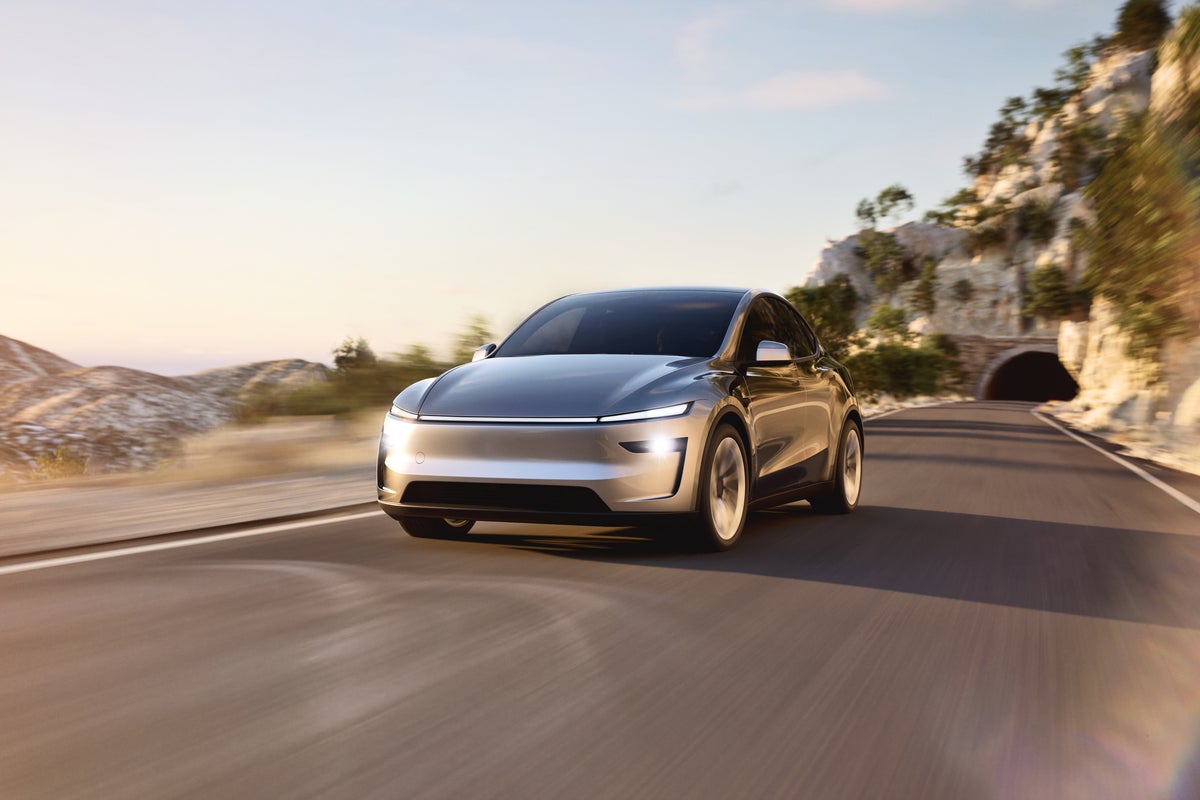
Federal auto safety regulators officially struck down a petition from Tesla seeking an exemption from a recall covering roughly 19,900 Model 3 and Model Y vehicles. The National Highway Traffic Safety Administration rejected the EV manufacturer's plea to bypass repairs and owner notifications over high-beam headlight assemblies that exceed legal light emission limits. Tesla insisted the excess brightness caused no real-world danger and generated no customer complaints. Federal officials flatly disagreed, ruling that blinding light output creates severe glare risks for surrounding drivers, effectively forcing the automaker to execute a formal safety fix.
The decision strikes at the heart of an ongoing friction point between modern automotive manufacturing and federal oversight. For years, silicon valley mindsets have pushed the boundaries of standard hardware homologation, treating minor physical noncompliance as immaterial glitches that can be swept under the rug or patched away. This ruling demonstrates that Washington is closing those escape hatches.
When Over-Spec Hardware Meets Federal Law
The dispute centers on Model 3 and Model Y vehicles manufactured between model years 2017 and 2023. According to agency documentation, photometer testing revealed that specific headlight units emitted light levels above the maximum thresholds established by Federal Motor Vehicle Safety Standard 108. The regulation strictly governs lamps, reflective devices, and associated equipment to guarantee that vehicles properly illuminate the roadway without dazzling oncoming traffic.
Tesla filed a formal petition for inconsequential noncompliance in 2024. The legal maneuver allows manufacturers to request relief from recall requirements if they can convince regulators that a technical defect creates no actual threat to motor vehicle safety. In its filing, Tesla pointed to its internal data logs. The company asserted it had received zero field reports, zero warranty claims, zero crash reports, and zero injury allegations linked to the noncompliant illumination levels. To Tesla's engineering leadership, the extra photometric output was a victimless statistical anomaly.
The safety agency took a starkly different view. Regulators noted that light levels exceeding legal ceilings introduce veiling glare, particularly in adverse meteorological conditions. When high-intensity light hits suspended water droplets in fog, heavy rain, or falling snow, it refracts violently. That scatter backlights atmospheric moisture, creating a wall of white light that severely degrades sightlines for both the driver behind the wheel and drivers approaching from the opposite direction.
Safety rules are explicitly designed to prevent catastrophic edge cases before they turn into fatal head-on collisions. Waiting for a crash log to pile up before taking action violates the preventative doctrine of federal vehicle standards.
The Math Behind Photometric Compliance
Automotive lighting design requires a delicate balance between forward road illumination and beam cut-off angles. Modern light-emitting diode modules generate intense, high-kelvin white light that offers superior clarity compared to legacy halogen systems.
However, when light output ticks even slightly above federal candlepower limits at specified test points, the human eye on the receiving end suffers from prolonged disability glare. The recovery time for a human retina exposed to illegal beam intensity at night can stretch from two to five full seconds. At highway speeds, a driver blinded for four seconds travels the length of a football field without visual acuity.
Tesla argued that the photometer overages occurred at isolated geometric points that rarely align with an oncoming driver's direct eye line. Regulators pushed back, emphasizing that roadway topography is never perfectly flat. Cresting hills, rounding banked curves, and carrying heavy trunk loads continuously alter a vehicle's pitch and roll angles. A headlight beam that exceeds brightness thresholds on a flat test track becomes a direct blinding laser when the car bounces over a dip on a dark rural road.
A Growing Habit of Dismissive Regulatory Filings
This petition denial reflects a broader pattern in how the company approaches regulatory friction. When faced with compliance failures, the manufacturer frequently leans on petition mechanisms to argue that the letter of the law is outdated or irrelevant to its design philosophy.
The strategy works when an issue is purely administrative. It fails when physical hardware directly interacts with human physiology and shared public infrastructure.
Tesla is hardly the only legacy or modern automaker to test the limits of inconsequentiality petitions. General Motors attempted a similar maneuver in 2022, asking federal regulators to excuse a lighting defect affecting 820,000 vehicles whose daytime running lights remained illuminated when the main headlights turned on. That request was similarly rejected. Regulators established early that lighting parameters are non-negotiable baselines, not flexible guidelines.
What makes Tesla's scenario unique is its systemic reliance on software fixes to bypass physical hardware intervention. When a software update can adjust beam patterns or dim specific diode clusters over the air, the cost of a recall is negligible. But when a lighting assembly suffers from physical housing misalignments or internal optical lens flaws that cannot be recalibrated via code, a physical recall becomes unavoidable.
The refusal to acknowledge these physical limits until forced by federal mandates highlights a persistent friction within the organization's quality control philosophy. Hardware cannot always be patched over Wi-Fi.
The Broader LED Headlight Crisis Facing American Drivers
This regulatory clash occurs against the backdrop of massive public frustration over night driving safety. Modern light emitting diode headlights have transformed night driving into a high-contrast nightmare for millions of motorists.
A study conducted by the American Automobile Association revealed that 60 percent of drivers identify headlight glare as a critical safety concern, with roughly 75 percent asserting that the problem has gotten noticeably worse over the past decade. The transition from warm halogen bulbs to piercing white and blue LED arrays has flooded American roads with unprecedented levels of luminance.
Automakers have chased higher lumen counts to score top marks on crash-prevention visibility tests administered by insurance groups. In doing so, many have pushed photometer metrics right to the legal edge.
+-----------------------------------------------------------------------+
|                       THE GLARE ESCALATION CYCLE                      |
|                                                                       |
|   1. Automakers deploy high-kelvin LED arrays for max visibility.     |
|                                   │                                   |
|                                   ▼                                   |
|   2. Beams exceed legal photometric thresholds at specific angles.    |
|                                   │                                   |
|                                   ▼                                   |
|   3. Oncoming drivers experience retargeted "veiling glare."          |
|                                   │                                   |
|                                   ▼                                   |
|   4. Regulatory bodies step in to enforce FMVSS 108 threshold limits. |
+-----------------------------------------------------------------------+
When manufacturing variance or design oversights push those assemblies past legal boundaries, the real-world impact is immediate. Drivers face an arms race on dark highways where every vehicle seems to be running its high beams continuously.
By shutting down Tesla's exemption attempt, regulators sent an unmistakable signal to the entire automotive industry. High-intensity lighting limits will be strictly enforced regardless of brand prestige, market cap, or historical crash metrics.
Escalating Pressure Across the Entire Autonomy and Safety Envelope
The headlight petition rejection is not an isolated incident. It represents one piece of an expanding puzzle of regulatory scrutiny surrounding the EV giant.
The safety administration has steadily elevated its investigations into various core operational systems. While the headlight issue involves physical hardware limits on 20,000 cars, broader probes are evaluating millions of vehicles equipped with camera-only driver assist software.
Federal investigators escalated their review of the Full Self-Driving system to an advanced engineering analysis following reports of collisions occurring in low-visibility environments. Heavy fog, blinding sun glare, airborne dust, and severe rain have consistently proven to be challenging edge cases for optical-only sensing suites.
+--------------------------------------------------------------------------+
|                 CURRENT REGULATORY SCRUTINY DIRECTIVES                   |
+--------------------------+-----------------------+-----------------------+
| SYSTEM UNDER REVIEW      | VEHICLE SCOPE         | PRIMARY CONCERN       |
+--------------------------+-----------------------+-----------------------+
| Photometric Lighting     | ~19,900 units         | Excess beam output    |
|                          |                       | causing glare         |
+--------------------------+-----------------------+-----------------------+
| FSD Visual Sensing       | ~3.2 million units    | Poor visibility system|
|                          |                       | failure               |
+--------------------------+-----------------------+-----------------------+
| Traffic Compliance       | ~2.88 million units   | Operating rule        |
|                          |                       | infractions           |
+--------------------------+-----------------------+-----------------------+
The thematic parallel between these separate regulatory actions is striking. In both instances, atmospheric degradation—rain, snow, fog, glare—serves as the catalyst for safety failures. Whether it is an overly bright headlight scattering light across a foggy highway or an optical camera struggling to distinguish a barrier through a rain-slicked windshield, physical real-world weather continues to challenge Silicon Valley engineering assumptions.
The regulator's message is unequivocal. The agency will no longer grant leniency to carmakers that treat environmental edge cases as negligible variables.
The Real Cost of Neglecting Hardware Precision
For an automaker operating at massive global scale, correcting 20,000 vehicles is financially negligible. The physical cost of swapping out light assemblies or re-flashing internal control boards on a limited run of Model 3 and Model Y units will barely register on a quarterly balance sheet.
The true cost lies in the precedent. By rejecting the petition, the government has reasserted its authority as an uncompromising referee in vehicle manufacturing standards. Automakers cannot simply bypass compliance rules by filing petitions that claim their customers haven't complained yet.
Precision engineering requires total adherence to safety parameters across every component, from high-voltage battery architecture down to the exact lumen output of a headlight diode. When a company treats safety baselines as negotiable suggestions, federal intervention is the only logical outcome.
Tesla now faces a choice. It can continue filing costly, time-consuming legal petitions every time a manufacturing batch fails photometric or mechanical compliance, or it can overhaul its internal validation protocols to ensure its hardware meets federal law before it rolls off the assembly line.