When a cigarette butt dropped into a trash-filled lightwell in late 2025, it shouldn't have spelled death for 168 people. Modern high-rises are designed to contain fires. Concrete walls keep flames boxed in, giving residents time to escape and firefighters time to do their jobs. But on November 26, 2025, the Wang Fuk Court housing complex in Tai Po became a towering inferno that burned for over 44 hours. It turned into Hong Kong's deadliest blaze in generations.
If you think this was just a freak accident caused by dry weather, you are missing the point entirely. The tragic loss of life, including brave firefighter Ho Wai-ho and ten foreign domestic workers, happened because of a terrifying sequence of human errors, corruption, and systemic policy gaps. The building itself was turned into a giant matchstick from the outside.
Understanding what went wrong means looking past the initial spark and looking directly at how building renovations are managed, inspected, and executed in crowded cities.
The External Tinderbox that Bypassed Indoor Safety
Hong Kong building regulations are incredibly strict when it comes to containing indoor fires. They mandate fire doors, concrete compartmentation, and internal sprinkler systems. Experts at the recent hearings pointed out that the entire regulatory framework had a massive blind spot: it focused almost exclusively on the interior.
At Wang Fuk Court, the killer came from the outside.
The 31-storey residential towers were undergoing massive external wall renovations. To facilitate the work, the contractor, Prestige Construction and Engineering, wrapped the structures in a traditional bamboo scaffolding network that stretched all the way to the roofs. This scaffolding was covered in green plastic safety netting and waterproof tarps to keep dust from flying into the neighborhood.
When the fire started at the base of Wang Cheong House around 2:51 p.m., the flames caught the exterior mesh. Instead of burning slowly, the fire raced up the scaffolding like a fuse. It bypassed every single indoor fire door and concrete barrier by climbing the exterior facade. Strong winds and the open spaces created by the scaffolding acted as a chimney, feeding oxygen to the fire and causing it to jump across seven of the eight towers within a single hour.
Flammable Insulation and Fake Safety Netting
It gets worse. The rapid spread inside the flats happened because of specific materials used during the renovation work.
To shield the apartments from dust and impact while work was underway, workers had sealed the interior windows near the lift lobbies and all exterior windows with expanded polystyrene boards. Polystyrene is basically styrofoam. It is incredibly flammable and releases toxic, blinding black smoke when ignited. As the exterior fire roared up the bamboo, it hit these polyfoam boards. The intense heat caused the window glass to shatter instantly, allowing the fire to punch directly into the living spaces of thousands of residents.
The inquiry into the disaster revealed an even darker truth: outright deception.
While initial tests suggested the green netting met fire-retardant standards, subsequent independent testing discovered that seven out of twenty samples completely failed safety metrics. How did this pass inspection? The investigation showed that fire-resistant netting was deliberately placed only at the very base of the scaffolding. That's the only area inspectors usually check or take samples from. Cheaper, highly combustible materials were used higher up, completely hidden from routine view.
Total Failure of Internal Defense Systems
When residents realized their building was on fire, they tried to defend themselves. They couldn't.
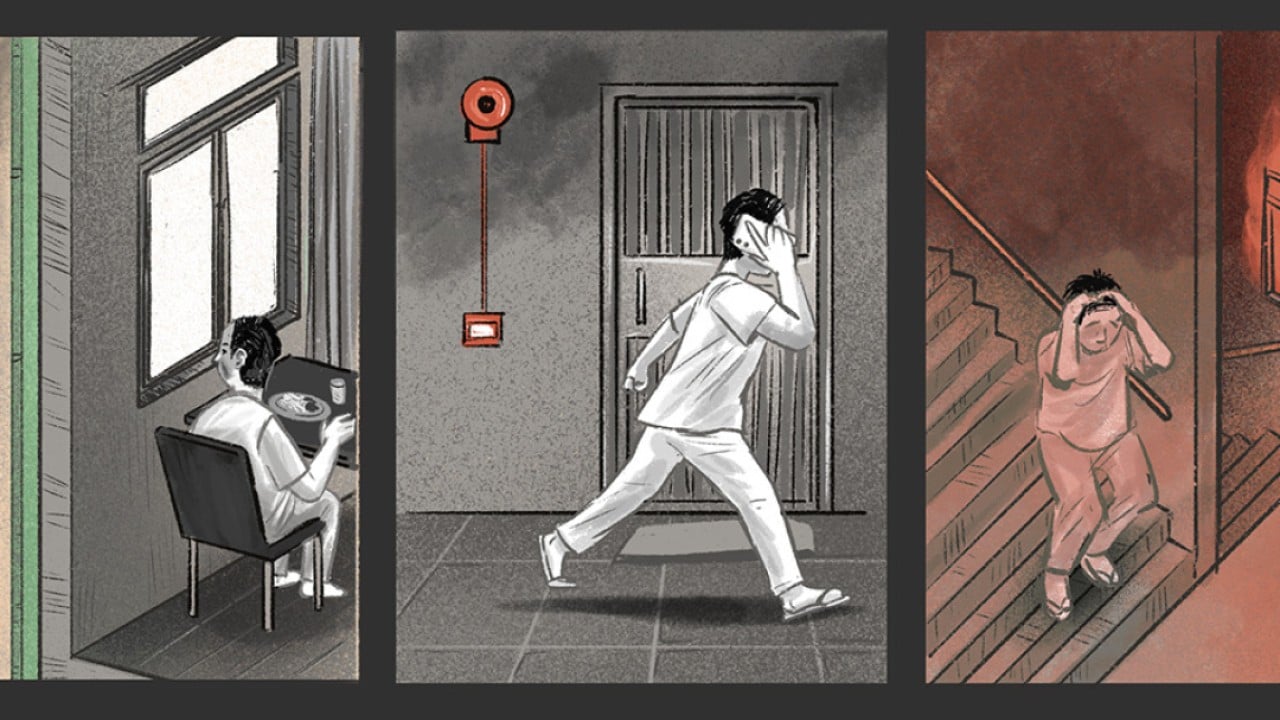
Residents inside Wang Kin House raced to pull the fire hoses from the walls and activate the manual fire alarms in the corridors. Nothing happened. The alarms didn't ring, and the water tanks for the emergency hoses were completely empty. Because the renovation project had disrupted the building's infrastructure, the internal firefighting systems were non-functional right when people needed them most.
This left the vulnerable population with essentially zero response time. Nearly 40% of the residents in this older Home Ownership Scheme estate were senior citizens over the age of 65. Thick polystyrene smoke filled the corridors, the alarms were silent, and the fire was burning into their homes from the windows. They were trapped in total darkness.
The Subsidized Housing Renovation Trap
You have to look at the economic reality of Hong Kong housing to understand why this happened. Wang Fuk Court was built in 1983. Under local laws, aging buildings are hit with mandatory building inspection notices requiring massive, multi-million dollar repair works.
These mega-renovation projects are a breeding ground for corruption. Following the Tai Po tragedy, the Independent Commission Against Corruption (ICAC) reported a massive 1.5-fold spike in building renovation corruption complaints. In fact, the project at Wang Fuk Court is tied up in a massive bid-rigging trial involving HK$700 million across multiple estates.
When contractors rig bids, they cut corners on materials, oversight, and safety to maximize their illicit profits. Residents had actually complained to the government about the poor quality of construction and workers openly smoking on the scaffolding months before the disaster. The complaints were dismissed or ignored.
Seven individuals and two companies—including the project consultant Will Power Architects and contractor Prestige Construction—now face manslaughter charges. But criminal charges won't bring back the dead.
What Must Change Immediately
If you live in or manage a high-rise residential building undergoing renovation, you cannot afford to rely on basic government compliance. You need to act to ensure your building doesn't become another Wang Fuk Court.
- Demand Material Certification Receipts: Do not just accept a visual check of safety nets. Building management committees must demand independent laboratory burn-test certifications for every batch of netting delivered to the site, not just the pieces at ground level.
- Ban Flammable Window Coverings: Under no circumstances should expanded polystyrene or unrated plastic sheeting be used to seal windows during external wall works. Demand non-combustible or fire-rated temporary protections.
- Enforce Strict Smoking Bans with Real Penalties: Workers smoking on bamboo scaffolding is a catastrophic hazard. Sites must feature mandatory designated smoking zones away from the structure, backed by immediate dismissal for violators.
- Maintain Weekly Fire System Audits: If a contractor needs to isolate a water tank or an alarm zone for renovation work, alternative safety measures—like temporary wireless alarms and on-site fire extinguishers on every floor—must be legally mandated and checked weekly.