The Grandstand Guarantee
Everyone pretends to be shocked when a local politician makes a sweeping international promise and quietly walks it back six weeks later.
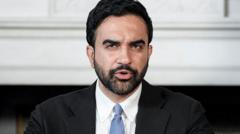
When Zohran Mamdani floated the idea of arresting Benjamin Netanyahu on New York City soil, political commentators treated it as a serious policy debate. Later, when he admitted what any first-year law student already knew—that a city official or local authority lacks the jurisdiction, federal mandate, or police powers to detain a foreign head of state—the press ran the standard playbook. Headlines decried the walkback. Pundits parsed the legal language. Critics claimed he had been forced into a corner by reality.
They missed the entire point.
This was never a legal miscalculation. It was a precise, high-yield campaign operation.
The media standard narrative treats these moments as embarrassing stumbles. In reality, modern political campaigns treat jurisdictional boundaries not as hard walls, but as free leverage. Pledging to perform an act you physically and legally cannot execute costs absolutely nothing. You harvest the outrage, capture the headlines, solidify your political base, and then invoke legal limits when it comes time to collect.
It is time to stop pretending these walkbacks are failures. They are the strategy.
The Illusion of Local Foreign Policy
For decades, political campaigns at the municipal level focused on garbage collection, public transit, property taxes, and street repairs. Those issues carry a massive liability: you can actually be measured on them. If the subway runs late or the trash piles up, voters notice.
International grandstanding carries zero performance risk.
When a city politician takes a stance on foreign diplomacy or international warrants, they enter a friction-free zone. The United States Constitution explicitly reserves foreign policy and diplomatic affairs for the executive branch and federal government under Article I and Article II. Foreign leaders traveling on diplomatic visits operate under federal protection, international treaties, and sovereign immunity frameworks enforced by the U.S. State Department and Secret Service.
Local police departments do not override federal diplomatic immunity. A mayor or assembly member cannot order local officers to intercept a foreign delegation protected by federal marshals and federal law.
MUNICIPAL JURISDICTION vs. FEDERAL FOREIGN POLICY

Local Authority:
[City Ordinances] ---> [Local Police] ---> [Municipal Courts]
* Limited to state/city boundary line. Zero jurisdiction over international treaties.

Federal Foreign Policy:
[U.S. Constitution] ---> [State Department / Secret Service] ---> [International Treaties]
* Overrides local law. Dictates diplomatic immunity and sovereign protections.
When a municipal figure claims they will arrest an international figure, they are not describing a law enforcement action. They are selling a political fantasy to an audience eager to buy it.
Why the Media Keeps Buying the Outrage
Why do news outlets cover these non-starter promises with straight faces? Because the media business model thrives on the same dynamic.
A realistic headline—Local Official Expresses Symbolic Disapproval of Foreign Leader—gets zero clicks. It generates no debate, no cable news panels, and no viral clips.
A sensational headline—Politician Pledges Local Arrest of Prime Minister—creates immediate friction. Outrage drives engagement. Opponents rush to issue press releases. Supporters share clips across social feeds. The algorithm rewards the fiction.
When the inevitable retraction arrives, the media gets a second bite at the apple. They publish the "walkback" story, framing it as a triumph of accountability over political overreach.
Both sides win. The politician gains national name recognition overnight without spending a dime on ad buys. The news outlet gets two full news cycles out of a scenario that had a zero percent chance of occurring.
The only loser is the public, who receives political theater instead of substantive debate on local issues.
The Economics of Unenforceable Promises
Look closely at how political capital operates in modern urban races.
- The Assertion: Make a dramatic claim outside your legal purview. Target a high-profile topic with strong emotional resonance.
- The Amplification: Let media outlets and online networks spread the statement. Collect donor contacts, mailing list sign-ups, and cable news appearances.
- The Pivot: When pressed by legal experts or journalists, point to statutory constraints, federal preemption, or jurisdictional boundaries.
- The Retention: Keep the attention and name recognition gained in Step 1 while surrendering nothing, because the promised action was impossible anyway.
Imagine a private company selling pre-orders for a rocket ship to Mars, taking your deposit, and then releasing a statement three months later saying, "Due to federal aviation guidelines, we actually do not have authorization to leave Earth's orbit." In the private sector, that triggers fraud investigations. In politics, it gets labeled as a nuanced policy adjustment.
The political market incentives are completely inverted. The system rewards those who promise the impossible, because the penalty for backing down due to "legal constraints" is near zero compared to the massive brand equity built during the initial news wave.
Dismantling the Excuses
Whenever this pattern repeats, defenders roll out the same set of rationalizations. Every single one collapses under basic scrutiny.
"It raises awareness for an important cause."
Awareness built on false premises produces cynical voters. When citizens discover that a promised action was legally impossible from day one, trust in public institutions drops further."They were expressing moral clarity, not legal strategy."
Words mean things, especially from those seeking executive or legislative power. Conflating moral conviction with executive authority isn't clarity; it is deliberate ambiguity designed to mislead supporters."The legal reality was complicated."
Federal preemption on foreign diplomacy isn't complicated. It is one of the most clearly defined areas of American constitutional law. Pretending it was a surprise legal hurdle is intellectually dishonest.
Stop Validating the Performance
If voters want real accountability, the response to these publicity stunts needs to change immediately.
Stop debating whether the candidate should do the impossible action. Start asking why the candidate is using non-existent powers to distract from their actual job responsibilities.
When a city leader makes an international law enforcement pledge, the follow-up question should not be "When will you do it?"
The question must be: "Which constitutional clause gives your office the authority to override federal federal jurisdiction, and if you know you lack that authority, why are you making this statement?"
Force politicians back to the arena where they actually hold power. Make them talk about zoning laws, municipal budgets, infrastructure, and local enforcement. That is where their decisions carry actual consequences—and that is precisely why so many of them prefer to talk about world affairs instead.
The walkback wasn't a mistake. It was the closing act of a scripted performance. Stop buying tickets to the show.


