A dangerous thermal anomaly is currently building across the equatorial Pacific Ocean, and global climate models are struggling to chart its trajectory. While public warnings focus on simple record-breaking temperature anomalies, the true crisis lies in the unprecedented volume of subsurface ocean heat content that traditional forecasting tools were never designed to interpret. The planet is not merely facing another strong weather pattern; it is entering an entirely new baseline where historic meteorological precedents no longer apply. This disruption threatens global supply chains, agricultural stability, and emergency management infrastructure before the event even reaches its winter peak.
The underlying mechanics of this current cycle reveal structural vulnerabilities in how the international community monitors, prices, and prepares for atmospheric volatility.
The Physics of the Pacific Heat Reservoir
To understand why the developing El Niño is defying expectations, one must look below the surface. Standard satellite monitoring focuses heavily on sea surface temperatures, yet the real engine of this event is the immense thermal reservoir concentrated between 50 and 150 meters deep in the central and eastern Pacific. Subsurface temperature anomalies in this zone have surged up to 6 degrees Celsius above historical averages. This is not a temporary surface warming driven by solar radiation, but a profound structural shift in oceanic energy distribution.
The upper ocean heat content between the Date Line and 80 degrees West is currently tracking at nearly double the levels observed during the initiation phase of the major 2023 event. Oceanographers view this deep-water energy as the primary fuel source for atmospheric disruption. When trade winds weaken, this massive volume of warm water surges eastward, suppressing the typical upwelling of cold, nutrient-rich deep water along the South American coast.
This mechanism is amplified by a steep drop in the Southern Oscillation Index, which measures pressure differentials across the Pacific. Recent readings have plummeted well into negative territory, confirming that the atmosphere has coupled with the ocean far faster than anticipated. This rapid ocean-atmosphere feedback loop means that the kinetic energy driving the system is compounding, creating a self-sustaining cycle that resists normal cooling trends.
The sheer scale of this subsurface heat reservoir ensures that even if atmospheric winds fluctuate temporarily, the foundational energy required to sustain a record-breaking event remains locked in place. The ocean acts as a massive thermal battery, and it is currently fully charged.
Why Modern Forecasting Models are Failing the Stress Test
Meteorologists rely on a combination of dynamical models, which simulate physical ocean and atmosphere interactions, and statistical models built on historical data. Both systems are currently hitting their operational limits. The core issue is that statistical models rely on the assumption that the past is a reliable guide to the present, but the baseline global ocean temperature has altered so radically that historical analogies are becoming obsolete.
The Data Gap in Historical Analogies
For decades, the super El Niño events of 1982–1983 and 1997–1998 served as the gold standards for extreme forecasting. Analysts routinely compare current pressure drops and wind anomalies to those eras to predict global impacts. However, those historical events occurred in an ocean that contained significantly less background heat than the ocean of today.
When a modern El Niño develops, it does not operate in isolation. It superimposes its warming signal onto a global marine environment that has experienced years of uninterrupted, systemic heat accumulation. Consequently, the predictive equations used to calculate how a Pacific warming event will alter the jet stream over North America or the monsoons over Asia are generating highly volatile outputs. The models are forcing old algorithms onto an unmapped environmental reality.
The Problem of Concurrent Marine Heatwaves
Outside the tropical Pacific, anomalous warming in the Indian Ocean and the North Atlantic is actively interfering with traditional global weather links. Historically, El Niño could be counted on to predictably alter wind shear patterns, suppressing Atlantic hurricane activity while shifting rain belts predictably across the Southern Hemisphere.
Today, the hyper-warmed Atlantic is resisting the traditional dampening effect of Pacific wind shear. This creates highly unpredictable, localized storm systems that catch municipal planners off guard. The models see the Pacific signals clearly, but they cannot accurately simulate how these signals will collide with concurrent, extreme marine heatwaves in entirely different oceans.
The Multi-Trillion Dollar Economic Blindspot
The economic consensus surrounding global weather patterns remains dangerously reactive. Most corporate risk assessments treat an extreme climate event as a temporary operational pause—a brief window of inflation or supply disruption followed by a rapid return to equilibrium. Historical data suggests otherwise, showing that the financial scars of a super El Niño persist for years after the physical weather patterns dissipate.
Structural Vulnerabilities in Soft Commodities
Agricultural production centers across Southeast Asia, Australia, and parts of Africa are already showing signs of stress due to shifting rainfall zones. Major crop staples including rice, sugar, and palm oil are highly sensitive to the prolonged dry spells typical of strong Pacific warming phases.
Consider a scenario where the Indonesian archipelago experiences a multi-month delay in monsoon rains. The resulting reduction in soil moisture does not merely lower that season’s harvest; it permanently damages the root systems of perennial crops and heightens regional wildfire risks that can deplete timber stock for a decade. Food production systems are optimized for narrow, historical bands of temperature and moisture. When those bands shift violently over the course of a single financial quarter, the corporate agricultural sector faces immediate liquidity crises that cannot be resolved through simple supply chain rerouting.
The Collapse of Predictable Maritime Transit
Global shipping networks are fundamentally dependent on stable hydrological baselines. The most immediate choke point exposed by altered precipitation patterns is the Panama Canal, which requires massive volumes of freshwater from inland lakes to operate its lock systems.
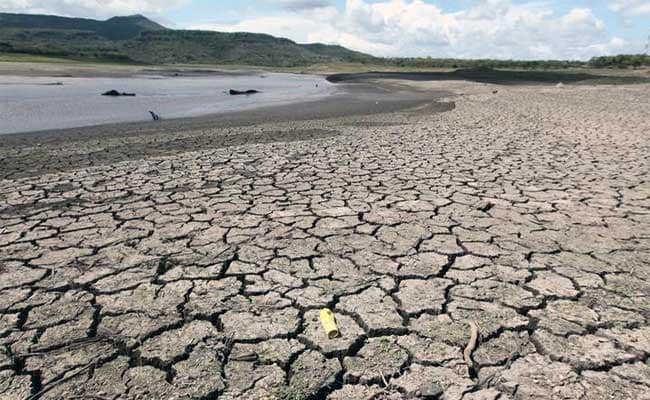
During extreme Pacific warming cycles, severe droughts across Central America drastically reduce lake levels, forcing transit authorities to place strict weight and draft limits on commercial vessels. Ships are forced to wait in extended queues or bypass the canal entirely, adding thousands of miles and millions of dollars in fuel costs to standard trade routes between Asia and the eastern United States. This structural slowdown ripples through global manufacturing just-in-time inventory strategies, driving up landing costs for consumer goods and industrial components alike.
Systemic Failures in Infrastructure Readiness
Civil infrastructure across both developed and developing nations is built on the concept of the return period. Engineers design storm drainage systems, reservoir capacities, and electrical grids to withstand events categorized as one-in-a-hundred-years occurrences. The continuous escalation of ocean-driven climate events means these statistical definitions are practically meaningless.
The Fallacy of the Urban Drainage Design
Urban centers along the western coast of the Americas are particularly vulnerable to the altered atmospheric rivers that characteristically form during strong El Niño winters. When a hyper-warmed Pacific ocean transfers vast quantities of moisture into the lower atmosphere, it creates narrow corridors of intense precipitation that can drop months of average rainfall in a matter of days.
Municipalities frequently assume that clearing local drainage channels and upgrading minor culverts will mitigate flood risks. However, the sheer volume of water delivered by these modernized atmospheric systems completely overwhelms the foundational geometry of urban concrete infrastructure. Water treatment plants, built at low elevations to utilize gravity-fed processing, face catastrophic flooding that compromises drinking water safety for millions of residents simultaneously.
The Unravelling of Public Insurance Markets
The financial mechanism designed to absorb these infrastructure shocks is showing signs of systemic failure. Property and casualty insurance providers rely on historic actuary tables to price risk and maintain capital reserves. As extreme weather events compound in frequency and severity, the predictability required to underwrite these policies vanishes.
In regions exposed to repeated cycles of drought-induced wildfires or torrential coastal flooding, private insurance capital is actively retreating. Major firms are either raising premiums beyond the reach of average property owners or exiting high-risk regional markets entirely. This leaves state-backed insurers of last resort to absorb immense financial liabilities, shifting the ultimate economic burden onto the taxpayer and creating a hidden sovereign debt risk that global financial institutions have largely ignored.
Realities of the New Thermal Baseline
The international community must abandon the idea that this upcoming climate phase is an isolated anomaly to be weathered until normalcy returns. The data from the tropical Pacific demonstrates that the underlying thermodynamic system has shifted permanently. Waiting for the ocean to cool back down to twentieth-century averages is a strategy based on a reality that no longer exists.
Industrial planning, food security strategies, and municipal asset management must transition toward dynamic risk modeling that assumes continuous environmental instability. This means decoupling corporate supply chains from historically vulnerable choke points, re-engineering urban water systems to handle unprecedented volumetric surges, and pricing financial risk based on forward-looking thermodynamic realities rather than comforting historical tables. The thermal battery in the Pacific is discharging its stored energy into the global climate system, and the window for proactive adaptation is closing faster than the models can keep up.