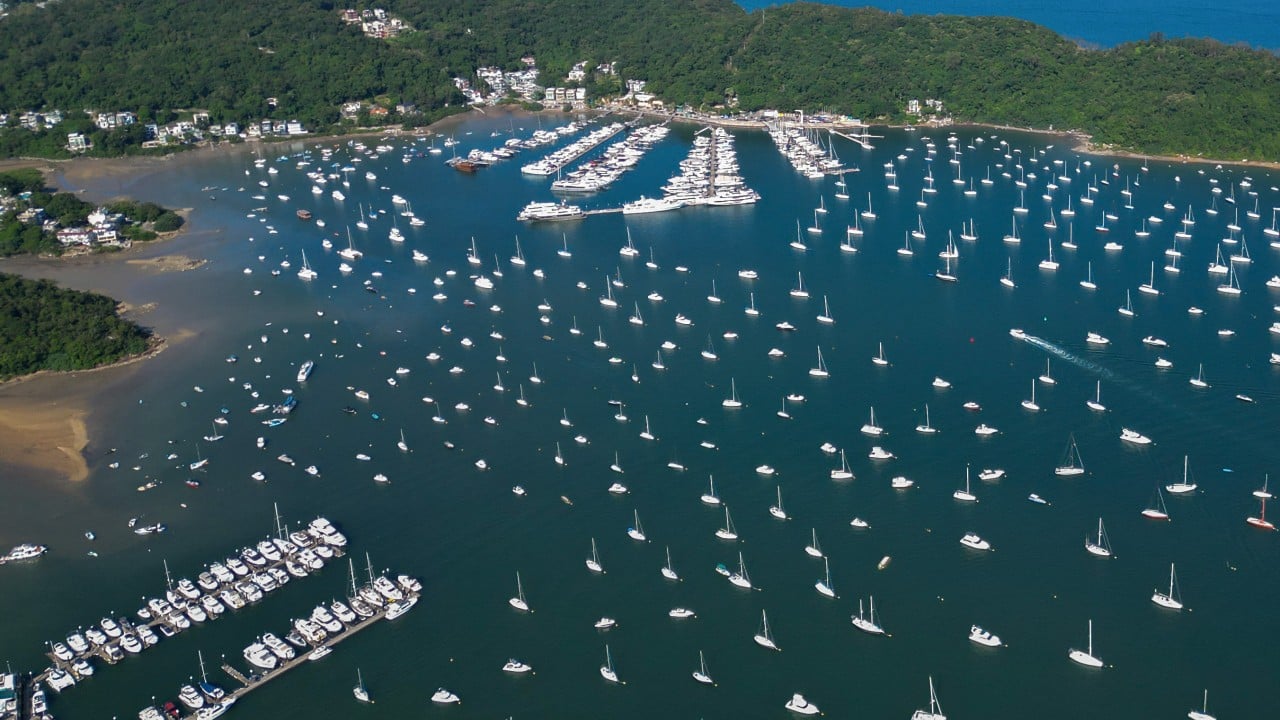
Hong Kong wants to become the Monaco of the East, but its maritime ambitions are currently choked by a crisis of its own making. The government’s recent policy push promises to inject HK$4.5 billion annually into the local economy by transforming the city into a playground for the regional ultra-wealthy. The strategy relies on expanding cross-border vessel travel within the Greater Bay Area and constructing over a thousand new berths at sites like the ex-Lamma Quarry, Aberdeen, and the Skytopia development near the airport.
The real problem isn’t a lack of ambition; it is an unsustainable structural logjam. Decades of regulatory inertia, rigid space allocation, and a severe deficit in deep-water superyacht infrastructure have turned one of the world’s finest natural harbors into a parking nightmare. Wealthy owners are discovering that buying a multi-million-dollar vessel is easy, but finding a place to park it or get it serviced locally is nearly impossible.
The Mathematical Imbalance of the Harbor
The fundamental breakdown of the city's maritime ecosystem is a simple matter of math. The Marine Department records more than 12,300 registered pleasure vessels vying for a highly restricted pool of private club berths and public moorings. The official count of dedicated, secure berths hovers well below 5,000.
This vast deficit has forced a massive portion of the local fleet into an undignified game of musical chairs. Owners are routinely forced to "street park" their high-end assets inside crowded public typhoon shelters, wedged between working cargo barges, tugboats, and traditional fishing vessels.
During the peak of the summer boating season, these shelters turn into high-stakes obstacle courses. When a typhoon warning drops, the scramble for protected water turns chaotic. Insurance premiums for vessels stationed in Hong Kong have risen sharply, reflecting the physical risks of crowded, unmanaged anchorages.
The private market offers little relief. Gaining entry to the city’s premier private yacht clubs typically requires waiting lists that span years, or purchasing secondary-market memberships that cost more than a luxury apartment in Manhattan. For international superyachts measuring over 65 meters, the situation is even more bleak. The city simply lacks the deep-water dockage, heavy-duty shore power, and dedicated crew infrastructure required to sustain these floating mansions for more than a brief visit.
The Illusion of the Borderless Bay
The centerpiece of the current economic revival strategy is the individual travel scheme, designed to allow seamless movement between Hong Kong, Macau, and the ports of Guangdong province. On paper, the "northbound and southbound" maritime flow creates a massive, unified leisure market. In reality, navigating the border remains an administrative nightmare.
A yacht crossing from mainland waters into Hong Kong faces an archaic wall of dual-bureaucracy. Despite promised electronic upgrades, captains must still navigate distinct legal systems, separate maritime codes, and clashing customs requirements.
"The operational reality of moving a vessel across the maritime boundary involves a mountain of paperwork that contradicts the very concept of leisure travel."
The mainland market presents its own unique cultural and fiscal hurdles. For years, steep import tariffs on luxury vessels deterred buyers in Guangdong. While those taxes have softened, the broader political environment across the border has shifted. The domestic crackdowns on conspicuous wealth mean that owning an ostentatious 40-meter superyacht is no longer politically prudent for mainland tycoons.
Consequently, buyer preferences have fractured. While Hong Kong buyers traditionally favored customized new-builds, the economic slowdown and a corrections cycle in the mainland real estate sector have flooded the secondary market with lightly used vessels. Brokers are dealing with a highly cautious consumer base that is intensely sensitive to asset devaluation.
The Hidden Failure of After-Sales Logistics
Building new concrete docks at the ex-Lamma Quarry or Hung Hom will not magically solve the crisis if the vessels have nowhere to go when a generator fails or a hull needs painting. Hong Kong’s maritime strategy suffers from a glaring blind spot: the complete absence of a dedicated industrial refit and maintenance district.
Superyachts are not static assets; they are complex machines requiring constant, specialized engineering. Currently, when a vessel over 50 meters requires major dry-docking or specialized warranty work, it is often forced to bypass Hong Kong entirely. Capital and jobs are migrating to competing regional hubs like Singapore, Taiwan, or European shipyards.
The city's astronomical commercial land values have systematically priced out marine service yards. Waterfront land is continually prioritized for lucrative residential towers or public parklands, leaving the maritime repair sector to squeeze into cramped, outdated plots in Tsing Yi or Ap Lei Chau.
Compounding the infrastructure deficit is a severe shortage of specialized labor. The local maritime workforce is aging rapidly. Younger generations are bypassing technical marine apprenticeships in favor of finance, tech, or traditional corporate paths. Without a concerted effort to establish certified training programs for marine engineers, composite technicians, and superyacht crew, any new marina built will merely be an expensive parking lot lacking vital operational support.
Real Reform vs. Superficial Upgrades
The Transport and Logistics Bureau has signaled relief measures, including relaxed entry rules for visiting vessels and a Dynamic Yacht Monitoring System designed to allow foreign boats to anchor without pre-booked private berths. These steps are necessary, but they represent minor policy patches rather than a true structural overhaul.
To prevent its maritime economy from sinking under the weight of regional competition, the government must abandon its piecemeal approach. If Hong Kong wants the economic windfall of a world-class yachting capital, it must treat the industry as a vital industrial sector, not a minor branch of luxury tourism.
This requires anchoring maritime zoning laws to protect working shipyards from real estate developers. It requires standardizing cross-border safety certifications so a captain can clear customs with a single digital click. Most importantly, it requires building large-scale, deep-water infrastructure that accommodates the largest superyachts in the global fleet. Until the city aligns its physical infrastructure with its grand economic policy, its dreams of dominating the luxury maritime world will remain dead in the water.