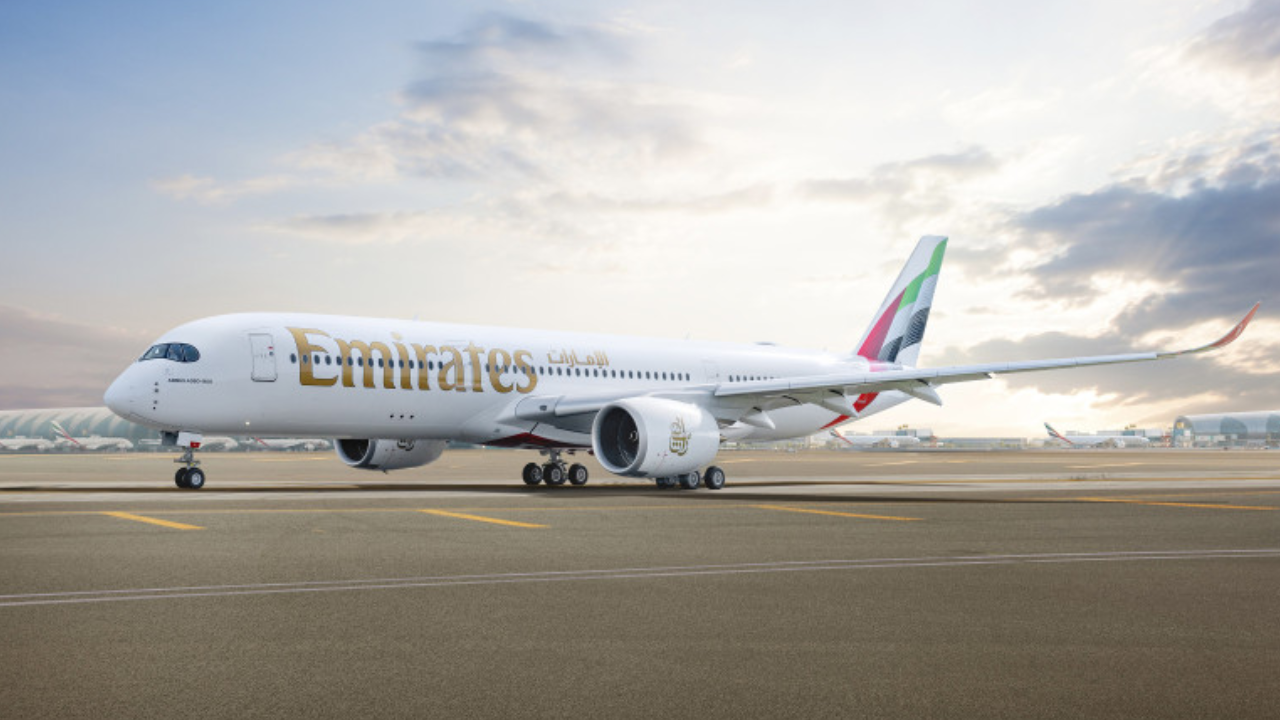
Emirates is deploying its flagship Airbus A380 to Delhi starting October 25, a move paired with a massive rollout of premium economy cabins across six major Indian gateways. While headlines present this as a standard capacity upgrade to meet rising travel demand, the underlying industry reality points to a defensive strategy against a rapidly rising Air India and a heavily constrained bilateral treaty system. By flooding the Indian market with high-yield premium inventory, the Dubai-based carrier is attempting to lock down corporate and affluent leisure travelers before domestic rivals can fully deploy their newly ordered widebody fleets.
The aviation market in India is no longer an easy playground for Gulf carriers. Air India is aggressively rebuilding under Tata ownership, inducting new Airbus A350s and Boeing 777s with vastly improved cabin products, while IndiGo prepares to take delivery of widebody aircraft for long-haul routes. Facing strict bilateral seat caps that prevent it from adding more weekly flights into India, Emirates has chosen the only logical path left to maximize revenue. It is swapping out smaller aircraft for the double-decker A380 and retrofitting existing Boeing 777s to extract higher yields from the exact same number of allocated slots.
The Bilateral Trap and the Maximization Strategy
For over a decade, the Indian government has firmly resisted calls from UAE authorities to increase the bilateral traffic rights between the two countries. The current limit stands at 65,200 seats per week for Dubai carriers. Every single seat is a precious resource. Because Emirates cannot add a fifth daily flight to Delhi, it must squeeze more revenue out of its existing four daily frequencies.
Deploying the four-class A380 on flights EK512 and EK513 accomplishes this goal precisely. The superjumbo does not just bring sheer volume. It brings a completely different tier of profitability. By standardizing the premium economy product across all four daily Delhi flights—using the A380 on one rotation and retrofitted Boeing 777s on the other three—Emirates is creating a consistent corporate travel product that local competitors will struggle to match in the short term.
The Mid Market Margin War
The expansion of premium economy to Delhi, Mumbai, Ahmedabad, Bengaluru, Kolkata, and Kochi by the end of October highlights a broader shift in Indian consumer behavior. The country is experiencing a surge in high-net-worth individuals and affluent families willing to pay a premium for comfort, yet still hesitating at the high cost of a full business class ticket.
A standard economy ticket from Delhi to New York via Dubai generates slim margins due to fierce competition from European and American airlines. Premium economy changes that dynamic completely. The physical footprint of a premium economy seat takes up only slightly more room than standard economy, but carriers can often command a fare premium of 50 to 100 percent. For Emirates, this cabin is an ideal tool to capture the rising middle-class upgrade spend across non-metro hubs like Ahmedabad and Kochi, where business class demand might fluctuate but the desire for extra legroom is constant.
The Kolkata Chess Move
The announcement also includes an uncharacteristic equipment shift for Kolkata, where Emirates will introduce its new Airbus A350 on the daily EK570 and EK571 flights starting October 25. This replaces a Boeing 777 and represents the first major deployment of the A350 into the eastern Indian market by a foreign carrier.
Kolkata has historically been viewed by international airlines as a low-yield, cargo-heavy route dominated by labor traffic and price-sensitive travelers. By introducing the A350 alongside a five-times-weekly retrofitted Boeing 777, Emirates is ensuring that all 12 weekly flights to the city offer a premium economy option. This is a direct shot at regional competitors operating single-aisle aircraft to Southeast Asian hubs, signaling that Emirates intends to dominate the premium connecting traffic out of Eastern India before Air India can establish a dominant hub presence in Delhi or Mumbai.
Retail Stores and the Physical Trust Factor
Alongside the fleet updates, Emirates has quietly opened physical travel retail stores in Delhi and Mumbai, with plans to expand into Bengaluru and Hyderabad. In an era where most legacy airlines are closing ticket offices to cut costs, opening brick-and-mortar stores seems counterintuitive.
The strategy targets the unique nature of high-value Indian travel booking. Multi-generational family vacations and complex corporate itineraries in India are still heavily influenced by face-to-face consultations and high-touch service. By establishing a physical presence in wealthy urban enclaves, Emirates is building brand equity that digital marketing alone cannot replicate, protecting its market share against digital aggregators and domestic airlines that rely almost exclusively on app-based distributions. The battle for the skies over India is no longer just about who has the cheapest seat, but who can convince the passenger to upgrade before they even arrive at the airport.