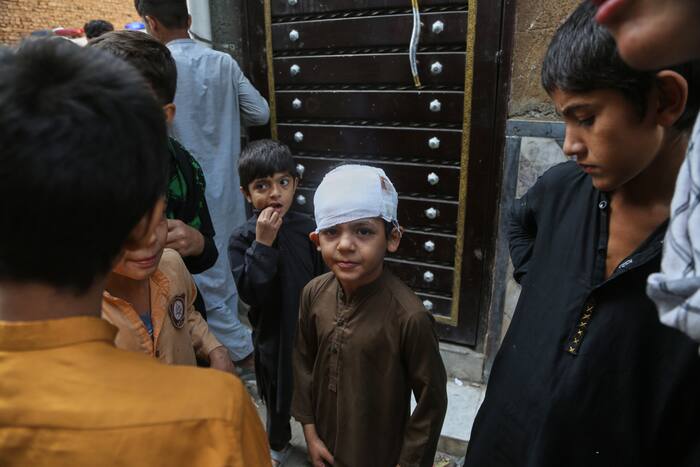
Reactive inspection sweeps ordered immediately after a fatal structural failure rarely prevent future collapses unless they dismantle the underlying incentive and enforcement defects that allowed unsafe buildings to operate in the first place. When a roof gave way at a private school in Peshawar in October 2026—killing a teacher and dozens of students—and followed a June 2026 tutoring center collapse in Lahore that killed 14 children, officials responded with familiar measures: emergency audits, district inspection committees, and public appeals asking parents to report weak buildings. Standard wire reporting captures the immediate human tragedy, grief, and official pledges, but it treats the announcement of inspections as a meaningful corrective shift rather than examining why prior warnings went unheeded and why post-disaster sweeps routinely lose momentum.
A rigorous structural and institutional diagnosis requires separating verified facts from analytical hypotheses. Known facts include the occurrence of deadly roof collapses at educational facilities in Pakistan in 2026, accounts from survivors and relatives describing visible structural warning signs or prior concerns before failure, rapid emergency response efforts at the scene, and subsequent government directives ordering inspections. Educated hypotheses—explicitly framed as analytical models rather than proven field measurements of every site—explain the causal chain linking informal urban construction, weak regulatory enforcement, asymmetric information between operators and families, and cyclical inspection waves.
Deconstructing the Standard Reporting Narrative
Conventional event reporting organizes information chronologically around tragedy, reaction, and human impact. It opens with the casualty count and grieving families, introduces official statements and inspection orders, cites past incidents such as the Lahore tutoring center collapse for historical context, and closes with survivor reflections or appeals for safety. That structure serves an essential witnessing function, yet it leaves major analytical gaps.
First, conventional reporting treats an inspection order as an output rather than testing it as an operational control. Announcing district committees or asking parents to flag unsafe buildings does not establish who conducts structural engineering assessments, what technical criteria govern closure, or how authorities fund relocation when a school is shuttered. Second, it frames pre-collapse warnings as an emotional irony ("how could I have known" or relatives saying risks were visible) rather than a predictable signal in a system with high compliance costs and low detection probability. Third, it lumps together distinct failure modes—such as unreinforced masonry or heavy roofs added onto weak load-bearing walls, incremental vertical additions, and structures under active construction—without distinguishing how each mechanism alters structural margins.
Structural Failure Mechanisms and Hidden Warning Signs
A building collapse is rarely an instantaneous event without precursors; it is typically the terminal point of progressive load-path degradation. In low-margin urban construction, structural safety depends on continuous load transfer from roof slabs or trusses through beams and walls down to foundations. When materials are substandard, curing times are rushed, or vertical loads are stacked onto walls not engineered for upper stories, stress concentrates in vulnerable elements.
Progressive Degradation Versus Sudden Rupture
Survivors and observers of compromised structures frequently describe physical cues before failure: cracking plaster, sagging or vibrating roof elements, dampness weakening mortar or reinforcement, or additions built atop existing walls. From a structural mechanics standpoint, these cues represent two distinct regimes:
- Serviceability and stiffness loss: Deflection, vibration, or fine cracking indicates that stiffness has dropped or loads are shifting unevenly across supports, even before ultimate load capacity is exhausted.
- Brittle or overload threshold breach: Unreinforced masonry, heavy brick-and-mud roof assemblies, or unverified additions carry narrow margins when dead loads increase or moisture compromises bond strength. Once applied stress exceeds local capacity, failure can propagate rapidly with minimal warning during normal occupancy.
Witness accounts of shaking walls or visible structural weakness are therefore best understood as noisy leading indicators. In operational risk management, weak signals only trigger action if someone has both the technical literacy to interpret them and the authority to halt operations before failure occurs.
Why Families Often Miss or Absorb Structural Risk
Parents choosing a neighborhood school or tutoring center operate under severe practical constraints that distort risk perception. When low-cost private schools or informal tuition centers cluster near residential blocks, proximity, affordability, perceived instructional quality, and social trust weigh heavily in daily decisions. Even when families notice worn plaster, cramped rooms, or ongoing construction, two cognitive and structural frictions blunt protective action:
- Normalization of deviance: When many neighborhood buildings show age, cracks, or makeshift extensions without collapsing on a given day, visible wear becomes normalized as ordinary local condition rather than an acute hazard.
- Principal-agent and information asymmetry: The operator captures immediate tuition revenue and avoids upfront capital expenditure on structural retrofitting or compliant premises, while parents and students bear catastrophic tail risk if the structure fails. Asking parents to report structurally weak buildings shifts a technical engineering burden onto households that lack structural diagnostics and face retaliation or disruption costs if a local school abruptly closes.
The Institutional Economics of Post-Disaster Inspection Sweeps
Why do authorities so often order sweeping inspections only after a fatal collapse, and why do those sweeps struggle to produce durable safety? Applying basic public-sector economics and control theory exposes four structural bottlenecks that recur across regulatory regimes with weak baseline enforcement.
The Enforcement Cost Function
Effective building safety requires continuous verification across the asset lifecycle: permitting at design and construction stages, periodic recertification during operation, and credible penalties for non-compliance. When municipal engineering capacity is stretched across rapid urban growth and informal settlements, routine pre-collapse inspection carries high marginal cost per verified building while yielding low visible political credit in quiet years.
After a high-casualty disaster, political salience spikes sharply. The cost function shifts temporarily: leadership faces intense public and media scrutiny, making visible action mandatory. Ordering broad inspections across districts is fast to announce and signals responsiveness, yet rapid mass sweeps often collide with scarce qualified structural engineers, ambiguous checklists, and administrative overload.
The Enforcement-Displacement Trade-Off
Strict, sudden closures of non-compliant schools create an immediate secondary crisis: displacement. If regulators shut down dozens of low-fee schools or tutoring centers overnight without providing alternative classrooms or transition pathways, thousands of children lose access to schooling or move into even less regulated spaces. Regulators face a harsh trade-off between immediate physical safety and educational continuity. Without pre-planned capacity buffers or phased remediation rules, enforcement officers face intense pressure to issue warnings, grant informal extensions, or close only the most visibly ruined sites while leaving marginal structures open.
Four Failure Modes of Reactive Inspection Campaigns
- Scope mismatch: Campaigns often focus on registered schools or public facilities while informal tutoring centers, residential conversions, and unpermitted extensions slip outside inspection rosters.
- Visual-only bias: Rapid walk-throughs without structural drawings, material testing, or load-path checks can miss concealed defects in roofs, foundations, or unpermitted upper floors.
- Unfunded remediation mandates: Telling an undercapitalized operator to "fix the building" without clear engineering standards, financing options, or timelines incentivizes cosmetic patching rather than structural correction.
- Attention decay: Once media coverage subsides and emergency committees file initial reports, routine follow-up inspections revert to baseline staffing and competing administrative priorities.
What Public Inquiries and Safety Audits Typically Overlook
When governments launch inquiries after a collapse, investigations naturally center on immediate culpability—who built the structure, who approved or ignored it, and what happened during the rescue. Accountability matters, yet focusing solely on blame obscures system-level design flaws.
A thorough institutional review must examine four operational questions rather than treating them as afterthoughts:
- Registry completeness: Does the education or municipal authority actually possess a complete, geocoded inventory of all active schools, branches, and tutoring centers—including facilities operating in mixed-use or residential buildings?
- Tiered triage criteria: Are buildings sorted into clear risk tiers—immediate evacuation and closure, restricted occupancy with engineering stabilization, or minor maintenance—so scarce engineering hours go to the highest-consequence hazards first?
- Chain of sign-off: Which agency verifies structural fitness before a license or registration is granted or renewed, and is there an independent check separating commercial licensing from safety clearance?
- Post-order verification: When an inspection flags a defect or orders a closure, who verifies that the structure actually stays vacated or properly remediated sixty and one hundred eighty days later?
Limitations of Inspection-Led Safety Strategies
Even well-designed inspection programs have hard operational limits. An inspection is a point-in-time audit, not a permanent guarantee of structural integrity. Extreme weather, groundwater shifts, adjacent excavation, unmonitored renovations, or gradual material fatigue can alter risk profiles between inspection cycles.
Furthermore, inspections alone cannot solve underlying economic constraints. Where building codes are complex or expensive relative to local incomes and school fee structures, pure enforcement without practical compliance pathways risks driving operators further underground. A realistic safety strategy treats inspections as one component inside a broader risk-control system, recognizing that no checklist eliminates tail risk entirely.
A Tactical Framework for Moving From Reaction to Control
To turn post-collapse inspection orders into durable risk reduction, authorities and institutional planners need a sequenced operating model rather than a one-off sweep:
- Build a unified facility registry: Consolidate education department records, municipal tax and building records, and local surveys into a single live registry covering schools and tutoring centers, flagging unverified or recently modified buildings.
- Deploy a two-stage triage protocol: Use a standardized rapid screening checklist first to separate buildings requiring immediate closure or load reduction from those needing detailed engineering evaluation, preventing bottlenecks at the structural engineer level.
- Tie registration and renewal to verified safety status: Require documented structural clearance—scaled appropriately to building height, occupancy, and construction type—as a gating condition for operating approval rather than an optional post-incident exercise.
- Establish rapid relocation and remediation tracks: Pair closure orders with pre-designated swing spaces, double-shift hosting in safe public or private facilities, and clear technical remediation standards so safety enforcement does not permanently sever children's schooling.
- Audit closure compliance on fixed intervals: Institute mandatory follow-up checks on every red-tagged or shuttered site to ensure orders are enforced in practice rather than existing only on paper.
The decisive strategic play is to convert emergency post-collapse inspection drives into a permanent, risk-tiered licensing and triage system backed by mandatory closure-verification audits. Without binding registration gates, rapid risk triage, and follow-up enforcement after public attention fades, post-disaster inspection orders will remain temporary political responses to preventable structural failures.
Peshawar School Roof Collapse: What did Witnesses and Rescue Officials see?
This video provides visual context from the Peshawar school roof collapse aftermath and witness accounts discussed in the analysis.