Two hundred and forty million dollars is a number so vast it loses its edges. You cannot hold it in your hands, and if you tried to stack it in crisp hundred-dollar bills, the pile would rise nearly eight hundred feet into the air, taller than the Space Needle overlooking the Seattle skyline where the money first began to take shape.
For decades, big philanthropy operated like a gilded fortress. Wealthy donors built endowments meant to last forever, parking billions in tax-advantaged vaults and doling out five percent a year while the principal quietly swelled in the background. It was safe. It was institutional. It was painfully slow. For a closer look into this area, we suggest: this related article.
And then, something broke.
Consider a hypothetical founder named Elena. Let us place her in a cramped, fluorescent-lit office in Austin, Texas, staring at a spreadsheet that refuses to balance. Elena runs a grassroots maternal health clinic serving low-income mothers—women who routinely slip through the cracks of a fractured healthcare system. She has data proving her program reduces emergency room visits by forty percent. She has testimonials from mothers whose lives she literally saved. What she does not have is three years to wait for a traditional foundation to review her sixty-page grant proposal, demand an external audit, and eventually wire fifty thousand dollars restricted strictly to "programmatic overhead." By the time that check clears, Elena’s doors will be locked. To get more information on the matter, comprehensive analysis can also be found at MarketWatch.
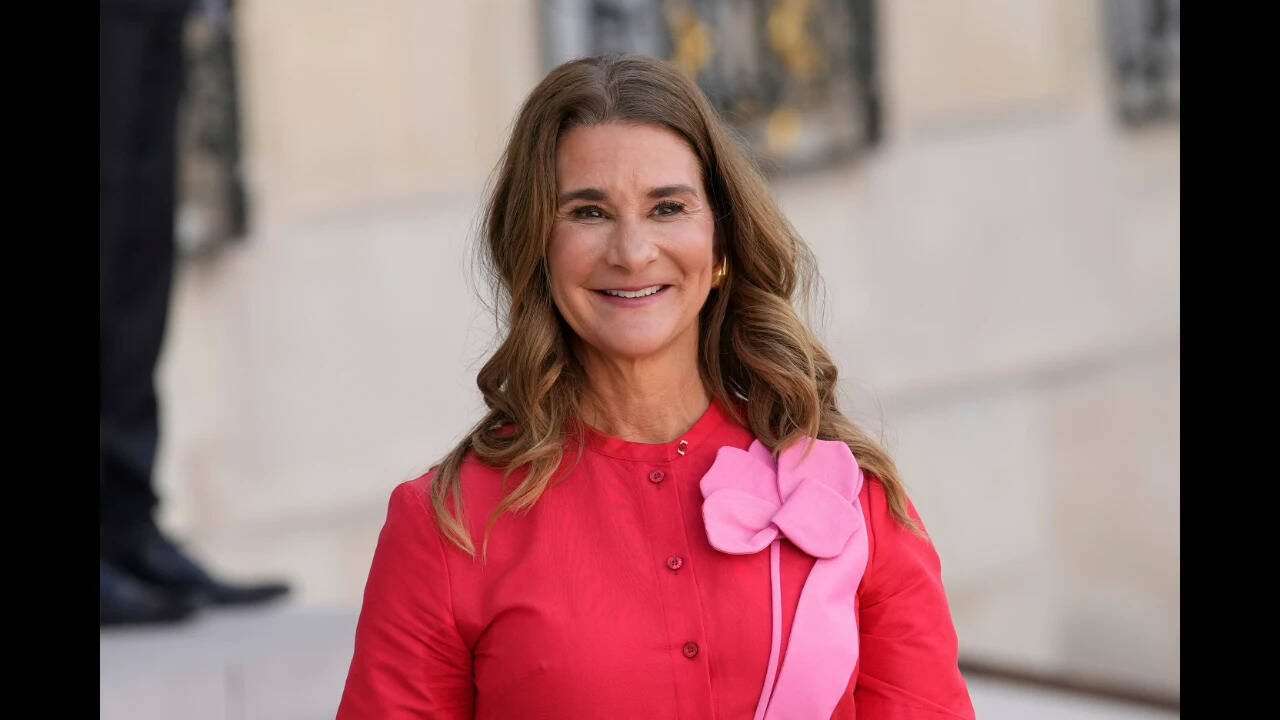
That friction—the lethal gap between urgent human need and sluggish institutional charity—is the invisible villain of modern giving. When Melinda French Gates announced in May 2024 that she was stepping down from the Bill & Melinda Gates Foundation and committing one billion dollars of her own capital to advance women and families globally, the headlines focused on the sheer scale of the divorce settlement and the dramatic split from her former husband’s legacy. Inside that billion-dollar pledge sat a very specific, radical experiment: a $240 million fund designed to move at the speed of trust.
Now, the receipts are in. According to a comprehensive new progress report from her organization, Pivotal, nearly every single dollar of that $240 million fund has already been distributed.
Stop and appreciate how abnormal that is. In the rarefied air of mega-philanthropy, moving a quarter of a billion dollars out the door in roughly two years without building a sprawling bureaucratic empire is practically unheard of. It is the financial equivalent of tearing down a Victorian mansion and building a high-speed rail line in a single afternoon.
The Architecture of a Broken System
To understand why this report matters, you have to understand how traditional charity quietly starves the very people it claims to feed.
I spent years working adjacent to nonprofit boards, watching brilliant, exhausted executives burn forty percent of their waking hours chasing phantom dollars. You sit in boardrooms smelling of stale coffee and expensive cologne, listening to program officers ask frontline workers to quantify human dignity on a quarterly basis. "How many units of empowerment did you deliver in Q3?" No one uses those exact words, of course, though they might as well. The underlying message is always the same: We have the money, we have the wisdom, and you must prove you will not waste our generosity.
Historically, women and girls have absorbed the worst of this patronizing gatekeeping. Despite making up half the global population, organizations dedicated specifically to women and girls receive less than two percent of all charitable giving in the United States. Two percent. Think about that number the next time someone tells you the market naturally corrects for inequality. When female founders pitch venture capitalists, they receive roughly two percent of funding. When female-led nonprofits pitch philanthropists, they get the exact same sliver of the pie. The bias is baked into the concrete of the financial system.
Melinda French Gates saw this arithmetic up close for twenty years. While co-chairing one of the largest private foundations on earth, she traveled to rural clinics in India, maternal wards in Sub-Saharan Africa, and community centers in the American South. She realized that writing checks for vaccines and agricultural seeds only solved half the equation. If a woman cannot own land, cannot open a bank account without a male relative's signature, cannot access reproductive healthcare, or cannot find affordable childcare, every other intervention hits a ceiling.
Power does not trickle down. It has to be handed over.
How the $240 Million Actually Moved
The genius of the $240 million fund—officially titled the Action for Women’s Health initiative—was not just the size of the pot, nor even the speed at which it emptied. It was the mechanism of delivery.
Instead of hiring an army of internal consultants to hand-pick winners from an ivory tower, Pivotal tapped a global network of twelve trusted leaders and organizations already embedded in the trenches. People like former New Zealand Prime Minister Jacinda Ardern, filmmaker Ava DuVernay, and reproductive justice pioneer Loretta Ross were each given $20 million to distribute directly to the organizations they believed were doing the most vital work.
Pause and think about what happens when you hand Loretta Ross or Jacinda Ardern twenty million dollars and tell them, You know the terrain better than we do; go fund the people saving lives.
You bypass the cold-call purgatory. You eliminate the exhausting dog-and-pony show where small organizations have to hire expensive grant writers just to translate their community work into philanthropic jargon. Because these twelve leaders already possessed deep, lived proximity to the problems, they knew who was actually moving the needle and who was merely good at PowerPoint presentations.
The resulting capital flowed into more than eighty organizations across the globe, spanning maternal mortality, mental health, chronic illness, and reproductive freedom. Crucially, the money arrived largely as general operating support.
For anyone who has never managed a nonprofit budget, "general operating support" sounds like dry accounting terminology. In reality, it is oxygen. Most mega-donors hate paying for rent, electricity, laptops, or competitive salaries for social workers; they want their names on shiny new wings of hospitals or specific, measurable initiatives. General operating support says to a leader on the ground: You are the expert. Buy the laptops. Pay your staff a living wage. Keep the lights on.
The Invisible Stakes of Speed
Money moves differently when it is unshackled from ego.
Return to our hypothetical clinic director, Elena, in Austin. Imagine the phone rings on a Tuesday morning. There was no six-month vetting process, no site visit from an evaluator flying in from Seattle on a private jet. Instead, a leader who has spent thirty years fighting for reproductive justice says, "We have been watching your work. Here is two million dollars. Use it however you need to keep mothers alive."
Suddenly, Elena is not spending seventy hours a week begging for five-thousand-dollar sponsorships. She hires two bilingual nurse practitioners. She establishes an emergency transportation fund so pregnant patients in rural counties do not miss prenatal appointments because their car broke down. She sleeps eight hours for the first time in three years.
Multiply that exact ripple effect across eighty-plus organizations on multiple continents, and the cold statistics of the Pivotal report begin to pulse with heat.
Yet, it would be naive to pretend this model is magic or entirely without risk. Trust-based philanthropy is terrifying to traditionalists precisely because it surrenders control. When you give away $240 million rapidly without micromanaging every receipt, some bets will inevitably underperform. A program might stumble. A local political shift might stall an initiative. Critics from the old guard love to point to those rare missteps as proof that strict oversight is necessary.
They miss the larger math. When you hoard capital in an endowment waiting for a risk-free investment, the cost of inaction is measured in human lives lost today. Holding onto money while a crisis burns is not prudence; it is a choice to let people suffer while your portfolio compounds.
The Shift in the Philanthropic Tectonic Plates
Look closely at what is happening among the ultra-wealthy right now, and you can see a quiet civil war playing out over the soul of charity.
On one side sits the Carnegie-Rockefeller tradition: build an immortal institution, attach your surname to it, and let future generations manage the legacy indefinitely. On the other side stands a growing insurgency led by figures like MacKenzie Scott and Melinda French Gates—women who walked away from historic marriages with historic fortunes and immediately began dismantling the traditional playbook.
MacKenzie Scott has given away over nineteen billion dollars in a handful of years using a similar no-strings-attached philosophy, astonishing small colleges, food banks, and domestic violence shelters with surprise gifts that arrive without warning. French Gates is executing a more targeted, thematic version of that same rebellion. By committing one billion dollars through 2026 and draining the $240 million Action for Women's Health fund almost completely ahead of schedule, she is proving that massive capital deployment does not require massive bureaucracy.
There is a vulnerability in this approach that deserves recognition. Stepping away from the Gates Foundation meant walking away from an institution she spent a quarter-century building—an organization with unmatched global clout, direct lines to heads of state, and armies of researchers. Going solo meant trading institutional immortality for immediate velocity. It meant admitting that the old way, the way she herself helped pioneer, was no longer fast enough for the emergencies staring women in the face right now.
Few powerful people ever admit their past methods were too slow. Fewer still put a quarter of a billion dollars on the table to prove they have learned a better way.
What Happens When the Vaults Empty
As the Pivotal report circulates through financial circles and nonprofit boardrooms this week, the real story is not found in the accounting ledgers. The real story is the pressure this puts on every other billionaire sitting on a dragon’s hoard of unrealized capital gains.
For years, the excuse for hoarding wealth in perpetual foundations was capacity: We simply cannot vet worthy organizations fast enough to give away billions safely.
Melinda French Gates just demolished that alibi. By delegating trust to twelve proven leaders and empowering them to move $240 million directly to the front lines, she demonstrated that the bottleneck was never a lack of worthy recipients. The bottleneck was always the donors' refusal to let go of the steering wheel.
Outside that hypothetical clinic in Austin, the afternoon sun drops low, casting long shadows across the parking lot. Inside, the waiting room is full. Nobody sitting in those plastic chairs knows the name of the fund that paid for the ultrasound machine in the back room, and none of them have read a single page of a philanthropic impact report. They only know that when they walked through the door, terrified and out of options, someone was there to catch them.