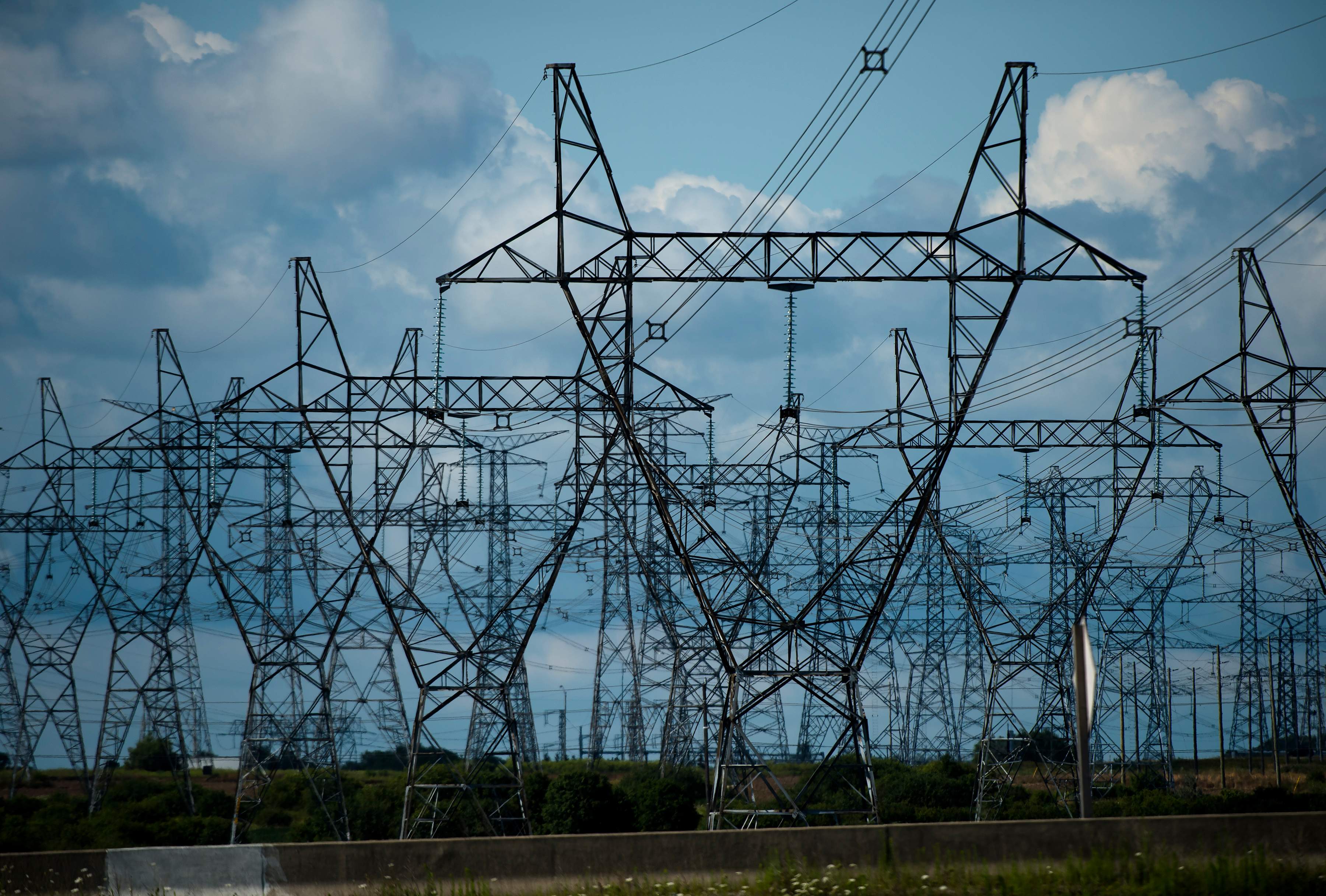
Silence. That is the first thing you notice when a massive server warehouse sits half a mile from your porch, except it is not silence at all. It is a low, unrelenting hum that vibrates in your teeth at two in the morning, a mechanical pulse that never takes a day off because the machines inside never sleep.
I have spent years reporting on infrastructure and sitting through municipal council meetings where residents lean into microphones with trembling hands, asking simple questions that suddenly feel revolutionary. Who pays when the grid strains? Where does the water go? Why did we find out about this from a zoning notice taped to a utility pole?
Across Ontario, artificial intelligence data centres have stopped being abstract cloud servers floating somewhere in the ether. They have become heavy, concrete-and-steel realities landing squarely inside municipal election debates. When voters went to the polls in Ontario's October 26 municipal elections, and as legal challenges and provincial debates have rolled into November, a quiet revolt has been taking shape in suburbs and industrial corridors from Mississauga and Oakville to Hamilton and Toronto. Citizens are not merely debating bylaws. They are asking who gets to decide what their neighborhoods become.
A Neighbor's Kitchen Table
To see how this feels on the ground, let's look at a hypothetical scenario grounded in real Ontario zoning battles. Picture Elena, a retired high school chemistry teacher living on a quiet cul-de-sac near the edge of Mississauga, not far from former farmland along Tenth Line and Argentia Road. Elena has lived in the same brick bungalow for twenty-eight years. She knows the sound of the school bus at 7:40 a.m., the smell of damp maple leaves in October, and the exact pressure of the tap water when she fills her kettle.
One Tuesday evening, Elena opens a flyer from a local resident group. A multi-storey AI data centre is proposed nearby, a facility that would pull massive blocks of electricity—potentially ten megawatts or more—and require round-the-clock cooling. Elena is not anti-technology. She uses her tablet to video-call her grandson in Ottawa and checks weather radar before morning walks. Yet sitting at her kitchen table, staring at a map of feeder lines and cooling towers, she feels an unfamiliar knot in her stomach.
Nobody came to her door to ask. No one explained how a building full of processors might affect local electricity rates, strain municipal water mains, or warm the air outside her back fence. To Elena, the proposal does not look like "the future of innovation." It looks like an uninvited guest who plans to drink from the well, flip every breaker in the house, and leave the bill on the counter.
That reaction is why municipal councils across Ontario have found themselves caught in a tug-of-war between global capital and local trust.
Why Ontario Became a Magnet
If you want to understand why AI data centres are targeting Ontario right now, think of the province like a cold, well-lit pantry stocked with everything a hungry chef needs. First, there is electricity—comparatively clean generation and a grid that has long anchored industrial growth. Second, there is climate: cooler temperatures reduce the baseline effort required to keep hardware from cooking itself. Third, there is geography: proximity to the Great Lakes gives the region a psychological and physical association with water abundance, even when local municipal systems have finite capacity.
Provincial leaders have moved quickly to court that investment. In August 2026, Premier Doug Ford's government rolled out Ontario's Data Centre Playbook as part of a broader push toward an AI industrial strategy, aiming to attract economic growth, keep more data on Canadian soil, and attach expectations around community benefits. Provincial officials have stated that proposals have been flowing in since the playbook arrived, and ministers have emphasized that data centre operators will be expected to cover their full electricity costs and meet provincial water and environmental rules.
Yet promises on paper do not automatically calm people sitting in council chambers. The province has already signaled that proposed data centre builds could represent roughly 30 percent of Ontario's current peak electricity demand. When power demand spikes on hot summer afternoons or freezing winter evenings, grids often lean on natural gas plants to bridge the gap. Suddenly, a digital query sent from a phone or laptop connects through copper and high-voltage lines to a real smokestack and a real household utility bill.
The Invisible Thirst Behind the Cloud
We like to imagine the internet as weightless. A metaphor helps here: calling the cloud "weightless" is like calling a cruise ship "a breeze" because you only see the whitecaps and never the engine room below deck.
Inside an AI data centre, thousands of specialized chips run continuously, turning electrical energy into intense heat. Left unchecked, that heat would warp circuit boards and shut down operations in minutes. Cooling those racks requires either heavy electrical air-handling systems or water-based cooling loops. In evaporative cooling systems, water absorbs heat from the facility and much of it evaporates into the atmosphere rather than returning directly to the local watershed. Even a mid-sized data centre can consume roughly 1.13 million litres of water per day—comparable to the daily water use of about 5,000 Canadians—and larger complexes can require hundreds of millions of litres annually.
Let's be honest about how confusing this gets. Even energy engineers and municipal planners sometimes wrestle with trade-offs where fixing one bottleneck creates another. A closed-loop or air-cooled design may save municipal drinking water, yet draw more electricity from the grid. A water-cooled design may ease immediate electrical strain during peak hours, yet raise questions about long-term watershed draw and wastewater treatment.
I do not pretend these trade-offs are simple to balance. Anyone who tells you there is zero friction between building massive compute clusters and protecting local infrastructure is selling a fairy tale. The real question is not whether physics exists—it does, and it is stubborn—but whether everyday residents get a say before the concrete is poured.
City Halls at a Crossroads
Across Ontario, local leaders have answered that question in strikingly different ways.
In Mississauga and Oakville, councils moved to enact one-year pauses—interim control bylaws—giving staff and residents breathing room to examine land use, power draw, water impacts, noise, and local rules before approving major new data centres. In Mississauga, the pause targeted facilities drawing more than 10 megawatts from the grid while the city studied planning implications. Not everyone welcomed the brake pedal: developers such as Prologis and Montcrest Asset Management filed appeals with the Ontario Land Tribunal, arguing the temporary freeze overreached municipal planning authority and unfairly stalled projects on designated land.
Elsewhere, the votes went differently. Hamilton council rejected a one-year pause in a split vote after intense debate over economic opportunity versus local safeguards. Toronto took a different route still, opting against a blanket moratorium in favor of tighter oversight and city-wide review as candidates and councillors weighed investment against infrastructure pressures.
Meanwhile, provincial voices have also collided over how much authority local communities should hold. Premier Ford has resisted calls for a province-wide ban, saying he does not want to force data centres on unwilling municipalities, while opposition leaders like NDP leader Marit Stiles have pushed for a broader provincial moratorium and Green Party leader Mike Schreiner has pointed to local pushback from Mississauga and Oakville to Hamilton and Sault Ste. Marie as proof that residents want control over their communities.
Look beyond Ontario's borders and you see the exact same fault line cracking open. In the November 2026 U.S. midterm elections, local ballot measures limiting or blocking data centres passed in 40 out of 41 contests across ten states, driven by voters worried about power bills, land, and quality of life. That wave does not mean Ontario has to slam every door shut. It does prove that when communities feel sidelined, backlash arrives fast and loud.
| Municipal Approach | What It Looks Like in Practice | Core Tension at Stake |
|---|---|---|
| Temporary Pause (Moratorium) | Freezing new large data centre approvals for up to a year while studying zoning, water, noise, and grid impacts. | Protects planning time and public trust, but invites developer appeals and delays investment. |
| Targeted Oversight Without Freeze | Allowing compliant projects to proceed while tightening review rules, siting conditions, and transparency. | Keeps economic momentum moving, though critics worry rules may lag behind massive power demands. |
| Pro-Growth Fast Track | Prioritizing rapid industrial siting to capture investment, tax base, and sovereign compute capacity. | Attracts capital and jobs quickly, yet risks fierce neighborhood pushback if infrastructure costs feel shifted. |
What Voters Are Really Asking For
When residents show up at municipal meetings and demand that politicians "call them out" or slow down, they are rarely asking to live in a cave. Most people want reliable internet, modern healthcare tools, and a healthy economy.
What they are pushing back against is a familiar pattern in growth politics: private upside concentrated in boardrooms and balance sheets, while public costs—grid upgrades, strained water systems, hums across quiet streets, and disappearing industrial or agricultural land—get spread across ratepayers.
Consider what happens next when a municipality sets clear ground rules upfront:
- Transparent resource accounting: Requiring clear public numbers on projected megawatts, peak load behavior, and daily or annual water consumption before zoning approval, not after.
- Ring-fenced energy and water costs: Ensuring ratepayers do not subsidize transmission upgrades or municipal water main expansions needed solely for hyperscale facilities.
- Smart thermal and water design: Favoring closed-loop cooling, non-potable water where appropriate, and waste-heat recovery—such as warming nearby buildings or greenhouses—rather than wasteful once-through or high-evaporation designs.
- Honest neighborhood consultation: Holding plain-language public briefings early enough that residents can shape conditions rather than just react to a done deal.
History has shown this movie before with highways, refineries, and big-box distribution hubs. Whenever growth arrives without consent, resentment hardens. Whenever rules are transparent, enforceable, and fair to households, communities can absorb big change without losing their footing.
Elena, back in our hypothetical Mississauga cul-de-sac, does not need a complicated slide deck to know what fairness looks like. She wants a council that listens before a crane arrives, a grid that stays steady when a heatwave hits, and a neighborhood where the loudest sound at night is still the wind in the trees.
The machines humming inside a data centre may run on silicon and code, yet the decisions that place them on our map are made by flesh-and-blood people casting votes, writing bylaws, and deciding what kind of home they refuse to trade away.