Cold.
That is the first thing you notice when the grid goes down in a northern winter, long before the sirens even finish echoing off concrete apartment blocks. You feel it in your fingertips while you try to strike a match. You hear it in the sudden silence of a refrigerator that has stopped humming. You see it in your neighbor’s breath hanging in a dim stairwell while a child tries to read a picture book by the pale glow of a dying phone battery.
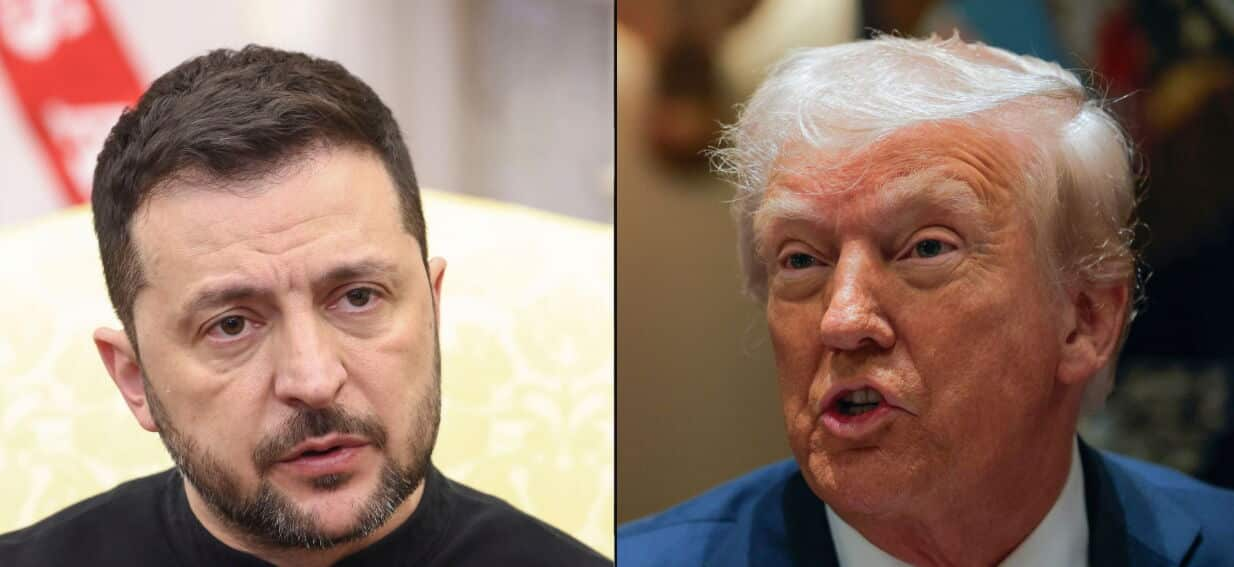
When Volodymyr Zelenskyy accuses Donald Trump of choosing the wrong side of history as relations between Kyiv and Washington fray, most headlines treat the clash like a scoreboard update. They count sharp quotes. They tally diplomatic snubs. They reduce a collision of survival and transactional statecraft to a few soundbites on a cable news ticker.
Soundbites do not keep a boiler running at ten degrees below zero.
I have spent enough time around conflict zones and policy rooms to know how dangerous it is when big geopolitical abstractions drift away from human bodies. To be completely honest with you, watching two powerful leaders trade public warnings about history can feel dizzying, even exhausting. One camp insists that endless open-ended commitments are unsustainable and that hard-nosed negotiation is the only way to stop the bleeding. The other camp argues that bowing to aggression or trading away sovereignty invites a far wider catastrophe. Both claims sound plausible at thirty thousand feet. Down on the ground, someone has to bury the dead while arguing over the terms of survival.
To understand why those words—side of history—carry such lethal weight right now, we have to look past the press conferences and examine what a frayed alliance actually costs in real time.
When Diplomacy Turns Into a Ledger
Diplomacy has always been a tug-of-war between principle and interest. Still, there is a vast difference between tough bargaining and treating a sovereign nation’s existence like a distressed asset on a balance sheet.
In Trump’s worldview, foreign policy frequently looks like a high-stakes real estate deal. Costs are itemized. Burden-sharing is demanded upfront. Traditional alliances are questioned if the perceived return on investment looks lopsided. Supporters of that approach see a leader willing to say out loud what other politicians whisper behind closed doors: that American resources are finite, that domestic priorities matter, and that protracted wars drain wealth and attention.
Now consider a hypothetical character to ground this tension—let’s call him Marek, a logistics coordinator in eastern Ukraine who spends his nights routing generators, medical supplies, and winter gear toward front-line towns. Marek is entirely fictional, created here to illustrate a very real operational bottleneck. When Washington and Kyiv clash publicly, Marek does not experience the dispute as a philosophical debate over realism versus idealism. He experiences it as a spreadsheet of missing parts. A shipment delayed by political friction means an air-defense battery runs low on interceptors. A cooling relationship means a repair crew waits three extra days for replacement transformers after a missile strike.
That is the invisible stake behind every sharp exchange between Zelenskyy and Trump. A diplomatic chill is not just a mood shift in capitals; it is friction transmitted directly into supply chains, morale, and air-defense coverage.
When Zelenskyy warns that a partner risks landing on the wrong side of history, he is not quoting a dusty textbook. He is making a moral and strategic indictment. In his framing, history is not a passive archive written after the dust settles. History is a court of judgment that watches how great powers act when a smaller neighbor is fighting to remain free.
The Weight of Words Spoken Under Fire
Why do leaders reach for phrases like "side of history" when talks sour?
Because ordinary diplomatic language has already failed to bridge the gap.
When two sides share basic assumptions—about territorial integrity, deterrence, or the trustworthiness of an aggressor—they can argue over tactics. They can haggle over timelines, weapon systems, or peace-proposal sequencing. Once those foundational assumptions fracture, rhetoric escalates because each leader is trying to define what reality actually is.
Think of it like two passengers in a car arguing over whether the driver is steering toward safety or toward a cliff. One sees a sharp turn meant to avoid a ditch; the other sees the guardrail giving way. Raising your voice does not fix the steering, yet people raise their voices anyway because silence feels like surrender.
For Zelenskyy, speaking bluntly is also a survival tool. A wartime leader cannot afford to look meek while asking citizens and soldiers to endure another brutal year. If his nation’s primary backer signals skepticism, pressure for concessions, or impatience with Kyiv’s terms, public pushback becomes a way to rally domestic resolve and remind global allies that appeasing an expansionist power rarely buys durable peace.
Yet public confrontation carries a sharp risk of its own. Alienating a decisive partner—especially one whose weapons, intelligence, and economic clout shape the battlefield and any eventual negotiating table—can shrink Kyiv’s room to maneuver. Even when a leader is right on principle, politics still operates on leverage.
Looking Back Before Judging the Present
History does not repeat itself like a script, though human habits rhyme with unsettling regularity.
Consider the Munich Agreement of 1938, when major powers sought peace by conceding territory in Czechoslovakia in hopes of averting a broader war. Those architects believed they were being pragmatic. History judged them harshly because the concession did not satisfy the aggressor; it whetted an appetite and weakened future defenses.
Now compare that with the 1956 Suez Crisis, when Washington broke with close allies Britain and France over an intervention in Egypt. There, American pressure reined in a move that risked alienating wider global opinion and destabilizing the region further.
History punishes both blindness and overreach. That is why invoking history is a double-edged sword. Every side claims the moral high ground before the verdict is complete. A policy that looks like hard-headed realism in one decade can look like shortsighted abandonment in the next—or, conversely, an open-ended commitment that felt noble at the start can become a quagmire if no clear strategic end state exists.
Let’s introduce another hypothetical figure to bring that ambiguity closer to home: Elena, a mid-level analyst in a European ministry who tracks energy security and defense industrial capacity. Elena is hypothetical, drawn to reflect the quiet anxieties of officials trying to plan five years ahead. Her greatest fear is not a single dramatic speech. Her greatest fear is strategic drift—a world where allies stop trusting one another’s commitments, where deterrence erodes piece by piece, and where smaller nations conclude that international law is just decoration.
When relations between Trump and Zelenskyy fray, Elena’s worry sharpens. Europe alone cannot easily replace every gap left by American hesitation, especially when its own defense stockpiles and political coalitions are stretched thin.
What Is Actually at Stake Beneath the Headlines
Strip away the personalities and the theatrical flourishes, and four concrete pressures define this moment:
- Leverage at the negotiating table: Any eventual settlement—whether a ceasefire, a frozen line, or a broader security arrangement—depends heavily on who holds leverage. A fractured front between Kyiv and Washington signals division that adversaries can exploit.
- Credibility of alliances: Allies around the world watch how the United States treats partners under pressure. Reliability is hard to build and fast to lose.
- Domestic fatigue and resource limits: Skepticism in the U.S. about endless foreign entanglements is not manufactured out of thin air; many voters genuinely worry about inflation, housing costs, and national debt at home.
- Human survival on the ground: For civilians living under drone alerts and power rationing, diplomatic friction translates directly into risk to life, home, and future.
Notice how none of these four pressures disappears just because someone wins a rhetorical point. A sharp quote can energize a base or rally supporters for an afternoon. It cannot conjure air-defense batteries out of thin air, erase domestic economic strain, or calm a nervous ally.
Why Both Sides Miss Part of the Picture
Here is the uncomfortable truth that partisan commentary rarely admits: both perspectives contain a piece of reality that the other ignores.
If you listen only to critics who fault Trump for straining ties with Zelenskyy, you can overlook a legitimate question about long-term strategy: how does a protracted war of attrition end without ruinous cost, and what happens if aid flows without a clear path to sustainable security? Ignoring voter fatigue or pretending resources have no ceiling does not make a strategy stronger.
Conversely, if you listen only to arguments that dismiss Zelenskyy’s warnings as ingratitude or posturing, you risk missing the central moral and strategic hazard of letting an invasion succeed through exhaustion. Rewarding force with territorial gain teaches every ambitious power on earth that borders can be redrawn if you wait out your opponent’s backers.
A frayed relationship between a beleaguered state and a superpower is rarely just a misunderstanding. Usually, it is a clash of timelines and priorities. One side is fighting for national survival today. The other is weighing global power, domestic politics, and future risks tomorrow.
When those clocks fall out of sync, friction is almost guaranteed.
The Verdict Nobody Can Rush
Nobody gets to write the final chapter of a conflict while the shooting is still happening.
Zelenskyy’s accusation that Trump is choosing the wrong side of history is a challenge aimed straight at legacy, conscience, and power. Trump’s pushback is a challenge aimed at conventional orthodoxy, burden-sharing, and the limits of intervention. Between those two poles sits millions of ordinary people whose lives are shaped by decisions made thousands of miles away.
In the end, history rarely cares about the cleverest insult traded at a podium. It remembers who stood firm when principles were tested, who reckoned honestly with limits, and who bore the cost when the lights went out.
A single candle still flickers in a dark stairwell long after the shouting outside stops.