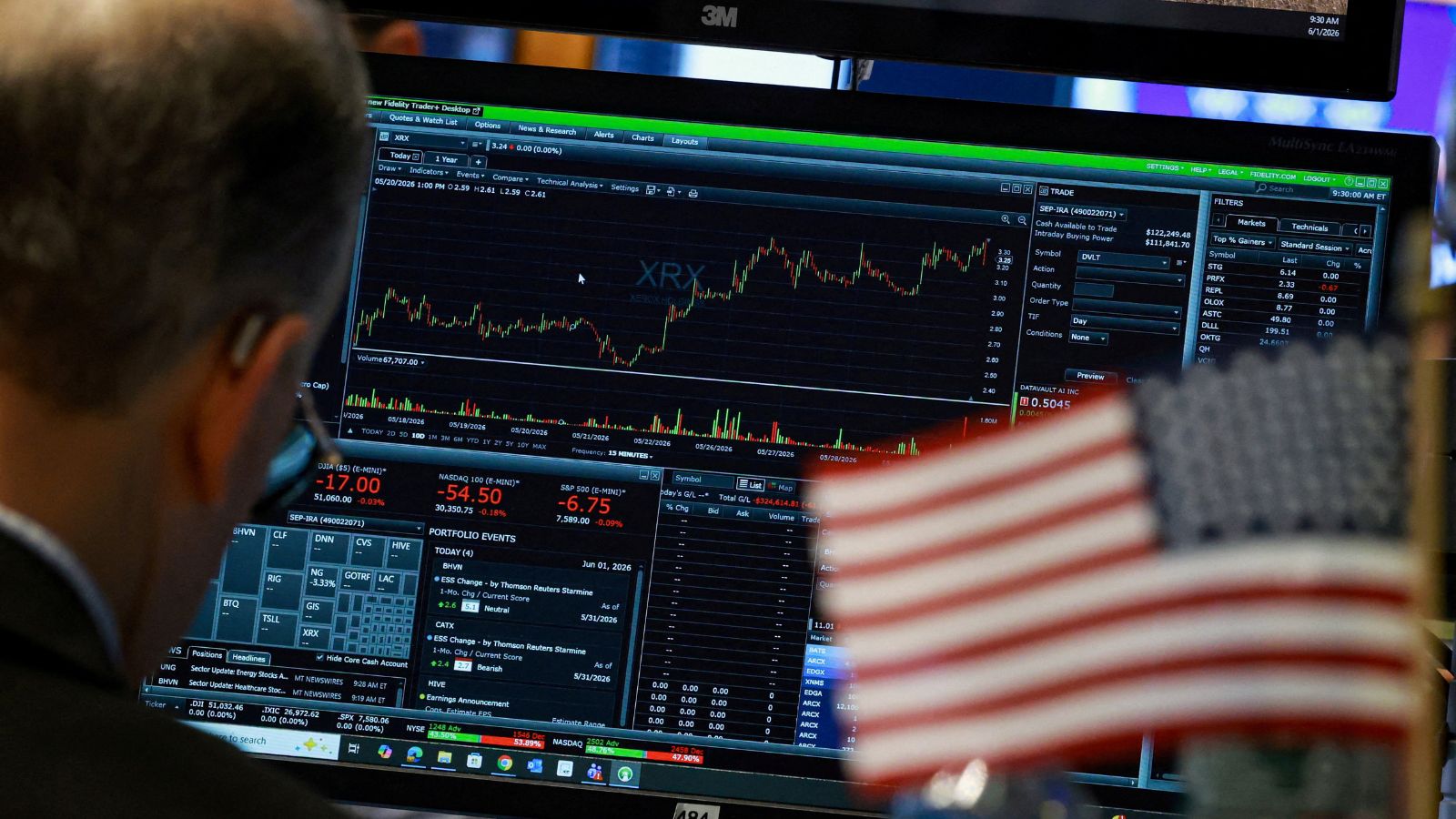
The fluorescent lights in a mid-tier Manhattan hedge fund office hum at a frequency you only notice after midnight. Cold coffee sits in cardboard cups beside glowing Bloomberg terminals, while twenty-six-year-old analysts rub their eyes and stare at spreadsheets that no longer obey the old rules of gravity.
Money used to have a smell. It smelled like ink on freshly printed prospectuses, burnt espresso on the trading floor, and the damp wool of coats rushing through revolving doors on Wall Street. Today, the biggest financial bet in human history smells like ozone and chilled liquid coolant rushing through rows of server racks in rural data centers.
Anthropic wants to go public. On paper, that single sentence reads like another routine milestone in Silicon Valley's endless march toward liquidity. Yet beneath the clean typography of financial headlines lies a strange, quiet panic—a collision between an artificial intelligence boom that has consumed hundreds of billions of dollars in venture capital and a public market that is suddenly asking a terrifyingly simple question.
Where is the profit?
The Architecture of a Contradiction
To understand why an Anthropic initial public offering carries the weight of a high-wire act over a canyon, you have to rewind to the original promise of the company.
Founded in 2021 by Dario and Daniela Amodei alongside a group of researchers who walked away from OpenAI over disagreements about safety and direction, Anthropic built its identity on restraint. It structured itself as a Public Benefit Corporation. It established a Long-Term Benefit Trust designed to insulate its mission from the ruthless quarterly demands of shareholders. It preached constitutional AI, careful scaling, and the moral obligation to build machines that would not burn down the house while trying to clean it.
Safety was the brand. Caution was the moat.
Now, picture the moment those idealistic blueprints meet the cold steel of the New York Stock Exchange or the Nasdaq. Once a company rings that opening bell, its ticker symbol becomes an open wound exposed to the elements every ninety days. Quarterly earnings calls do not reward philosophical nuance. Institutional investors do not buy shares in a company because its safety papers are elegantly argued; they buy shares because revenue curves bend upward at forty-five-degree angles and margins expand like lungs taking in clean air.
Consider a hypothetical scenario that plays out every earnings season across Manhattan and San Francisco. Call him Arthur, a portfolio manager overseeing a twelve-billion-dollar pension fund for retired schoolteachers in Ohio. Arthur does not care about artificial general intelligence timelines or alignment theory. He cares about whether the stock he buys on Tuesday will pay a retiree's heating bill in January. When Arthur looks at an AI lab preparing for an IPO, he sees astronomical compute bills, relentless price wars on application programming interfaces, and massive investments from tech giants like Amazon and Google that already come wrapped in complex cloud-credit arrangements.
Arthur asks a question that echoes through every boardroom from Menlo Park to Midtown: If training each new generation of frontier models costs billions more than the last, while competitors drive the price of intelligence toward zero, how does a standalone AI company ever become a cash machine?
The Trillion-Dollar Appetite
We have seen this fever before, though never at this altitude.
In the late 1990s, telecommunications companies laid millions of miles of fiber-optic cable across continents on the assumption that internet traffic would double every hundred days forever. The cables were real. The technology worked. Yet the companies that buried the glass went bankrupt by the dozens because revenue arrived years slower than the debt came due.
The modern AI boom runs on an even hungrier engine. Every breakthrough requires clusters of specialized chips costing tens of thousands of dollars apiece, wired together in facilities that draw enough electricity to power small cities. Training Claude—Anthropic's flagship family of models—demands capital on a scale that makes traditional software startups look like lemonade stands.
For the past three years, private markets absorbed that shock. Venture firms, sovereign wealth funds, and hyperscale cloud providers poured tens of billions into Anthropic, pushing its private valuation into the stratospheric territory of sixty billion dollars and beyond. In the private market, valuations are negotiated behind closed doors among true believers who can afford to wait seven or ten years for an exit.
Public markets are different. Public markets are a stadium full of skeptics holding stopwatches.
When a company like Anthropic prepares to cross that threshold, it is essentially admitting two truths at once. First, private capital alone can no longer feed the beast; the sheer cost of staying at the frontier of model development requires access to the deepest pools of public liquidity on Earth. Second, early investors and employees—many of whom have spent years working eighty-hour weeks in San Francisco offices overlooking Mission Street—need a door through which they can finally turn paper wealth into real homes, college funds, and financial freedom.
Timing, however, is everything. And the clock on the wall is ticking louder than anyone in Silicon Valley wants to admit.
Ghosts in the Spreadsheet
Spend enough time talking to enterprise chief information officers—the quiet men and women who actually sign the multi-million-dollar software contracts—and a very different picture emerges from the breathless hype on social media.
Two years ago, every Fortune 500 board demanded an AI strategy. Executives bought pilot licenses by the thousands, terrified of looking obsolete in front of their peers. Money flowed effortlessly into the coffers of foundation model makers.
Today, the mood in those corporate conference rooms has hardened into pragmatism.
Take a hypothetical mid-sized logistics firm in Chicago—let us call it Heartland Freight—that spent four million dollars last year integrating generative AI tools across its customer service and routing teams. When the chief financial officer audited the results six months later, the software had shaved a few minutes off email responses and drafted decent internal memos, yet it had not meaningfully moved the company's operating margin. Meanwhile, open-source models and smaller, cheaper alternatives had quietly caught up to ninety percent of what the giant proprietary models could do, at a tenth of the price.
When Heartland Freight renegotiates its contracts this year, it will not double its spending. It will cut it in half.
This is the invisible undertow pulling at the ankles of every major AI lab. Revenue is growing—Anthropic has climbed rapidly into the multi-billion-dollar annualized revenue tier, fueled largely by enterprise adoption and developers who genuinely prefer Claude's coding and reasoning capabilities—but the ground beneath that revenue is shifting. Customer loyalty in software used to last a decade because switching databases or accounting systems felt like performing open-heart surgery. Switching from one AI model to another often requires changing a single line of code.
How do you build a generational public company when your customers can walk out the door in thirty seconds?
The Weight of the Ring
I remember sitting in a cramped press gallery overlooking a stock exchange floor years ago during another heavily hyped technology debut. Before the opening bell rang, the company's founders stood on the balcony smiling for cameras, waving down at traders in blue jackets who barely looked up from their phones. Within forty-eight hours, a single analyst note questioning customer retention shaved twelve billion dollars off the company's market value. The founders aged five years in two days.
Going public changes the soul of an organization. It happens slowly, then all at once.
Right now, if an Anthropic researcher discovers a subtle flaw in how a model reasons under pressure, the company can delay a release by three weeks to fix it. That restraint is baked into its DNA. Once Anthropic becomes a publicly traded stock, delaying a product launch by three weeks means missing quarterly revenue guidance, which triggers algorithmic sell-offs, which depresses the stock price, which makes it harder to retain top engineers whose compensation is tied to equity.
Suddenly, safety is no longer an abstract ethical commitment debated in white papers. It is a line item fighting for oxygen against Wall Street's relentless demand for speed.
Critics argue that Anthropic's Long-Term Benefit Trust will protect its mission even after an IPO. Perhaps it will. Corporate governance structures, however, have a habit of bending when billions of dollars in shareholder lawsuits and activist investor pressure push against them. History rarely sides with noble bylaws when quarterly earnings disappoint.
Why the Gamble Still Makes Sense
If the risks are this stark—if the public markets are skeptical, compute costs are astronomical, and competition is ruthless—why push toward an IPO at all?
Because waiting might be even more dangerous.
Look at the broader chessboard. OpenAI is restructuring itself into a conventional for-profit enterprise while eyeing its own eventual public debut. Google, Microsoft, and Meta are spending tens of billions per quarter out of their own massive cash flows—money generated by search ads, cloud computing, and social networks—to subsidize their AI ambitions without ever needing to ask public investors for permission.
In that arena, an independent lab cannot remain a private startup forever. An IPO gives Anthropic three weapons it desperately needs:
- A public currency for acquisitions: Stock that trades openly on an exchange allows a company to buy smaller startups, specialized hardware teams, and data infrastructure without draining its cash reserves.
- Institutional legitimacy for massive enterprise deals: Many global banks, healthcare networks, and defense contractors hesitate to bet their core infrastructure on private companies whose financial statements remain hidden behind non-disclosure agreements. Opening the books to the Securities and Exchange Commission builds a level of trust that no marketing campaign can buy.
- Survival capital: If the AI boom cools into a prolonged winter—a period where venture funding dries up and valuations compress—companies that already secured billions from the public markets will survive, while private peers still begging for funding rounds may starve.
In short, Anthropic is trying to cross the bridge before the river rises.
The Reckoning Ahead
When Anthropic finally files its S-1 registration statement with federal regulators, millions of eyes will skip past the glossy mission statement on page one and scroll straight to the risk factors and the balance sheet.
For the first time, the world will see the exact math behind the miracle. We will see how much it truly costs to train a frontier model, how heavily discounted those celebrated enterprise contracts actually are, and how fast cash burns when thousands of top researchers and millions of graphics processors run around the clock.
That document will not just be a financial filing for one San Francisco company. It will be a referendum on the entire artificial intelligence economy. If public investors embrace Anthropic, rewarding its disciplined growth and enterprise traction, it will validate the trillions of dollars in market value already priced into chipmakers, data center builders, and software giants. If they recoil—if the stock stumbles out of the gate under the weight of massive losses and uncertain margins—the shockwave will rattle every technology portfolio from Tokyo to Zurich.
Late at night, long after the algorithms finish balancing the final trades and the server fans settle into their steady, tireless drone, every great technological revolution comes down to the same fragile human bargain. Someone has to believe the future is worth paying for today. Soon, Anthropic will step onto that brightly lit balcony, take hold of the brass gavel, and find out whether the crowd below is still willing to buy what Silicon Valley is selling.