Silence.
In a concert hall built for two thousand people, silence is never actually empty—it hums with the low thrum of climate control, the faint creak of red velvet seats settling, and the invisible weight of every note ever played inside those marble walls. For anyone who has ever stood backstage in the wings of a national performing arts center ten minutes before curtain, watching stagehands tape down cables and musicians warm up their reeds in the dim blue work lights, the possibility that the doors might simply lock shut feels less like a policy dispute and more like an amputation.
Yet that exact question is now sitting on a federal judge’s desk in Washington, D.C.
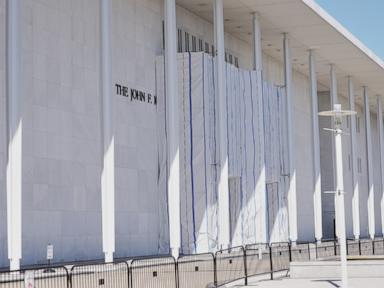
According to court filings and news reports surrounding the dispute, the Trump administration has urged a federal judge to lift a court order that currently blocks the closure of the John F. Kennedy Center for the Performing Arts. On paper, the motion reads like standard administrative litigation—a tug-of-war over executive authority, statutory mandates, and whether a prior judicial injunction improperly restrains the administration's operational decisions. Behind those dense legal briefs, however, lies a collision between two fundamentally different visions of what a public cultural institution is, who owns it, and what happens when the machinery of government threatens to pull the plug on a living monument.
The Architecture of a Promise
To understand why a legal motion over building operations has triggered such fierce resistance, you have to step outside the courtroom and look at the white Carrara marble sitting along the banks of the Potomac River.
Congress established the framework for the National Cultural Center in 1958 under President Dwight D. Eisenhower, and after President John F. Kennedy’s assassination in 1963, lawmakers designated the institution as his living memorial. When the building finally opened in 1971, it was not designed as a mere rental venue or an ordinary government office building. It was structured as a unique public-private partnership—a hybrid entity housed within the Smithsonian Institution as a bureau, governed by a board of trustees, funded through a combination of federal appropriations for building maintenance and private philanthropy for artistic programming.
Think of it like a historic lighthouse whose tower is maintained by public infrastructure funds while the local maritime community pays for the oil and the lens. If the authority managing the tower decides to board up the windows and turn off the beacon, the community does not just lose a building; they lose the entire reason the structure exists on the coastline.
That tension sits at the very heart of the legal fight. Plaintiffs who sought the original court order argued that shutting down the Kennedy Center would violate the statutory mandate created by Congress—effectively erasing a federally designated memorial and halting operations that lawmakers explicitly required to remain open to the public. In their view, an administration cannot unilaterally mothball an institution that Congress created to serve as a living cultural monument.
Inside the Courtroom Tug-of-War
Now look at the argument coming from the other side of the bench.
In urging the federal judge to lift the order blocking the closure, attorneys for the Trump administration have framed the issue around executive discretion, administrative authority, and judicial overreach. From the administration's perspective, lower court injunctions that freeze operational decisions interfere with the executive branch's ability to manage federal entities, restructure oversight, or pause operations amid broader administrative reviews and governance disputes. Legal representatives for the administration have contended that the plaintiffs lack the standing to dictate day-to-day operational status and that keeping the injunction in place improperly ties the hands of officials tasked with overseeing federal property and budgets.
It is easy, if you only read headlines, to treat this as just another partisan skirmish in a city that manufactures them by the hour. I admit that when I first looked at the docket entries, the procedural language made my eyes glaze over—irreparable harm, balance of equities, likelihood of success on the merits. Legal jargon has a way of anesthetizing the human reality underneath it.
Until you picture the people standing on the loading dock.
The Invisible Ecosystem Behind the Curtain
Consider a hypothetical scenario that plays out every single week in major performing arts centers across the country. Imagine a freelance cellist named Elena—not an actual party to the lawsuit, just a composite of the thousands of working artists who orbit institutions like the Kennedy Center—who has spent six months preparing for a spring residency. Her calendar is booked eighteen months out. Her income is stitched together from rehearsal fees, educational workshops in D.C. public schools, and evening performances.
When a federal venue faces a sudden closure order, the damage does not wait for the final appellate ruling.
Tours cancel months in advance because international orchestras cannot risk shipping priceless instruments across oceans into a legal limbo. Union stagehands, lighting designers, ushers, and box office staff—the blue-collar backbone of high culture—suddenly cannot tell their landlords whether they will have shifts next month. Arts education programs that bring thousands of students from underserved neighborhoods into the Concert Hall or the Eisenhower Theater for free performances simply evaporate from the school calendar.
Once an artistic season is broken, you cannot simply flip a switch and glue it back together. Subscribers drift away. Donors withhold pledges. Visiting companies book dates in New York, Chicago, or London instead. In the performing arts, a temporary closure rarely stays temporary; it hollows out an institution from the inside long before the plaster ever cracks.
Why Precedent Matters Beyond the Potomac
What makes this legal showdown so unsettling—and so consequential—is that the judge's ruling will reverberate far beyond Washington's Foggy Bottom neighborhood.
Historically, American presidents of both parties have clashed with cultural boards, endowment chairs, and museum directors over funding, programming, and governance. During the 1980s and 1990s, fierce debates erupted over federal arts funding and congressional oversight, yet the physical survival of flagship national institutions remained largely insulated from sudden operational shutdowns. The unwritten rule was clear: administrations change every four or eight years, while national memorials and cultural bureaus endure across generations.
If the federal court agrees with the Trump administration and lifts the block on closing the Kennedy Center, it establishes a potent legal precedent regarding how much unilateral authority the executive branch holds over congressionally chartered institutions. Critics and legal scholars warn that such a ruling could signal that statutory mandates creating public memorials or cultural bureaus offer little protection if an administration decides to halt operations. Conversely, supporters of the administration's motion argue that federal judges have grown far too quick to issue sweeping injunctions that paralyze executive management and force the government to maintain operations against the judgment of appointed officials.
Both arguments carry real legal weight, which is precisely why the outcome remains genuinely uncertain. Federal appellate courts have spent the past several years scrutinizing the boundaries of judicial injunctions against executive actions, demanding strict proof of concrete, immediate injury before allowing a judge to override administrative decisions.
The Question Left Hanging in the Dark
Walk past the Kennedy Center at dusk, when the river turns the color of pewter and the tall bronze columns catch the last orange streak of sunset, and you can see tourists pressing their faces against the glass doors just to glimpse the enormous busts of John F. Kennedy inside the Grand Foyer.
Every night, those doors are meant to swing open. Not for politicians, and not for lawyers, but for the fourth-grader seeing live theater for the first time, the retired veteran listening to the National Symphony Orchestra, and the stagehand adjusting a spotlight sixty feet above the floor.
A federal judge now holds the pen that will decide whether the legal shield keeping those doors unlocked stays intact or comes down—leaving the lights of a living memorial flickering in the dark.