The floorboards of the old house in Philadelphia creak in a specific way when the July humidity hits. It is a heavy, rhythmic sound, not unlike the ticking of a grandfather clock that has lost its key but refuses to stop running. A lone researcher sits under the dim yellow glow of a desk lamp, her fingers stained with the gray dust of two-and-a-half centuries of unread correspondence. She is not looking for grand declarations or the ink-flourished signatures of famous men. She is looking for the grocery lists. She is looking for the sheet music scribbled in the margins of ledgers by teenage girls who watched soldiers march past their windows.
We have arrived at a strange, towering milestone. Two hundred and fifty years.
It is a number so large it flattens into abstraction. How do you feel a quarter of a millennium? You cannot. The human brain is wired for local intimacy—the length of a childhood, the duration of a winter, the lifespan of a dog. When we try to process a national birthday of this magnitude, we usually default to pageantry. We buy the fireworks. We wave the small plastic flags made overseas. We listen to speeches filled with heavy words that have been scrubbed of their original, terrifying meaning.
But the real pulse of a culture does not live in its monuments. It lives in its art.
If you want to understand the fragile, chaotic, beautiful experiment that hit the 250-year mark, you have to turn off the news. You have to shut the history textbook. Instead, you need to watch a specific scene in an indie film, read a poem written by an immigrant in an engine room, and listen to a bassline that makes your chest ache. Art is the only mirror that does not lie to us about who we are.
Consider a hypothetical teenager named Marcus sitting on a subway train in Chicago today. He has one headphone in, listening to a track that samples a gospel song from 1926. He is reading a dystopian novel on his phone while passing buildings constructed during the Gilded Age. Marcus is living inside the American collage. He does not think about the Declaration of Independence on a Tuesday afternoon, yet every piece of culture he consumes is a direct consequence of it.
To look back at the art that shaped this journey is to realize we have been singing the same song all along. We just keep changing the tempo.
The Celluloid Mirror
Film is where our collective subconscious goes to confess. For decades, the cinematic landscape was dominated by a clean, heroic narrative—the lone cowboy riding into the sunset, the righteous soldier defending the perimeter. It was a comfortable myth.
Then the lens cracked.
The most vital American cinema has always been the work that forces us to look at the shadows on the wall. Think of the mid-twentieth-century masters who took the glittering promise of prosperity and peeled back the paint to show the rot underneath. The true American cinematic tradition is one of beautiful friction. It is found in movies that refuse to give us a happy ending because the country itself is an unfinished sentence.
When we look at the films that define our current cultural moment, they are obsessed with memory. We are a society looking backward, trying to find the exact moment we lost our way, or perhaps the moment we finally found it. The stories that stick to our ribs are the ones about families trying to survive the machinery of progress. They are small, intimate portraits of rural kitchens and neon-lit bodegas.
The magic happens when these specific, localized stories become universal. A filmmaker captures the exact shade of twilight over an Oklahoma oil rig, and suddenly a viewer in a Manhattan high-rise feels a pang of recognition. That is the invisible thread. It tells us that despite the noise, despite the algorithms designed to split us into neat little demographic boxes, our grief and our joy look remarkably similar in the dark of a theater.
The Ink that Bleeds
Books are different. A movie asks for your eyes, but a book demands your nervous system. You have to build the world yourself using the black marks on the page.
Our literary history is a long, loud argument. We are a nation founded on a document—a collection of sentences written by men who were desperately trying to codify an idea that had never been tested in the real world. Every writer who has picked up a pen on this soil since then has been responding to those original sentences. Some write to validate them. Many write to expose the gap between the promise and the reality.
The books we need to return to as the calendar turns are not the ones that make us feel safe. They are the ones that make us sweat. The novels that chronicle the migration of families across sunburned highways. The essays written from prison cells and penthouse suites.
There is a distinct vulnerability in American literature. It is the anxiety of self-invention. Because we do not have a thousand years of shared ancient ancestry to fall back on, we have to invent our identity every morning. A character in a contemporary novel walking down a street in Los Angeles is carrying the weight of their ancestors' oceans, trying to figure out how to speak a language that belongs to everyone and no one.
It is confusing. It is frightening. It is the exact reason our literature is so desperately alive.
The Weight of the Note
But if you want to skip the intellect and go straight to the bone, you listen to the music.
European classical music was built on order, symmetry, and royal patronage. American music, by contrast, was born in the dirt, the church, and the tavern. It is the product of collision. What happens when you mix Scottish fiddle tunes with West African polyrhythms in the heat of the Delta? You get a sound that changes the planetary orbit.
Jazz, blues, country, hip-hop—these are not just genres. They are survival strategies.
Consider the blues. It is a musical form that does something logically impossible: it takes agonizing pain and turns it into a reason to keep breathing. It is an architecture built on the "blue note," that microtonal space between the major and minor scale that sounds like a sob or a laugh, depending on how close you are standing to the speaker.
The music of this quarter-century milestone is loud, fragmented, and endlessly inventive. It is being made by kids in bedrooms with cheap laptops, sampling their grandfathers' record collections. It is music that refuses to sit still. It shouldn't. The moment our music becomes polite, the moment it belongs in a museum instead of a basement, is the moment the experiment ends.
The Canvas of the Unseen
Walk into any gallery displaying the visual history of the last two and a half centuries, and you will notice a shift in gravity. We started by painting portraits of wealthy landowners who wanted to look like European nobility. We painted vast, empty landscapes that conveniently omitted the people who had lived there for millennia.
But then the painters stopped looking at the mountains and started looking at the sidewalk.
The true art of this nation is found in the grit. It is the ashcan painters capturing the coal smoke of New York. It is the muralists covering the concrete walls of Detroit with the faces of factory workers. It is the abstract expressionists throwing paint at canvas because the trauma of the mid-twentieth century was too massive to be contained by a realistic drawing of a tree.
Today, the visual landscape is moving faster than our eyes can adjust. It is on our screens, our streets, our clothes. The boundaries between "high art" and "low culture" have been completely demolished, and good riddance. The most vital visual statements are being made by artists who use traditional techniques to tell untraditional stories, forcing us to reckon with who is allowed to hang on the museum wall and who is left standing outside on the pavement.
The Empty Chair
The researcher in Philadelphia finally turns off her desk lamp. The room drops into darkness, save for the blue light of the streetlamps filtering through the windowpanes.
She has found what she was looking for. It was a small diary entry from a woman whose name has been forgotten by history, written during a summer that was just as hot and uncertain as this one. The entry did not mention politics or grand theories of governance. It simply described the sound of someone singing down the block, a melody the writer had never heard before but couldn't get out of her head.
That is the secret. The infrastructure of the country is not built of steel or concrete. It is built of those fleeting, shared moments of cultural recognition. It is the sudden realization that the stranger sitting across from you on the train is moved by the exact same lyric, the exact same brushstroke, the exact same flash of light on a movie screen.
We do not need more monuments to mark this anniversary. We do not need more bronze statues of men who have been dead for two centuries. We need to listen to each other's songs. We need to read the stories that make us uncomfortable. We need to look at the art that challenges our tidy certainties.
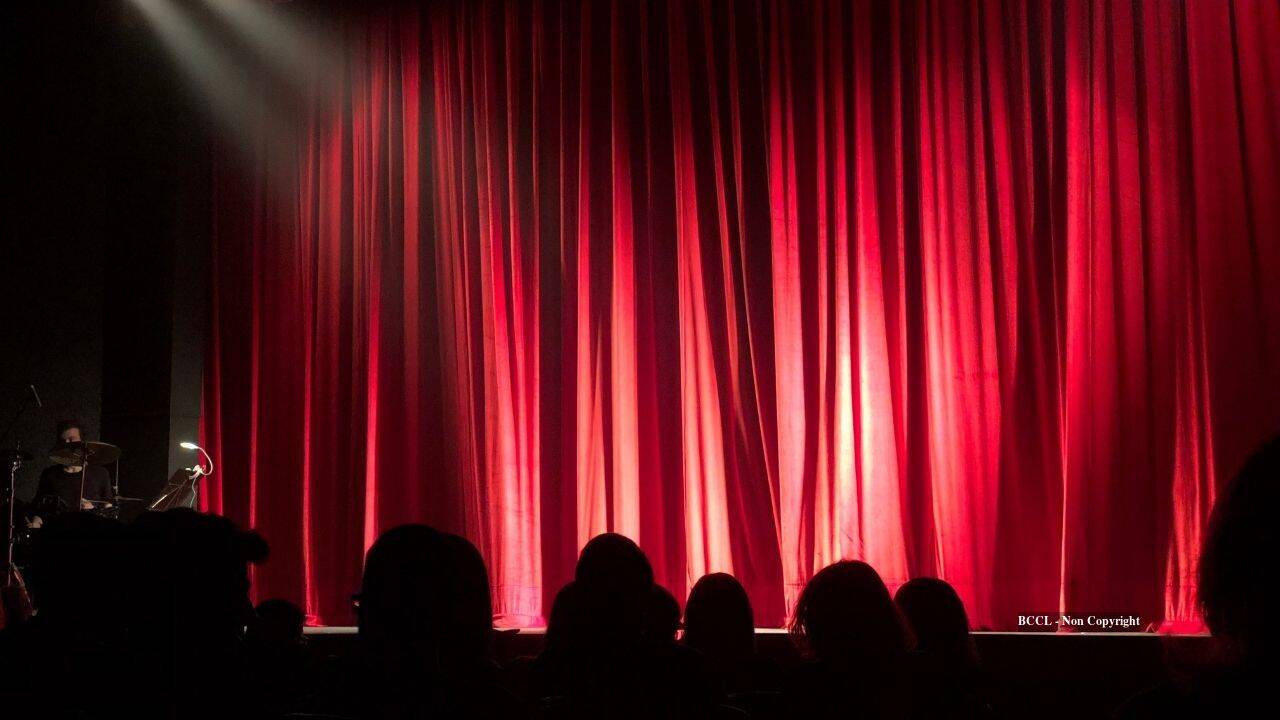
The quarter-millennium is not a finish line. It is just a pause between movements in a symphony that is still being written by people who haven't even been born yet. The instruments are tuned. The hall is dark. Everyone is waiting to see what happens when the baton drops.