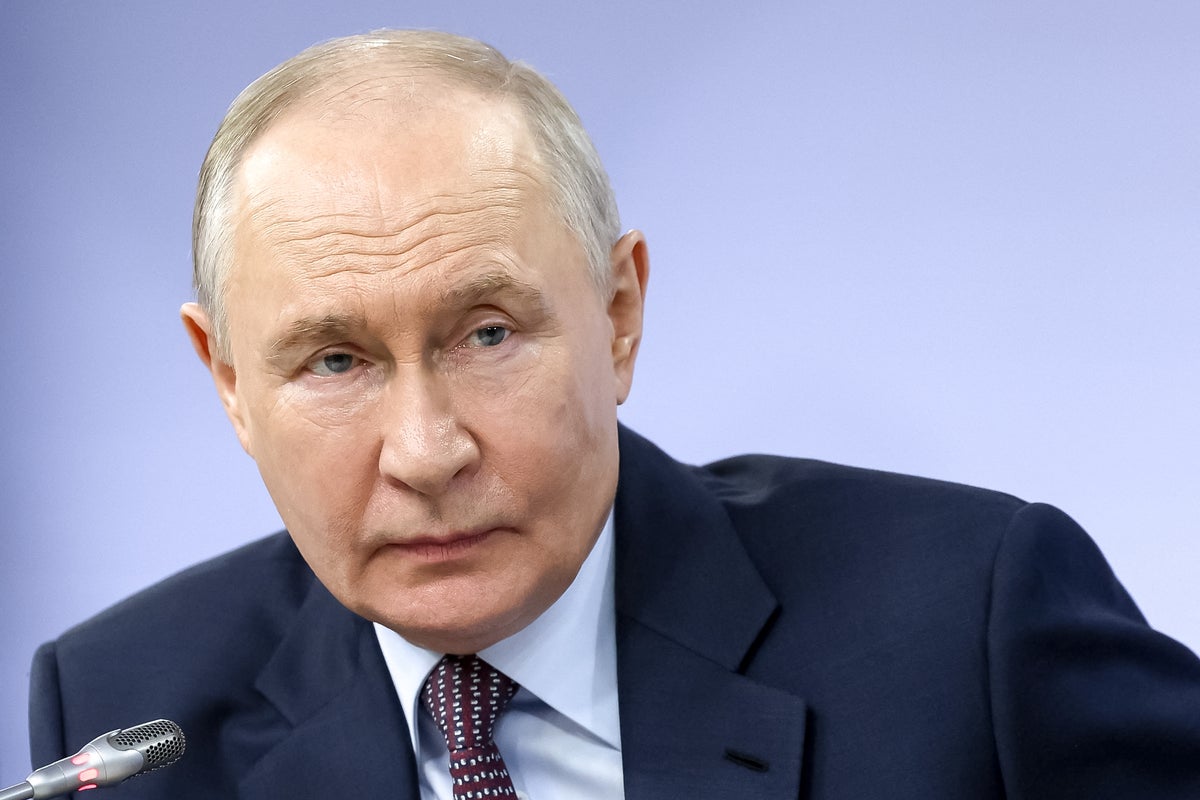
Vladimir Putin isn't just taking cover; he's practically living underground. Recent intelligence leaks suggest the Russian leader has spent weeks at a time tucked away in high-tech bunkers, specifically in the Krasnodar Krai region. If you've seen him on TV lately, there’s a good chance you’re watching "canned" footage—pre-recorded clips designed to make it look like he’s still walking the halls of the Kremlin when he’s actually hundreds of feet below the surface.
This isn't just about avoiding a cold or a noisy protest. The level of paranoia has hit a fever pitch. Reports from European intelligence agencies, corroborated by investigative outlets like iStories and the Financial Times, paint a picture of a leader who’s terrified of being the target of a drone strike or an internal coup.
The bunker life and the death of spontaneity
Putin has basically vanished from public life in 2026. Last year, he made nearly 20 public appearances by this time. This year? You can count them on one hand. He’s ditched his usual haunts in Moscow and the famous Valdai residence. Instead, he’s hunkered down in fortified complexes that can withstand nuclear blasts.
It’s a bizarre way to run a country. He’s micromanaging the war in Ukraine from a screen, obsessing over the capture of tiny villages while the rest of Russia’s domestic issues gather dust. People who actually see him say he’s spending about 70% of his time on military minutiae. If you aren't a general or a top-tier security official, you're lucky to get a meeting once every few months.
Living in a security bubble
The rules for anyone working near him are bordering on the insane. If you're a chef, a photographer, or a bodyguard for the President, your life just got a lot harder.
- No public transport: Staff are banned from buses or trains.
- Digital dark age: No internet-connected devices are allowed anywhere near him.
- Home surveillance: The FSO (Federal Protective Service) has reportedly installed cameras in the private homes of his inner circle.
Even the internet in Moscow has been taking hits. Those weird outages people were complaining about? Intelligence suggests the FSO was behind them, testing signal jamming to prevent drones from getting a lock on potential targets.
Fear of the enemy within
While the threat of Ukrainian drones is real—especially after the "Spiderweb" operation that hammered Russian bombers—the fear of a domestic "Brutus" seems to be what’s keeping Putin awake at night. The assassination of Lieutenant General Fanil Sarvarov in Moscow last December sent shockwaves through the system. Since then, the finger-pointing among the top brass has been relentless.
Putin responded by extending elite security detail to ten more generals. It’s not a gesture of kindness; it’s a way to keep them under the watchful eye of the FSO. When everyone is a potential traitor, you don't just protect them—you monitor them.
The geography of paranoia
Russia has a long history of "closed cities" and secret mountains, but the current focus is on the south. While the massive complex under Mount Yamantau in the Urals remains a legendary backup, the current activity is centered in the Krasnodar region. These aren't just holes in the ground. We're talking about "underground cities" with independent life-support systems, luxury amenities, and communication hubs that allow him to bypass the standard Russian internet.
The disconnect is becoming a problem for the Russian elite. While Putin is safe behind meters of reinforced concrete, the rest of the government is left to deal with a crumbling economy and a stagnant war. You can’t lead a nation effectively when you're afraid of your own shadow—and your own staff.
If you want to understand the current state of the Kremlin, look at the schedules. When the President of a superpower stops visiting military bases and starts spending weeks in a hole in the ground, the narrative of "everything is under control" starts to fall apart. You don't build a life in a bunker because you're winning; you do it because you're scared of what happens if you step outside.
Keep an eye on the "live" broadcasts. Watch for the shadows that don't match the time of day or the weather that doesn't match the Moscow forecast. The man in the bunker is still in charge, but he’s never been further from the people he leads.