The smell of diesel is unmistakable. It is heavy, oily, and clings to the skin long after the nozzle has clicked back into place. For the man standing on the blacktop of a Pennsylvania truck stop, the cold autumn wind whipping across the highway, that smell has recently taken on a bitter edge. He stares at the digital numbers spinning upward on the pump. Three dollars. Four dollars. Four dollars and fifty cents. Every tick of the red LED display feels like a personal tax levied by invisible hands thousands of miles away.
He does not care about the fine points of international diplomacy. He cares about his freight bill, his truck notes, and whether the margin between profit and ruin is going to survive the week.
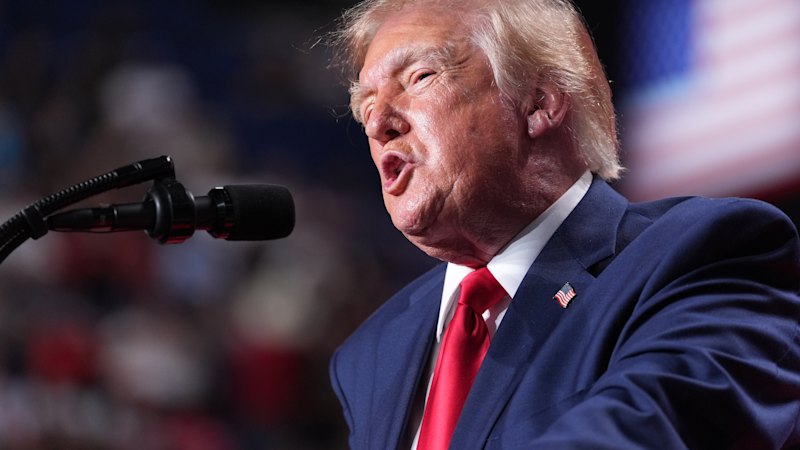
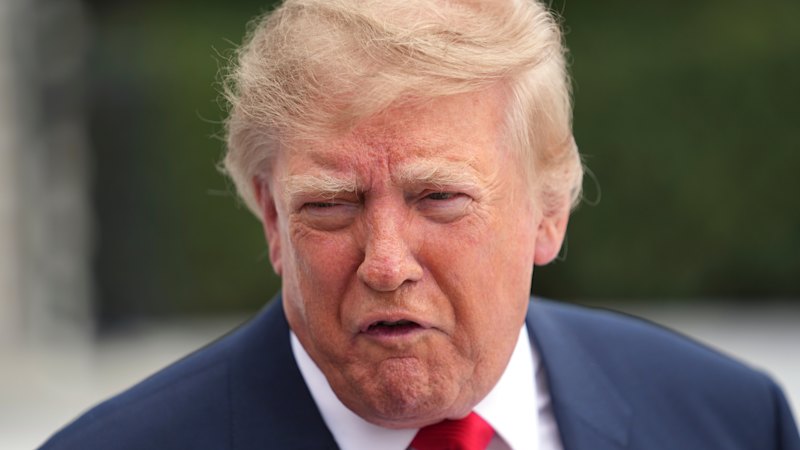
Thousands of miles from that truck stop, beneath the ornate gold leaf and chandeliers of a different world, another kind of calculation is taking place. Here, words are weapons, and rhetoric is currency. When Donald Trump looks out at a microphone and levels a harsh critique at Volodymyr Zelenskyy, linking the struggles of the American driver directly to the leadership in Kyiv, he is tapping into a very specific, raw frustration. He is speaking directly to the trucker at the pump. He is offering a narrative of cause and effect that cuts through the dense fog of foreign policy briefings.
Trump’s argument is built on a transactional view of the globe. In his telling, the ongoing conflict in Ukraine is not merely a tragedy of borders and sovereignty; it is a disruption machine. It is a wrench thrown into the gears of global commerce, sending energy shockwaves that ripple outward until they hit the local gas station. By suggesting that Ukraine’s leader should be replaced, or at least held accountable for the economic tremors felt in the American heartland, Trump is weaponizing domestic pain. He is asking a simple, populist question: Why should an ordinary family in Ohio or Texas pay more to heat their homes or move their goods because of a war on a different continent?
It is a powerful rhetorical stroke. Politics thrives on proximity. The pain at the pump is immediate, tactile, and unavoidable. The geopolitical strategy required to contain a revanchist power in Eastern Europe is abstract, long-term, and difficult to visualize.
Yet, looking only at the price on the diesel sign misses the intricate, messy machinery of the modern global economy.
To understand why a war in the breadbasket of Europe rattles the cost of fuel in North America, we have to look past the political posturing and examine the physical plumbing of energy markets. Diesel is not just another fuel; it is the lifeblood of logistics. It powers the combines harvesting wheat, the cargo ships crossing oceans, and the eighteen-wheelers carrying milk to the grocery store. When global energy supplies are thrown into chaos, diesel is often the first to feel the squeeze because refining capacities and global crude flows are tightly interconnected.
When Russia invaded Ukraine, it did not just alter European security maps; it severed vital arteries of energy supply. Europe, desperately trying to wean itself off Russian oil and natural gas, scrambled to find alternative sources, pulling harder on global reserves. That sudden, frantic reallocation of energy altered shipping routes, insurance costs, and refinery outputs worldwide. The ripple effect traveled across the Atlantic.
To lay the blame for these shifting prices entirely at the feet of a foreign leader under siege is to mistake the symptom for the disease. But dismissing the populist anger at the pump as mere ignorance is an equally dangerous mistake.
Consider the emotional core of this friction. When a trucker watches his livelihood get squeezed by rising fuel costs, he is experiencing a profound loss of control. Forces far beyond his ballot, beyond his town council, and beyond his comprehension are dictating whether he can afford to visit his grandchildren on the weekend. In that state of vulnerability, simple explanations are magnetic. If a prominent political figure points across the ocean and names a villain, it provides an outlet for anxieties that otherwise have nowhere to go.
This is where the rhetoric meets the reality of modern leadership. Zelenskyy is fighting for the physical survival of his nation. Every speech he gives, every diplomatic plea he makes, is calculated to keep Western weapons flowing and Western eyes fixed on the trenches of the Donbas. He is playing a zero-sum game for the survival of his state. From his perspective, complaints about fuel prices in the West, while acknowledged, must take a backseat to existential warfare. A nation facing artillery shells and missile strikes cannot easily recalibrate its defense strategy based on the cost of diesel in Pennsylvania.
This creates a brutal collision of realities. The American consumer’s grocery bill and fuel cost crash against the Ukrainian soldier’s desperate need for ammunition. Both viewpoints are rooted in real pain. Both are driven by immediate survival instincts. And both are exploited by political actors seeking to score points in an upcoming election cycle.
When Trump suggests that Zelenskyy has mishandled the situation or that new leadership might pave the way to a quicker deal, he is channeling an exhaustion that is quietly spreading across the West. Fatigue is a natural byproduct of prolonged conflict. The initial wave of blue-and-yellow flags hanging from suburban porches has faded, replaced by the dull, grinding weight of inflation and economic uncertainty. People grow tired of writing blank checks. They grow tired of endless news cycles dominated by devastation they cannot stop.
Politicians rise by sensing this exhaustion before anyone else does. They give voice to the unspoken fatigue.
Yet, the alternative to supporting Ukraine—a complete abandonment of the international consensus against unprovoked invasion—carries its own terrifying price tag. History suggests that tyrants do not stop when appeased; they merely pause to digest. If the global order fractures entirely, if borders become entirely negotiable through brute force, the economic instability that follows will make current fuel prices look like a minor tremor before an earthquake.
The trucker at the pump does not want to think about the geopolitical architecture of the twenty-first century. He just wants to afford his mortgage. The leader in Kyiv does not want to hear about American diesel prices. He just wants his children to live to see tomorrow.
Between these two human realities lies a chasm of rhetoric, blame, and political theater. The words spoken at campaign rallies and press conferences bounce across satellite feeds, reducing complex human suffering and economic friction into soundbites designed for thirty-second television segments.
As the sun sets behind the truck stop, the diesel pump clicks off. The numbers are locked in. The driver hangs up the hose, wipes his hands on a greasy rag, and climbs back into the cab. He turns the key, the heavy diesel engine rumbles to life beneath him, and he pulls back out onto the dark highway, carrying the weight of a world he never asked to break, driving toward a horizon that refuses to clear.