The Sirens at Midnight
The blue lights spin first. They cast long, erratic shadows across the dark siding of a suburban home. Then comes the heavy thud of boots on the porch, the sharp metallic click of weapons being unholstered, and the barking commands of police officers who genuinely believe they are walking into a bloodbath.
This is "swatting." It is a modern, digital weapon designed to weaponize local law enforcement against an unsuspecting target by fabricating a violent emergency. In May, this engineered chaos arrived at the doorstep of Supreme Court Justice Amy Coney Barrett. The emergency call was a hoax, a ghost in the machine, but the terror it was designed to induce was entirely real.
For generations, the nine men and women who sit on the highest court in the United States lived behind an invisible shield of institutional reverence. They walked the streets of Washington D.C., shopped for groceries, and attended local theaters largely unbothered. That era is dead. Today, the robe offers no protection. Instead, it acts as a bullseye.
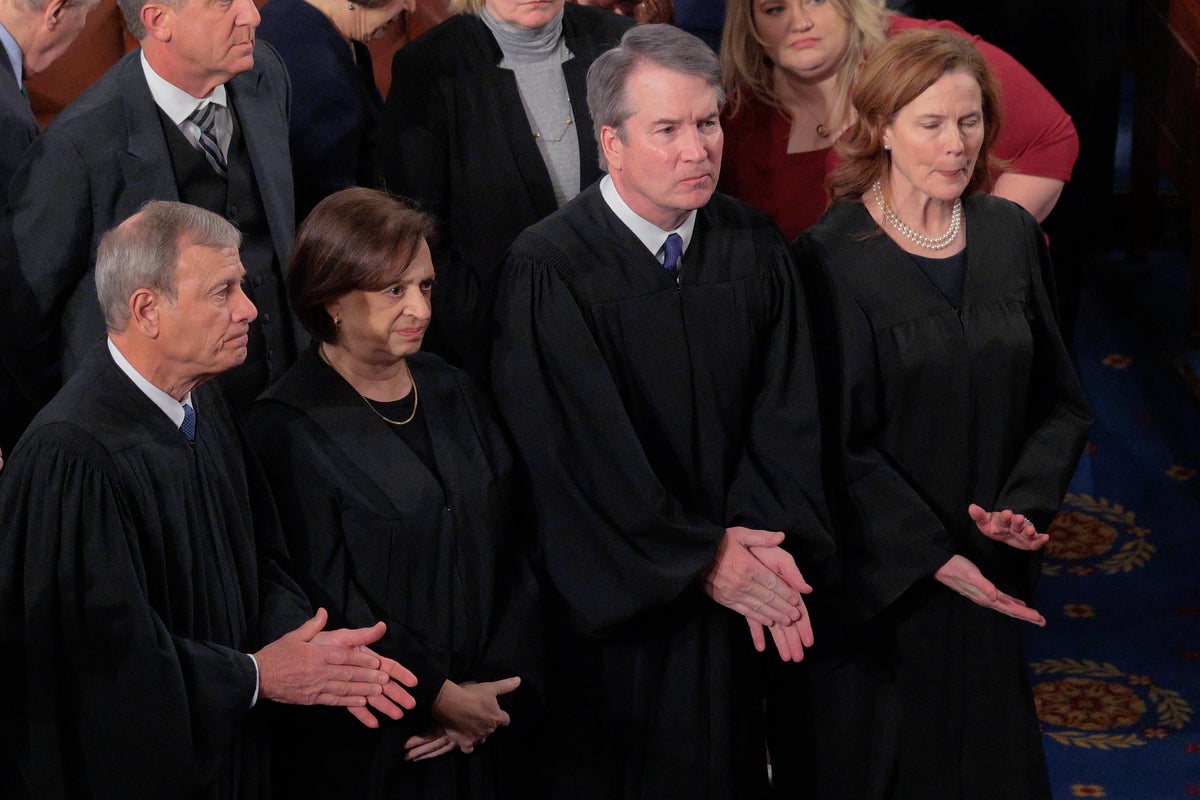
On a humid Tuesday morning in July, a rare scene unfolded on Capitol Hill. Two sitting Supreme Court justices, Elena Kagan and Amy Coney Barrett, walked into a congressional hearing room. They were not there to debate constitutional theory or interpret administrative law. They were there to talk about survival.
When the Bench Becomes a Target
The numbers coming out of the U.S. Marshals Service tell a sterile story of a frantic reality. In the last fiscal year alone, federal authorities logged 564 direct threats against the judiciary. That is not a statistic; it is a relentless drumbeat of hostility.
Consider what happens when the tension breaks. A few years ago, an armed man was arrested near the home of Justice Brett Kavanaugh, carrying zip ties and a firearm, driven by fury over a leaked draft opinion. Last year, a bomb threat targeted the family of Justice Barrett’s sister. Sixty-seven federal judges across the nation are currently under "enhanced online security screening" because the internet has turned their private lives into public property.
To understand the weight of this, you have to look past the political theater. Imagine sitting at your kitchen table, reading a legal brief, while knowing that your children are sleeping upstairs and a specialized security detail is patrolling your perimeter because someone on a message board decided your interpretation of a statute was an act of treason.
The human mind is resilient, but constant, low-grade terror erodes the soul. When Chief Justice John Roberts spoke out recently, his words carried the exhaustion of a man watching his institution crumble from the outside in.
"Personally directed hostility is dangerous, and it’s got to stop," Roberts warned.
But it hasn't stopped. It has accelerated.
The Crossfire of a Divided Nation
What makes the appearance of Kagan and Barrett so striking is the timing. The Supreme Court has just wrapped up a bruising, historic term. The decisions handed down have pleased no one entirely and enraged millions deeply.
In a bizarre twist of modern politics, the anger is no longer partisan; it is omnidirectional. Justice Barrett, a conservative appointed by Donald Trump, found herself under a torrent of fire from the right after joining opinions that rejected wide-ranging tariffs and protected birthright citizenship. Meanwhile, the court's liberal minority, including Justice Kagan, continues to navigate an environment where critics openly question the very legitimacy of the institution.
When Kagan and Barrett sat side by side before the House Appropriations subcommittee, they represented two vastly different judicial philosophies. Yet, they spoke with a single, urgent voice. They were asking for a 10 percent budget increase, bringing the court's total funding request to $228 million.
They need $14.6 million just to hire six additional security agents for each individual justice. They need another $2 million to establish a dedicated, off-site "residential security office" capable of monitoring their homes and coordinating lightning-fast emergency responses.
Think about that requirement. The arbiter of American constitutional law requires a military-grade security apparatus just to go home at night.
The Price of an Independent Judiciary
It is easy to get lost in the dollar amounts, to view this as just another bureaucratic squabble over federal funds. But the real problem lies elsewhere. The stakes are not fiscal; they are existential.
An independent judiciary relies on a simple, fragile premise: judges must be free to make decisions based on the law, entirely insulated from public passion, political pressure, or physical fear. If a judge begins to wonder how a ruling will affect the safety of their spouse, or whether a decision will trigger another fleet of police cars to their front lawn, the rule of law begins to warp.
The judiciary’s policy leaders have already warned lawmakers that flat security funding is completely unsustainable. Without this injection of capital, security screenings at federal courthouses will slow down. Perimeter monitoring will degrade. The administrative staff who handle the crushing workload of the American legal system will face layoffs.
We are watching the slow-motion fortification of American justice. The Supreme Court building, once an open temple of democracy where citizens could walk up the grand marble steps, is increasingly resembling a bunker.
The justices stepped back into their secure vehicles after the hearing, leaving the politicians to debate the line items of the budget. They returned to a life of gated perimeters, briefed security details, and the persistent, quiet dread that the next phone call might not be a hoax.