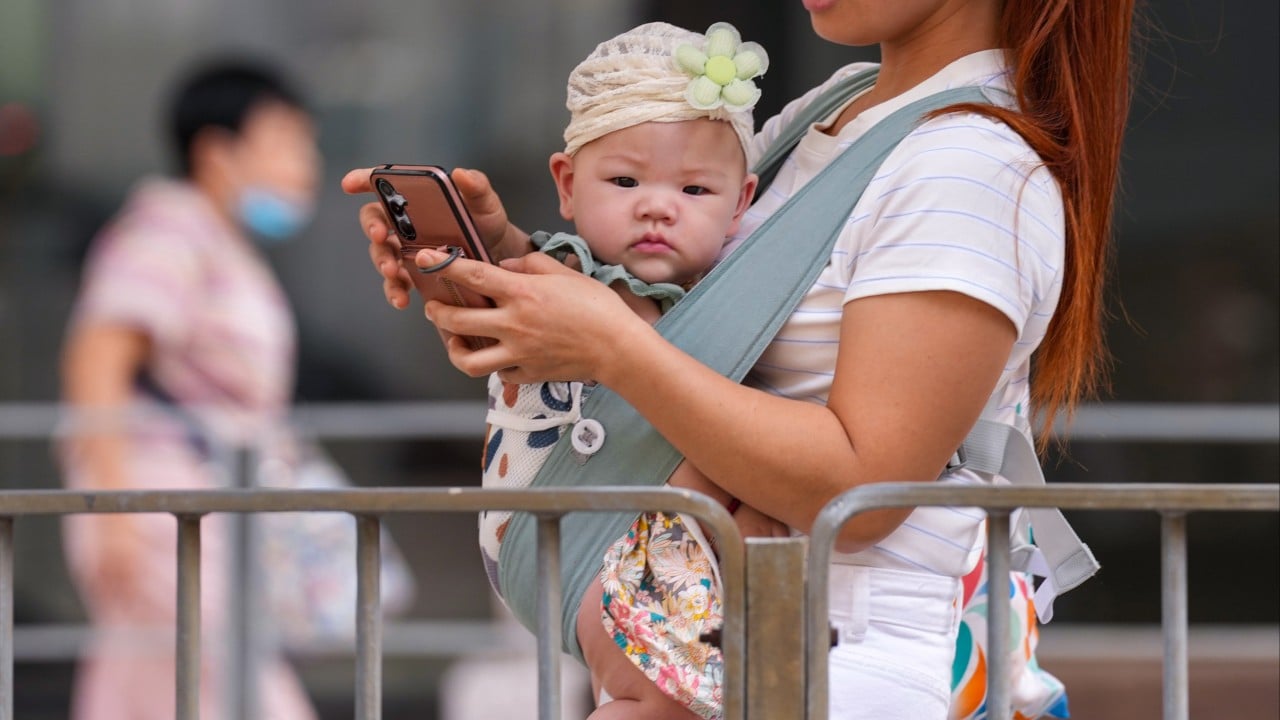
The hum of the air conditioner fought a losing battle against the damp midnight heat of Quarry Bay. Inside a flat barely large enough to stretch both arms wide, Carmen stared at the glowing screen of her phone. The numbers mocked her. Rent up another eight percent. Formula prices climbing. Preschool waitlists stretching into three-year queues before a child had even spoken their first word.
Beside her, three-year-old Leo stirred, his small hand twitching in a dream. Carmen pulled the thin blanket over his shoulder, her movements practiced and silent. She loved him with a fierce, terrifying intensity that often left her breathless. But as she looked at her sleeping son, a cold realization settled into her bones.
She was an only child. And Leo, barring a sudden miracle of economics and geography, would likely remain one too.
This is not just Carmen’s story. It is the quiet, heavy narrative playing out behind the neon-drenched facades of one of the densest cities on earth. Hong Kong is running out of children.
For years, the birth rate has slid down a precipitous cliff, bottoming out at a fertility rate hovering around 0.70 children per woman—far below the 2.1 replacement level required to maintain a stable population. Schools are merging classes. Playgrounds grow ghost-town quiet during weekday mornings. The demographic clock is ticking with the deafening rhythm of a grandfather clock in an empty room.
Governments tend to panic in spreadsheets. When birth rates plummet, administrators look at shrinking tax bases, straining eldercare systems, and empty classrooms, and they reach for the only tool they understand: financial incentives.
Enter the new policy package. Eleven distinct measures designed to jolt a dormant society back into family planning. At the center of this legislative rescue mission sits a striking figure: a HK$30,000 cash bonus earmarked specifically for families welcoming a second child.
Thirty thousand dollars.
To a bureaucrat in a government office, it is a tangible investment. To a young couple staring at the terrifying math of housing and childcare in Hong Kong, it is a drop of water on a scorching sidewalk.
Consider what happens next.
Derek, Carmen’s husband, woke up at six in the morning, the gray light of dawn barely slicing through the narrow alley between apartment blocks. He didn't stretch; he didn't linger. He brewed instant coffee, laced his shoes, and stepped out into the humid rush of the morning commute. Derek works in logistics, sixty hours a week, chasing a salary that feels like it shrinks every time inflation takes another breath.
When the news broke about the new policy package—the cash handouts, the tax deductions for home loan interest, the priority housing allocations for newborn families—Derek didn't cheer. He did mental arithmetic.
"Thirty thousand," he told Carmen over the rattle of the kitchen faucet later that evening. "That covers three months of rent. Or half a year of diapers and formula. What happens after month seven?"
He wasn't cynical. He was exhausted.
This is the central paradox of modern urban fertility crises. Governments treat birth rates like a retail sales problem, assuming that if you lower the price or offer a cash-back rebate, consumer behavior will shift. But children are not consumer goods. They are decades-long commitments of emotional, physical, and financial endurance.
To understand why a HK$30,000 bonus feels both generous and inadequate, you have to look at the invisible architecture of daily life in the city. Space is the ultimate luxury. In a market where square footage is measured in literal fragments of gold, adding a second child means finding a larger apartment. And the price gap between a one-bedroom flat and a two-bedroom flat is not measured in thousands of dollars; it is measured in millions.
The eleven new measures attempt to tackle this multi-headed monster. Beyond the headline-grabbing cash bonus, the package introduces expedited public rental housing allocation for families with newborns, increased tax ceilings for home loan interest deductions, and enhanced postpartum support services. It is a sweeping administrative effort to tilt the scales back toward family life.
Yet, the emotional friction remains.
Carmen sat at her kitchen table, a notebook open in front of her. She wasn't sketching out a budget for a vacation or a new car. She was calculating time. If she had a second child, who would pick Leo up from kindergarten while she worked her part-time accounting job? Her mother’s knees were failing; she couldn't lift a toddler all day. Hiring a domestic helper meant a separate visa, a dedicated sleeping space—which they simply did not possess—and an additional monthly salary plus food and insurance.
The math crumbled under its own weight.
Money helps, of course. No one turns down thirty thousand dollars. But money cannot buy hours in the day. It cannot compress the crushing pressure of Hong Kong’s hyper-competitive education system, where parents begin stressing about primary school admissions before their children can tie their shoelaces. It cannot manufacture square footage out of thin air.
And yet, there is something deeply hopeful about the fact that governments are finally trying.
For decades, the prevailing attitude of municipal policy across many developed economies was passive neglect. Populations would rise and fall according to market forces. Cities would adapt. But the sheer velocity of Asia's demographic contraction has forced a reckoning. Policymakers are realizing that a city without children is a city without a future—a museum of glass and steel echoing with the footsteps of an aging population.
When you walk through Victoria Park on a Sunday, you see the resilience of the human spirit in high definition. Foreign domestic workers gather on every patch of grass, sharing food, laughter, and stories from home, creating a temporary community in the heart of a concrete giant. Nearby, elderly residents practice tai chi with slow, deliberate grace.
Missing from that picture are the strollers. The chaotic, messy, beautiful clutter of young families taking up space without apology.
Can a policy package reverse a cultural tide?
History suggests that cash bonuses alone rarely create baby booms. Places like Singapore, South Korea, and various European nations have thrown billions at their declining birth rates with mixed, often underwhelming results. Culture changes faster than laws can rewrite it. When women achieve higher education and career parity in economies that still demand grueling working hours without flexible infrastructure, family size naturally contracts.
And yet, policies matter because they signal intent. They show whether a society values its own continuity.
Carmen looked back at the article on her phone, scrolling past the official quotes and the breakdown of the eleven measures. She looked at Derek, who was asleep on the sofa, his head tilted back, breathing softly after a twelve-hour shift.
She thought about what it would mean to hold another newborn. The smell of milk and soft skin. The small, curling fingers wrapping around her thumb. The sheer, irrational joy of watching a second personality unfold in their tiny home.
The HK$30,000 bonus wouldn't solve their problems. It wouldn't buy them a three-bedroom apartment in Mid-Levels or magically grant them twenty extra hours in the week. But it was a nod from the powers that be. A whispered acknowledgment that they saw the struggle. That keeping the lights on in this bustling metropolis shouldn't require sacrificing the next generation.
She turned off her phone. The room plunged into darkness, save for the pale amber glow of the streetlights filtering through the window blinds.
Outside, across the harbor, the skyline glittered with a million artificial stars, a monument to human ambition, engineering, and endurance. Somewhere down below, a train rattled along the tracks, carrying tired souls toward tomorrow, while millions of empty cradles waited in the dark, wondering who will fill them when the morning finally breaks.