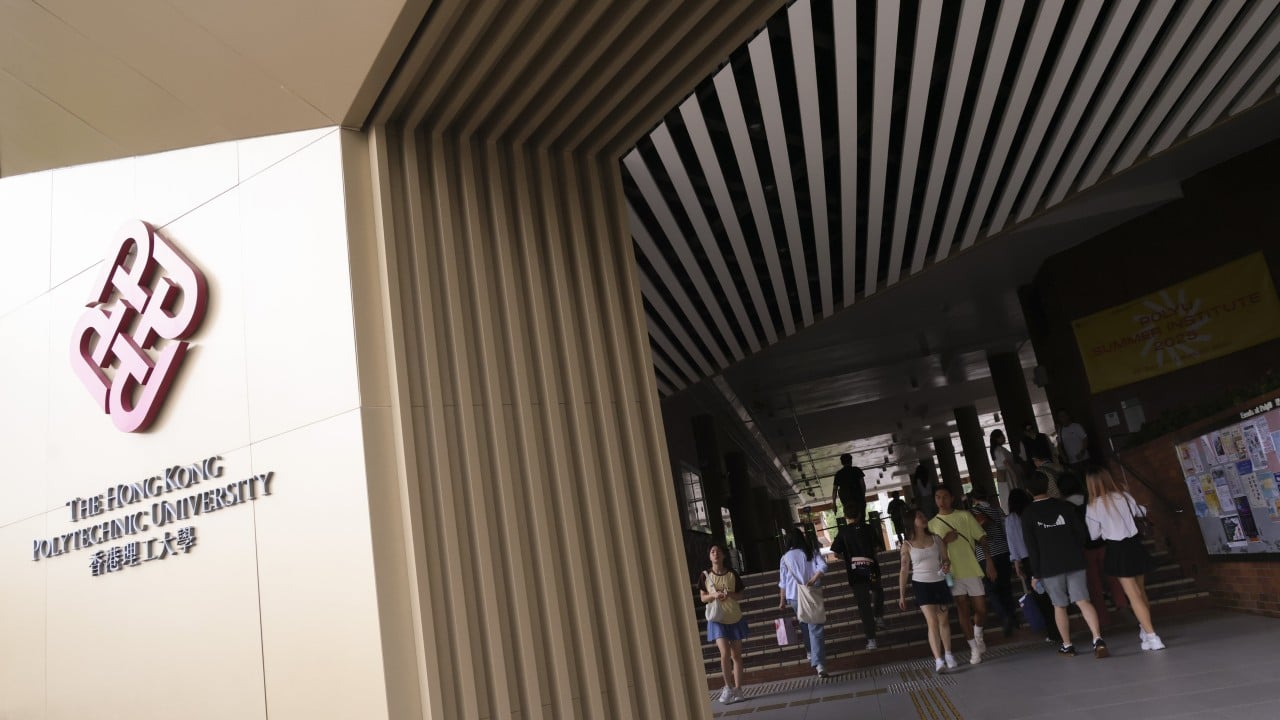
The rain in Kowloon does not fall; it weighs. It drives sideways off the harbor, slicking the neon-streaked asphalt and plastering trouser legs against shins. On a Tuesday night in Hung Hom, twenty-two floors above the street-level roar of diesel buses and clattering trams, twenty-four-year-old Chloe stands in a room the size of a shipping container.
There is a bed. There is a desk that doubles as a nightstand. There is a window the size of a laptop screen framing a wall of grey concrete across a narrow air well.
For this, Chloe pays twelve thousand Hong Kong dollars a month.
Multiply that by the square footage, and property agents in London or New York would laugh you out of the room. Yet Chloe is not crying. She is unpacking a single suitcase brought across the border from Shenzhen, sliding thick textbooks onto a shelf, and feeling an overwhelming, dizzying sense of absolute relief.
She has a Hong Kong address. She has a keycard. She is inside.
To understand why thousands of young professionals and university students from mainland China are willingly emptying their bank accounts for micro-rooms and hyper-inflated private student residences across Hong Kong, you have to abandon the spreadsheets. You have to look at the invisible architecture of ambition.
The Arithmetic of Desperation
Hong Kong has always been a city of walls. Historically, those walls kept people out or penned them into impossibly dense tenements. Today, the walls are economic, woven from a housing shortage so legendary it has become a dark tourist attraction. Rent a normal apartment in the city? Good luck. Landlords demand two months' deposit, references that trace your bloodline back three generations, and a lease signed in blood.
For a mainland graduate arriving in September with fluent English, a Master of Finance offer from HKU or CUHK, and zero local credit history, the traditional rental market is a closed iron gate.
Enter the modern student residence. These are not the moldering dormitories of the past, nor are they traditional campus housing, which universities can offer to barely a fraction of their international intake. These are privately managed residential towers, sleek conversions of old industrial buildings or boutique hotels, surgically engineered to separate young professionals from their savings.
They offer shared kitchens that look like minimalist Scandinavian cafes. They offer weekly cleaning services, high-speed Wi-Fi, and a 24-hour concierge. They also cost thirty to forty percent more than a dilapidated walk-up in Yuen Long.
And they are completely, unbreakably full.
Consider the economics through the eyes of a parent sitting in a high-rise in Guangzhou or Hangzhou. They have watched their only child study eighteen hours a day for the gaokao, secure a top-tier degree, and now face a hyper-competitive global job market. Hong Kong is the springboard. It is the bridge between the mainland economy and the wider world.
If the toll for crossing that bridge is twelve thousand dollars a month for a room where your knees nearly touch the opposite wall while sitting on the bed, parents pay it. They wire the funds across the border without blinking. To them, a student residence is not just a place to sleep. It is risk mitigation. It is a sterile, secure greenhouse where their investment can take root without the chaos of dealing with rogue landlords, language friction in wet markets, or the crushing isolation of an unfamiliar metropolis.
Inside the Glass Incubator
Step inside one of these residences in Sai Ying Pun or Tai Kok Tsui at midnight. The contrast with the traditional Hong Kong streetscape is jarring. Outside, the city is chaotic, sensory, steeped in decades of wet concrete, roasting ducks, and ancient diesel exhaust. Inside, the air smells of central HVAC and subtle reed diffusers.
The hallways are lined with acoustic carpeting. In the communal lounge, four students from different provinces are huddled around a MacBook, debating financial models for an upcoming venture capital pitch. None of them knew each other three weeks ago. Now, they are a micro-economy, sharing Taobao delivery codes, hunting for discount grocery apps, and translating the cryptic bureaucracy of local visa extensions.
This is the hidden product being sold here. It is not the square footage. It is the ready-made tribe.
When you cross the border at Luohu or West Kowloon Station, you leave behind your entire social scaffolding. WeChat groups for mainland students in Hong Kong act as digital rescue boats, and these private residences are the physical docking stations. They insulate the newcomer from the terror of absolute displacement. You do not need to figure out how to set up local utilities because it is bundled into the bill. You do not need to argue with a plumber who only speaks Cantonese because the front desk handles it.
The higher cost is effectively an insurance premium against friction.
Yet, this frictionless environment creates its own quiet paradox. Residents live in the heart of one of the most vibrant, chaotic, fiercely independent cities on earth, yet they often orbit within a polished, self-contained ecosystem. They eat at the bubble tea shops downstairs, study in the co-working lobby, and socialize with peers who share their exact demographic background. The city outside becomes a cinematic backdrop viewed through double-glazed glass.
The Long Game
Why do they keep coming? Why do rental rates in these student blocks defy gravity, climbing higher year after year despite broader economic headwinds?
Because for every student paying a premium for a micro-room, there is an unshakeable calculation being made. A Hong Kong degree coupled with a one-year or two-year IANG (Immigration Arrangements for Non-local Graduates) visa is a golden ticket. It buys time. It buys optionality. It places a prestigious stamp on a resume that reads brilliantly back in Shanghai, Shenzhen, or Beijing, while offering a backdoor into multinational firms headquartered on the Fragrant Harbour.
The high cost of the residence is treated as a tuition fee for the ecosystem.
Back in Hung Hom, the rain has slowed to a heavy, rhythmic mist. Chloe turns off her desk lamp. The room shrinks into darkness, save for the faint green status light of her power strip and the distant amber glow of container cranes stacking steel boxes by the harbor.
She cannot stretch her arms out fully without touching both walls. But tomorrow morning, at nine o'clock, she will walk out of her secure glass lobby, step directly onto the paved streets of a global financial capital, and walk toward a future she bought and paid for, square inch by expensive square inch.