Walk into any car dealership in Europe right now, and the air smells the same as it did thirty years ago. It is a mix of cheap coffee, industrial carpet cleaner, and the heavy, metallic tang of new rubber. But the conversation has fundamentally shifted.
A couple stands before a sleek, battery-powered hatchback. The gloss reflects the showroom’s fluorescent lights. The husband taps the window sticker. The wife looks at her phone, calculating monthly budgets against the brutal reality of their electricity bill. They want to do the right thing for the planet. They want to escape the volatile spikes of the petrol pump. But the number on that sticker is a wall. It is an immovable object.
For the last three years, drivers across the UK and Europe have been told a comforting story. The narrative went like this: yes, electric vehicles are currently a luxury for the affluent, but just wait. The Chinese are coming.
We were led to believe that a tidal wave of hyper-efficient, aggressively priced battery electric vehicles from the East would wash over the West. This influx would force legacy automakers to slash prices, finally democratizing the green transition. It was a beautiful, simple economic fairy tale of competition curing all ills.
It is also wrong.
The bargain-basement EV revolution in Europe is not delayed. It is not happening at all.
The Illusion of the Borderless Battery
To understand why your next electric car will still cost a fortune, you have to look past the shiny chassis and into the brutal mechanics of global logistics.
Brian is a fictional compilation of three different logistics managers I spoke with this year, men who spend their nights staring at shipping manifests and customs declarations. Brian does not care about carbon footprints. He cares about volume, weight, and the punishing laws of international trade.
"People look at a car built in Hefei or Shenzhen and see a retail price," Brian tells me, tracing a finger across a map of global shipping lanes. "They think you just pop it on a boat, float it across the ocean, and park it in a lot in Southampton or Rotterdam with a three percent markup. They don't see the friction."
The friction is everything.
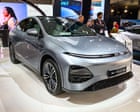
When a Chinese EV manufacturer like Xpeng, BYD, or Nio decides to sell a car in Europe, the vehicle undergoes a financial transformation before its tires even touch European asphalt. It is a death by a thousand cuts, disguised as line items.
First comes the physical journey. Shipping a two-tonne block of steel, lithium, and glass halfway across the globe is an astonishingly expensive endeavor. Ocean freight rates fluctuate wildly. Roll-on/roll-on vessels—the massive, specialized ships required to transport vehicles—are in desperately short supply. Space on these floating parking garages commands a premium that eats into margins before a single mile is driven.
Then comes the legal fortress.
The European Union and the United Kingdom are not passive bystanders in the global economic arena. They are protective entities. Tariffs are the first line of defense. The EU’s anti-subsidy investigation into Chinese EVs has resulted in a steep layer of provisional duties stacked on top of the standard ten percent import tax.
When you add up the shipping costs, the import duties, the local value-added taxes, and the mandatory European safety certifications—which often require expensive engineering modifications to the vehicle's software and structural frame—the price advantage evaporates. A car that sells for the equivalent of twenty thousand pounds in Shanghai suddenly commands thirty-five thousand in Manchester.
The cheap Chinese EV is a ghost. It vanishes the moment it crosses the hemisphere.
The High Cost of Planting Roots
But surely, you might think, these companies will simply bypass the ports. They will build factories on European soil, employ local workers, and dodge the tariffs entirely.
It sounds logical. It is the playbook Japanese automakers used in the 1980s to conquer the Western market. But the world has grown infinitely more complicated, and far more expensive, since then.
Consider the reality of setting up a manufacturing plant in Western or Central Europe. You are no longer operating in an ecosystem of cheap industrial land and subsidized energy. You are entering a realm of stringent labor laws, powerful unions, high wages, and some of the most expensive industrial electricity on the planet.
Brian laughs when I bring up localized manufacturing. "You can't just copy-paste a factory from Guangdong to Hungary or Germany," he says. "In China, the supply chain is a living organism. The battery cell maker is down the street. The semiconductor plant is next door. The steel mill is a short truck ride away. In Europe, you are building from scratch, and every link in that chain costs triple."
Brian’s insight cuts to the heart of the matter. Brian knows that localizing production does not automatically lower prices; often, it locks high prices in place. The capital expenditure required to build these facilities is astronomical. To claw back that investment, manufacturers cannot sell cheap cars. They must sell premium vehicles with fat profit margins.
Brian’s daily reality is dealing with the quiet nightmare of European compliance. A single regulatory delay can cost millions. He recalls a shipment of components held at a port for three weeks because a specific environmental certification form lacked a digital stamp. That is the hidden tax of doing business in Europe. It is a tax that is ultimately paid by the consumer at the dealership.
The Premium Pivot
This brings us to a uncomfortable truth about the strategic mindset of Chinese automotive executives. They are not charitable organizations intent on subsidizing the West's green ambitions. They are ambitious, profit-driven enterprises.
Brian’s perspective shifted when he attended a major automotive trade show last year. He watched European executives pacing nervously around Chinese premium SUVs, measuring panel gaps and tapping touchscreens with a mix of awe and dread.
"They aren't trying to be the next budget brand," Brian realized. "They don't want to be the cheap alternative you buy because you can't afford a Volkswagen or a BMW. They want to be the premium standard."
Look closely at the vehicles being launched by these new players. They are not Spartan econo-boxes meant for grocery runs. They are rolling luxury lounges. They feature dual-motor all-wheel-drive systems, sweeping digital dashboards powered by high-end gaming processors, lidar sensors for autonomous driving, and interiors lined with vegan leather and ambient lighting.
These features are not cheap to develop, and they are not cheap to sell. By positioning themselves at the higher end of the market, Chinese brands are making a calculated bet. They know they cannot win a price war against European regulators and local manufacturing costs at the bottom of the market. So, they are taking the fight to the top.
They are matching European premium brands feature for feature, often out-innovating them on software and battery tech, while pricing their vehicles just slightly below the entrenched luxury players. It is a brilliant business strategy. But it offers absolutely no comfort to the family standing in that showroom, staring at a monthly payment that resembles a second mortgage.
The Human Cost of the Premium Wall
The consequences of this macroeconomic reality are profoundly human, and they are playing out in living rooms across Europe every single night.
Consider a second hypothetical scenario, one that repeats in thousands of households. Meet Sarah. She is a district nurse in Yorkshire. She drives forty miles a day visiting elderly patients. Her ten-year-old diesel estate is wheezing its way toward its final MOT. She wants an electric car. She needs an electric car, because the low-emission zones expanding in her nearby city center will soon charge her ten pounds a day just to drive to work.
Sarah sat down with a financial advisor last month. She brought brochures for three different electric hatchbacks.
The advisor looked at her income, looked at the interest rates on personal contract purchases, and gently shook his head. "The numbers don't work, Sarah," he said. "Even with the fuel savings, the entry fee is just too high."
Sarah's situation illustrates the dangerous divergence occurring in our society. We are creating a two-tiered mobility system. On one tier are the wealthy, who can afford the high entry price of an EV, enjoy low running costs, and cruise through emission-free zones without a care. On the other tier are people like Sarah, locked out by the premium wall, forced to nurse aging internal combustion cars toward their graves, paying mounting penalties for the crime of being unable to afford a forty-thousand-pound battery on wheels.
We were promised that Chinese rivalry would break this wall down. We were told that market forces would democratize the technology.
But the market is shackled by geography, geopolitics, and the sheer, unyielding cost of European reality. The price floor is set, and it is made of concrete.
The Cold Reality in the Showroom
Back in the showroom, the couple turns away from the electric hatchback. They walk over to a certified pre-owned petrol vehicle sitting in the corner. It is three years old. It has thirty thousand miles on the odometer. It smells faintly of the previous owner's air freshener.
The husband sighs, a sound of quiet resignation that any middle-class consumer would instantly recognize. "Maybe the next one," he mutters, reaching for his pen to sign the paperwork for a car that burns fossil fuels.
The grand narrative of the cheap electric car revolution has collided with the cold, hard physics of global business. Prices are not going to dive. The rivalry from the East will bring innovation, choice, and technological marvels to Western shores, but it will not bring a discount.
The green transition remains an exclusive club, and the cost of membership is staying exactly where it is.


