The traditional presidential library is dead. For decades, these institutions followed a predictable formula. A retired commander-in-chief would pick a plot of land, build a massive limestone monument to their own ego, and fill it with boxes of paper records managed by the federal government. Scholars would fly in to read old memos, while tourists would stare at a replica of the Oval Office and buy cheap campaign buttons at the gift shop.
The grand opening of the Obama Presidential Center on June 19, 2026, completely breaks this mold. Located on Chicago's South Side in historic Jackson Park, this $850 million campus marks a total departure from how America preserves executive history. It isn't just a building change. It is a fundamental shift in purpose, architecture, and technology that challenges what a presidential site should actually do for its community.
If you think you know what a presidential library looks like, you need to adjust your expectations. The old system focused entirely on looking backward at the past. The new approach is obsessed with looking forward.
The First Fully Digital Imperial Archive
Every president since Franklin D. Roosevelt has had an official library managed by the National Archives and Records Administration, commonly known as NARA. These facilities traditionally act as giant filing cabinets. Millions of physical pages, top-secret cables, and diplomatic gifts sit in climate-controlled vaults under strict federal security.
The Obama Presidential Center changes this entirely. It is the first presidential library of its kind that won't house any physical, unclassified presidential documents on site.
Instead of moving tons of paper to Chicago, the Obama Foundation is funding the digitization of all unclassified paper records from the administration. The actual physical documents remain in a secure NARA facility in Washington, D.C., and Maryland. When researchers want to look at a memo regarding the Affordable Care Act or a transcript of a high-level meeting, they won't sit in a quiet reading room in Jackson Park. They will log onto a computer from anywhere in the world.
This choice sparked intense debate among historians. Some purists argue that something vital is lost when you can't touch the actual paper or see the physical ink of a president's signature. They worry that digitization slows down the declassification process, as NARA staff must scan and process millions of pages.
The counter-argument wins on accessibility. Why should an undergraduate student in California or a researcher in Kenya have to buy a plane ticket to Chicago just to read a public document? Going digital democratizes access to historical records. It strips away the geographical privilege that has always gatekept elite historical research.
From Quiet Research Lab to a Living Civic Campus
Step onto the 19.3-acre campus in Jackson Park and you'll quickly realize this place looks more like an active urban park than a quiet government archive. Traditional libraries are designed to keep people out unless they have a research badge or a museum ticket. This site does the exact opposite.
The campus features a massive public museum tower, but the surrounding grounds are completely open to the neighborhood. The foundation built a branch of the Chicago Public Library right on the site. Local kids can walk in, get a library card, borrow books, and study in a space dedicated to the neighborhood.
Look at the other amenities scattered across the property. There is a full-sized indoor basketball court called Home Court. There is a nature-inspired playground, a sprawling great lawn for neighborhood gatherings, and the Eleanor Roosevelt Fruit and Vegetable Garden. A public restaurant run by local Chicago chef Cliff Rome serves food that reflects the culinary culture of the South Side.
This isn't an accident. It is a deliberate effort to reverse a long history of presidential libraries acting as isolated enclaves. Think about the George W. Bush Presidential Center in Dallas or the Ronald Reagan Presidential Library in Simi Valley. They are beautiful, impressive facilities, but they sit on secluded campuses or university grounds, separated from everyday working-class life.
The Obama Center plants itself directly into a historic, predominantly Black neighborhood. By opening on June 19—Juneteenth—the organizers are tying the legacy of the first Black president straight to the national holiday celebrating Black liberation. It is an explicitly political and social statement about ownership of public space.
The Hidden Battles Over Community Displacements
You can't talk about a massive $850 million construction project in Chicago without talking about gentrification and neighborhood pushback. While the national media celebrates the architectural beauty of the new museum tower, local residents have spent years fighting to protect their homes.
When a massive cultural institution drops into a working-class neighborhood, property values spike. Rents go up. Property taxes skyrocket. Longtime residents get priced out.
To combat this, a coalition of local community groups fought bitterly for a Community Benefits Agreement. They demanded strict protections from the city council to ensure that the people who lived through the decades of disinvestment on the South Side wouldn't be forced out just as the neighborhood finally received a major investment.
The fight resulted in the passing of a landmark housing ordinance in 2020, which set aside millions of dollars for affordable housing preservation, tenant protection, and homeownership assistance in the Woodlawn neighborhood adjacent to the park. Even with these protections, tension remains. Walk down Stony Island Avenue today and you will see the physical reality of a changing neighborhood. New condos are popping up, and older apartment buildings are getting gut-renovated.
This highlights a major lesson for any future presidential center. You cannot build a monument to democracy while ignoring the economic democratic needs of the immediate community surrounding your walls.
The Evolution of the Modern Executive Monument
To understand why this shift matters, you have to look at how we got here. Before the mid-twentieth century, presidential papers were treated as private property. When a president left office, they packed up their boxes and took them home.
Some presidents sold their papers to the highest bidder. Others left them to rot in damp barns. In some cases, families intentionally burned sensitive documents to protect a former president's reputation.
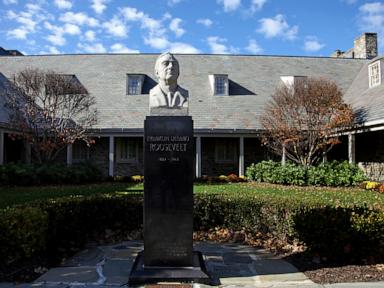
FDR realized this was a terrible way to preserve national history. He kicked off the modern system by offering his personal papers to the federal government and building a dedicated library on his estate in Hyde Park, New York, using private funds. Congress formalized this setup with the Presidential Libraries Act of 1955, establishing a system where private foundations build the facilities, then hand the keys over to NARA to run them permanently.
Over the decades, the system grew bloated. Each president tried to outdo their predecessor with larger buildings, flashier museum exhibits, and higher price tags. The costs of maintaining these massive structures became a heavy burden on taxpayers.
Congress tried to fix this by mandating that private foundations create massive endowments to help cover operational costs before NARA takes over. The Obama Foundation bypassed a lot of this bureaucracy by opting out of the traditional NARA operational model for the main museum facility. By keeping the main museum under private foundation control and going digital with the official archives, they established a completely new legal and operational precedent.
How Future Presidents Are Following Suit
The choices made in Chicago are already rippling through the planning stages of future presidential projects. Donald Trump's team has faced ongoing discussions about how to handle his official library. Given the chaotic nature of contemporary record-keeping, the massive volume of digital communications, and the legal battles over presidential records, a traditional paper-heavy archive makes zero sense for any modern administration.
Future centers will likely double down on the digital-first approach. The days of shipping millions of physical banker boxes to a dedicated building are officially over. The focus has shifted entirely to curating an experience, managing an ongoing global foundation, and creating localized civic spaces.
This model changes the role of the former president from a retired historical figure into an active, contemporary global brand. The library is no longer a retirement home for an administration's legacy. It is a launching pad for a former president's ongoing post-White House political and cultural work.
What to Do Before Your Visit
If you plan to visit the new center in Chicago, you need to approach it differently than a typical museum trip. Here is how to get the most out of the experience without getting stuck in logistical headaches.
- Book Your Timed Tickets Early: The main museum tower requires a paid, timed-entry ticket. Do not show up expecting to walk up to a ticket window and get in. Book online weeks in advance, especially for weekend slots.
- Take the CTA or Metra: Parking around Jackson Park is notoriously tight and expensive. The easiest way to get there is by taking the Metra Electric line to the 59th St. station or using CTA bus lines like the #6 Jackson Park Express or the #10 Obama Presidential Center Express.
- Explore the Free Spaces: Do not spend all your time inside the museum tower. Allocate at least an hour to walk the Wetland Walk, visit the John Lewis Plaza, and check out the public art installations scattered across the 19 acres.
- Look Beyond the Main Exhibits: Skip the crowd at the standard campaign retrospective rooms and head up to the Sky Room at the top of the museum tower. The view gives you a direct look at the geography of the South Side, which tells you more about the context of the presidency than any video display ever could.