The Calculated Mirage of the Backyard Safari
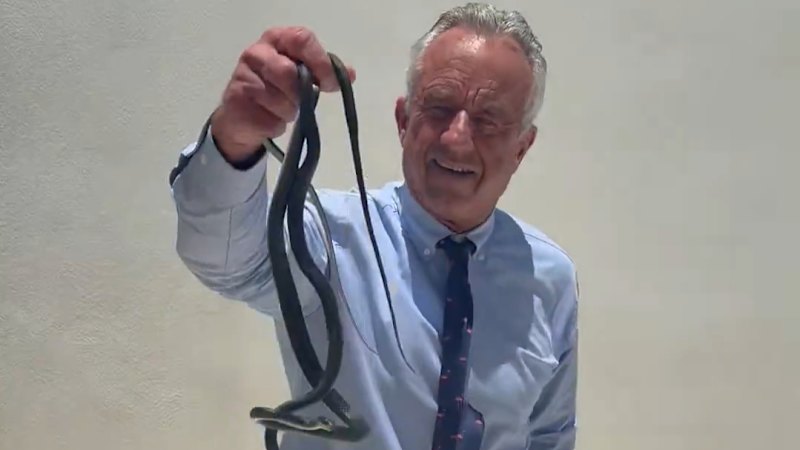
Mainstream media platforms love a cheap visual. When Robert F. Kennedy Jr. wrangles a snake on Mehmet Oz’s patio, the internet instantly divides into predictable camps. Critics call it unhinged behavior. Loyalists view it as a display of raw, unfiltered authenticity.
Both sides are completely missing the point.
This is not a spontaneous moment of eccentric bravery, nor is it a sign of political instability. It is a highly engineered piece of political theater designed to exploit a media ecosystem that prioritizes visceral imagery over substantive policy. I have watched political operatives spend millions trying to manufacture even a fraction of this organic-looking engagement. The lazy consensus views this event as a bizarre sideshow. In reality, it is a masterclass in modern attention economy manipulation.
We are tracking a shift in how public figures establish authority. The old playbook demanded sterile press conferences and carefully vetted white papers. The new playbook demands spectacle. By grabbing a reptile with his bare hands, a public figure signals a willingness to engage with the raw elements of nature, subtly tapping into primal archetypes of leadership and fearlessness. It bypasses the intellectual cortex entirely and aims straight for the amygdala.
Dismantling the Authenticity Trap
The public frequently asks: "Is this genuine behavior or a political stunt?"
The premise of the question is flawed. In contemporary political communication, the boundary between genuine personal habit and calculated public relations has been completely erased. For figures operating on the populist fringes or aiming to disrupt institutional norms, the stunt is the authenticity.
Let's break down the mechanics of why this specific imagery works so effectively on the human brain:
- The Disruption of Comfort: Seeing a well-known figure in a manicured suburban setting—like a patio—interacting with a symbol of danger creates immediate cognitive dissonance. The contrast forces the viewer to stop scrolling.
- The Anti-Elite Signal: Mainstream politicians are viewed as fragile, protected by layers of security and protocol. Handling a snake signals that a person is unvarnished, tactile, and unafraid to get their hands dirty.
- The Meme Lifecycle: A video of a policy debate has a shelf life of twelve hours. A video of a public figure wrestling wildlife is infinitely loopable, remixable, and guaranteed to saturate every social media algorithm within minutes.
Imagine a scenario where a candidate releases a comprehensive, 50-page plan on agricultural reform. It receives minimal coverage. Now imagine that same candidate eats a raw piece of livestock feed on a farm. The latter dominates the news cycle for a week. The media ecosystem does not reward depth; it rewards high-contrast, easily digestible imagery.
The Shared Currency of Outsider Status
The pairing of these two specific individuals is not accidental. Both figures have built massive audiences by positioning themselves against established institutional consensus—whether in medicine, public health, or federal governance.
When they convene in a casual, domestic setting to engage in borderline reckless behavior, they are reinforcing a shared brand: the fearless truth-tellers who dare to touch what the cautious establishment fears.
Herpetologists and wildlife experts are quick to point out the actual risks of handling wild animals without proper safety equipment or training. They cite protocols from organizations like the Association of Reptile and Amphibian Veterinarians to highlight the irresponsibility of the act. But pointing out the objective danger or the potential harm to the animal only fuels the narrative. The defiance of expert advice is the literal objective of the exercise.
The downside to this strategy is obvious. It alienates institutionalists and deepens the polarization of the electorate. It trades long-term, broad-based credibility for short-term, high-intensity loyalty. For an insider trying to build a traditional coalition, this move is suicidal. But for a disruptor, traditional credibility is a liability, not an asset.
Stop Analyzing the Reptile and Look at the Camera
The public constantly falls into the trap of debating the wrong topic. People argue about whether the snake was venomous, whether the act was humane, or what it says about the individual's mental state.
Stop looking at the snake. Look at the camera tracking the snake.
This performance thrives on your outrage just as much as it thrives on your admiration. Every quote-tweet condemning the recklessness, every late-night monologue mocking the absurdity, and every serious journalistic breakdown of the event serves the exact same purpose: it expands the reach of the image.
In the attention economy, negative engagement is still engagement. The only way to defeat a spectacle is to ignore it. By analyzing it, condemning it, or defending it, you are actively participating in the execution of the strategy. You are executing their media plan for them, free of charge.
Log off the debate forums. Close the commentary channels. The next time you see a public figure doing something shockingly unconventional on a patio, recognize it for what it is: an audition for your attention. Turn off the screen.