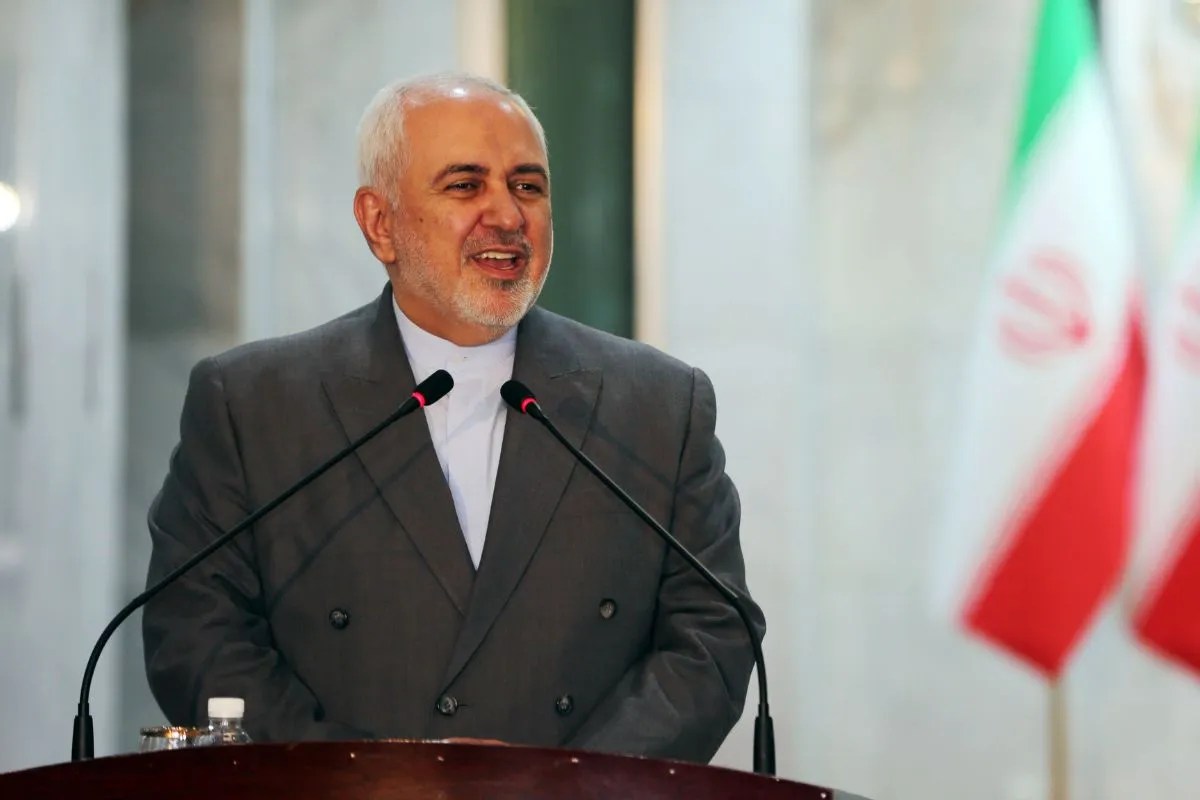
The room in Tehran probably smelled of bitter black tea and the faint, metallic scent of air conditioning fighting a losing battle against the Persian heat. Javad Zarif, a man who has spent more time in the pressure cooker of international diplomacy than almost any other living statesman, wasn't just speaking to a microphone. He was speaking to history. When he looked down the metaphorical lens at Washington and said, "You cannot dictate terms," he wasn't just making a policy statement. He was drawing a line in the sand that has been shifting for forty years.
Diplomacy is often painted as a chess match, but that is a lie. Chess is logical. Chess has fixed rules. This is high-stakes poker played in a room where the lights keep flickering and someone is always reaching for a holster under the table. Zarif’s recent bluntness regarding the failed peace talks with the United States marks a specific, jagged turning point in a relationship defined by missed cues and bruised egos.
The Ghost at the Negotiating Table
Consider a hypothetical shopkeeper in a bazaar in Isfahan. We will call him Ahmad. Ahmad doesn’t care about the nuances of "strategic patience" or the specific centrifuge count at Natanz. He cares about the price of cooking oil. He cares that the medicine his mother needs is trapped behind a wall of sanctions that were supposed to target "the regime" but ended up hitting his dinner table instead.
When Zarif speaks, he is carrying the weight of millions of Ahmads. The failure of peace talks isn't a headline for these people; it is a lifestyle. The American perspective often assumes that if you turn the thumb-screws of economic pressure tight enough, the other side will eventually scream and sign whatever paper you put in front of them. It is a transactional view of human nature.
But pride is a hell of a drug.
Zarif’s core argument is that the United States continues to operate under the "maximum pressure" mindset, even when they claim to be seeking a "maximum diplomacy" outcome. You cannot walk into a room, hold a gun to someone’s wallet, and then act surprised when they refuse to discuss the weather. The Iranian position has hardened because they feel they have already paid the entry fee for a club they were never allowed to join.
The Broken Promise of 2015
To understand why the current talks have hit a brick wall, you have to look at the wreckage of the JCPOA. For a brief window in 2015, the world felt lighter. There were photos of John Kerry and Javad Zarif walking together in Geneva. It looked like the beginning of an era where two old enemies might finally trade their swords for slightly less sharp butter knives.
Then the ink was retracted.
When the U.S. pulled out of the deal in 2018, it didn't just kill a policy; it killed the very idea of American reliability in the eyes of the Iranian hardliners. It made the moderates—men like Zarif—look like fools. They had traded their country’s nuclear leverage for a promise that turned out to be as stable as a house of cards in a hurricane.
Now, the Americans come back to the table and ask for more. They want to talk about missiles. They want to talk about regional influence. They want to expand the scope of the original deal before even proving they can stick to the first one.
Zarif’s "two-word" response—essentially telling the U.S. that they are in no position to demand concessions—is the sound of a door being bolted from the inside. It is the realization that if you are going to be treated like an outcast regardless of your behavior, you might as well act like one.
The Language of the Ultimatum
Words matter. In the West, we hear "You cannot dictate terms" and see it as aggression. In Tehran, it is framed as dignity.
The U.S. approach has long been built on the assumption of American Exceptionalism—the idea that the rules apply to everyone else, but the U.S. writes the rules. This works when you are dealing with a client state. It fails spectacularly when you are dealing with a civilization that measures its history in millennia rather than centuries.
Iran isn't just a country; it is a memory of an empire. When a superpower tells an ancient culture to "do as they are told," the response is almost always going to be a middle finger wrapped in a diplomat’s suit.
The failure of these talks isn't a technical glitch. It is a fundamental disagreement on the nature of power. The U.S. believes power is the ability to coerce. Iran, at least in its current rhetorical stance, believes power is the ability to resist coercion. These two definitions cannot occupy the same space.
The Human Cost of High-Level Spites
While the bureaucrats argue over the phrasing of "compliance for compliance," the reality on the ground continues to rot.
Imagine a young student in Tehran, brilliant in physics, who cannot get a visa to study abroad because of his passport. Imagine a doctor who has to tell a patient that the specific chemotherapy drug they need is unavailable because the banking channels are frozen.
These aren't hypothetical people. They are the collateral damage of a cold war that refuses to thaw.
The tragedy of the "No Terms" stance is that it is functionally correct but humanly devastating. Zarif is right: a negotiation where one side holds all the cards and the other is expected to just say "thank you" isn't a negotiation. It’s a surrender. And yet, by refusing to play the game on those lopsided terms, the cycle of isolation continues.
The U.S. is currently trapped in its own political cycle. No president wants to look "soft" on Iran. To do so is political suicide in certain circles of Washington. So, they maintain the sanctions, they maintain the rhetoric, and they wonder why the needle doesn't move.
The Invisible Stakes
What happens when the talking stops?
Silence is the most dangerous sound in geopolitics. When diplomats stop shouting at each other, the generals start whispering.
The "two-to-one" logic of the Iranian leadership is simple: if the U.S. won't offer a path to normalcy, Iran will create a path to necessity. They will increase their enrichment. They will deepen their ties with Moscow and Beijing. They will make themselves too dangerous to ignore, even if they can't be liked.
This isn't a strategy born of madness. It is a strategy born of cornered-animal logic. If the world won't let you through the front door, you start looking for the matches to burn the house down.
Zarif’s latest outburst is a warning. It is a signal that the "moderates" in Iran—the ones who actually wanted to talk—have reached the end of their rope. They are being replaced by a generation that doesn't remember the 2015 handshake, but does remember the 2018 betrayal.
Beyond the Ink and Paper
We often treat international relations like a game of Risk, moving colored pieces across a map. We forget that the pieces bleed.
The failure of these peace talks is a failure of imagination. It is the inability of the West to see Iran as anything other than a "problem to be solved," and the inability of Iran to see the West as anything other than a "bully to be resisted."
The air in that room in Tehran remains heavy. The tea has gone cold.
If the U.S. continues to believe that peace is something that can be bought with threats and sold with sanctions, they are not just misreading the room—they are reading the wrong book. Diplomacy requires the one thing that both sides currently lack: the courage to be vulnerable. Without it, we aren't moving toward a solution. We are just waiting for the next explosion.
The shopkeeper in Isfahan closes his shutters. He doesn't know what Zarif said today. He only knows that the price of bread went up again.
He waits. The world waits.
The poker game continues, but the players are running out of chips, and the house is starting to smoke.