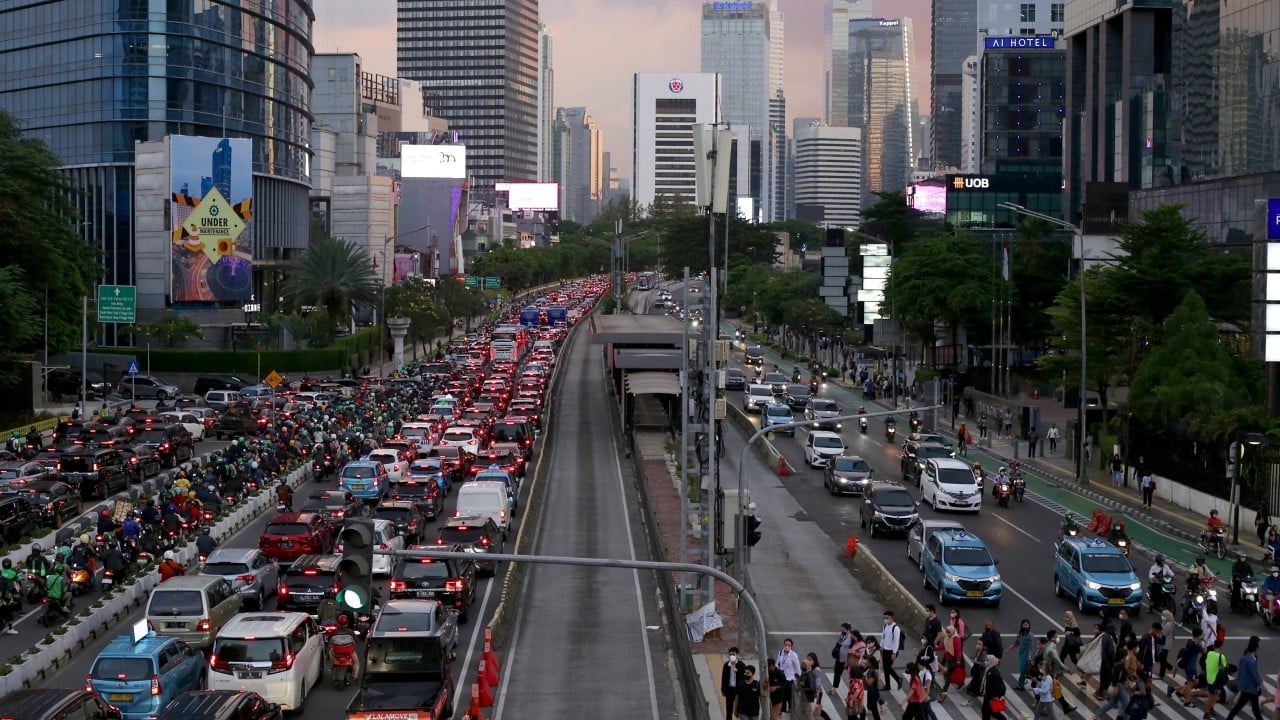
August smells like smoke, crushed grass, and fried onions in Jakarta. Every concrete wall blooms with red and white banners. Every alleyway echoes with the frantic, joyful hammering of scaffolding for the neighborhood stages. Independence Day is coming.
For most, the week leading up to August 17th is an exercise in collective breath-holding. It is the annual pilgrimage back to hometowns, the careful ironing of white-and-red uniforms for school children, the anticipation of greasy-pole climbing competitions. But behind the rhythmic beating of traditional drums and the scent of clove cigarettes, a different kind of percussion is picking up speed.
It is the silent, relentless ping of a smartphone screen lighting up in the dark.
Imagine walking down a crowded street in Menteng. The air is thick with humidity and excitement. Yet, look closely at the faces illuminated by the blue glow of mobile displays. People are not just smiling at family photos. They are staring at screens where a fabricated video shows a local politician tearing down the national flag. They are reading a breathless, entirely fictional message about a coordinated blackout meant to disrupt the national celebrations.
Falsehoods travel faster when wrapped in patriotism. This is the weaponization of history.
The Anatomy Of A Whispered Lie
To understand why Indonesia's Ministry of Communication and Information issues stern warnings against spreading fake news right before its national day, you have to look past the bureaucratic language of policy statements. You have to look at human vulnerability.
Picture Dewi. She is a fifty-two-year-old grandmother living in a quiet neighborhood in Yogyakarta. Her smartphone is her window to the world, her lifeline to grandchildren scattered across three different islands, and her primary source of news. Dewi does not read deep investigative journalism. She relies on WhatsApp groups—dozens of them—filled with old school friends, mosque committees, and extended family.
When a message pops up in her family chat, claiming that foreign agitators are planning to disrupt the upcoming anniversary celebrations, her heart does a familiar, uncomfortable flutter. It feels urgent. It features a grainy image that looks official enough. The text urges her to forward it immediately to "protect her family and country."
In that split second, Dewi is not a victim of technology. She is a victim of her own love for her country. The hoaxers know this. They exploit the deep, fierce pride Indonesians feel for their hard-won sovereignty, twisting that emotion into a tool for chaos.
When the government steps in with warnings, threatening legal action under the Electronic Information and Transactions Law, critics often cry out about censorship. But spend an hour watching rumors cascade through regional messaging networks during national holidays, and you realize the stakes are entirely physical. Words on a screen do not stay on the screen. They spill out into the streets. They turn neighbor against neighbor. They turn a national birthday into a tinderbox.
Why The Timing Matters
August 17th is not just a date on a calendar. It is the emotional anchor of the archipelago. In 1945, proclamation of independence was a desperate, courageous act broadcast across crackling radio waves and whispered through bamboo megaphones. Today, the battleground has shifted from jungle ridges to digital fiber optics.
Bad actors—whether politically motivated trolls, foreign disrupters, or click-hungry sensationalists—know that national holidays are moments of heightened emotional resonance. People are primed to feel strongly. When emotions run high, critical thinking runs low.
Consider the mechanics of digital deception during these sensitive windows. A typical viral fake news story follows a precise, toxic formula:
- It preys on existing social, religious, or ethnic fault lines.
- It mimics the styling of reputable news organizations.
- It employs artificial urgency, demanding immediate sharing before "they delete it."
- It uses historical touchstones of the independence struggle to manufacture artificial outrage.
The Indonesian government’s digital forensics teams work overtime during August. They track domain names, flag automated bot accounts, and issue rapid rebuttals. Yet, playing digital whack-a-mole is a losing battle. By the time a rumor is officially debunked, it has already mutated into three new forms, crossing provincial boundaries on the encrypted pathways of mobile apps.
The Cost Of Credulity
We like to think we are immune. We scroll past ridiculous headlines with a smirk, assuming everyone else is smart enough to see through them. But disinformation does not need to fool everyone. It only needs to create enough friction, enough doubt, to make people hesitate.
During the lead-up to Independence Day, false reports regarding food shortages, manufactured security threats, and staged political insults are deliberately injected into the public discourse. The goal is simple: fracture the unity that the holiday celebrates. If citizens cannot trust what they see on their screens, they begin to distrust each other.
This is where the human toll becomes visible. It is found in the weary sigh of a local police chief trying to calm an agitated crowd that gathered because of a fake viral voice note. It is found in the anxiety of small business owners who wonder if unrest will ruin the holiday market sales. It is found in the quiet erosion of communal trust.
Transparency is the only antidote, yet truth moves slower than fiction. Fiction puts on running shoes while truth is still lacing its boots.
Reclaiming The Narrative
The warnings issued by authorities are not just administrative directives. They are pleas for digital hygiene. They are reminders that holding a smartphone is akin to holding a match in a dry forest.
Every time we hit the forward button without verifying, we become unpaid interns for chaos. Every time we pause, check a reputable source, and refuse to amplify sensational garbage, we starve the machine.
Independence was not handed to Indonesia on a silver platter; it was forged through sacrifice, discipline, and a shared vision of a common future. Preserving that freedom today requires a different kind of vigilance. It requires citizens who are as protective of their digital spaces as their forebears were of their physical borders.
The firecrackers will go off soon. The red banners will snap in the tropical breeze. The spirit of 1945 will echo from Sabang to Merauke.
And somewhere in the digital ether, another rumor will try to take flight. Whether it crashes or soars depends entirely on the thumb hovering over the screen.