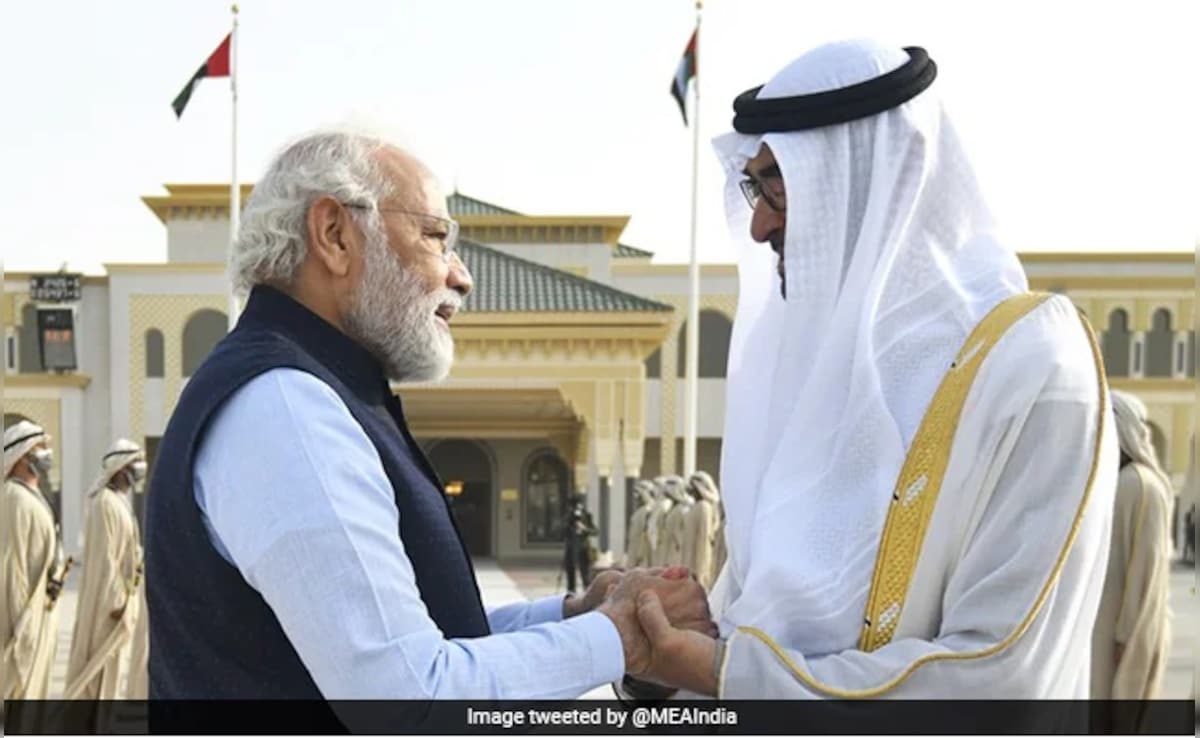
Diplomacy isn't about collecting perfect friendships. It's about navigating friction. As Prime Minister Narendra Modi touches down in the United Arab Emirates for his high-stakes multi-nation tour, commentators are quick to point toward a supposed Saudi Arabian roadblock. They call it a complication. They point to Riyadh’s massive September 2025 strategic defense pact with Pakistan—the one whispered about as the foundation for an "Islamic NATO"—and claim India's Middle East strategy is hitting a wall.
That view is flat-out wrong. It fundamentally misunderstands how modern geopolitics operates.
New Delhi isn't treating the Gulf as a single, homogenous bloc anymore. The real story here isn't that Saudi Arabia is pulling back; it's that India and the UAE have built an economic and strategic relationship so tight that it no longer relies on what happens in Riyadh. This visit isn't a damage-control mission. It's a victory lap for a bilateral partnership that hit an astonishing $100 billion in trade for the 2024-25 fiscal year.
The Myth of the Monolithic Gulf
For decades, Indian foreign policy bureaucrats operated under an old, tired assumption. They believed that because the Gulf Cooperation Council nations shared a religious identity with Pakistan, they would always side with Islamabad on critical issues like Kashmir.
Modi smashed that assumption. By treating Abu Dhabi and Riyadh as distinct economic powerhouses with their own national interests, India broke the old hyphenation.
Look at the data. Pakistan’s trade with Saudi Arabia hovers around a meager $3.7 billion. Its trade with the UAE sits at roughly $8 billion. India, meanwhile, is the UAE's third-largest trading partner. Millions of Indian expatriates pump billions in remittances back home, while Emirati sovereign wealth funds are directly financing Indian infrastructure.
When Saudi Arabia signed its Mutual Defense Agreement with Pakistan, treating an attack on one as an attack on both, it wasn't a personal snub to New Delhi. It was Riyadh securing its own defense perimeter amid historic regional chaos. The UAE knows this. India knows this. Expecting Abu Dhabi to freeze its ties with New Delhi just because Riyadh signed a piece of paper with Islamabad is a fundamental misunderstanding of the region's realpolitik.
Abu Dhabi Is India's New Economic Engine
The true substance of the India-UAE relationship isn't found in vague diplomatic communiqués. It’s found in concrete, multi-billion-dollar commitments. The Comprehensive Economic Partnership Agreement signed in 2022 wasn't just a trade deal; it was a structural binding of two economies.
Take a look at what is actually being built right now. We aren't just talking about oil shipments anymore.
- The Dholera Megaproject: The UAE is actively negotiating a massive partnership to develop the Special Investment Region in Dholera, Gujarat. This includes an international airport, an advanced pilot training school, a greenfield port, and a smart urban township.
- Deep Tech and Space Exploration: The two nations just launched a joint commercial space initiative. They aren't just buying satellites; they're building an end-to-end space industrial base to launch joint missions.
- The Second Infrastructure Fund: Following the success of the first National Investment and Infrastructure Fund, India is officially inviting Emirati sovereign wealth to anchor a second massive fund launching this year.
This level of integration goes far beyond traditional trade. They're even laying the groundwork for "Digital Embassies" to operate under mutually recognized sovereignty arrangements. This isn't the behavior of a country worried about a Saudi complication. It’s the behavior of two nations locking in a multi-decade alliance.
The IMEC Reality Check
You can't talk about India, the UAE, and Saudi Arabia without talking about the India-Middle East-Europe Economic Corridor. Critics love to claim that IMEC is dead, paralyzed by the ongoing Middle East conflict and the freezing of the critical Saudi-Jordan-Israel rail segment.
But true strategists look at the long game. IMEC was never just a collection of railway tracks; it was a direct geopolitical alternative to China's Belt and Road Initiative and a way to bypass overland routes through Pakistan.
While the full corridor to Europe faces undeniable delays, the initial maritime and logistical link between India and the UAE is operating at full throttle. Abu Dhabi serves as the absolute gateway for this network. Crown Prince Mohammed bin Salman previously pledged $20 billion toward infrastructure connected to this broader global initiative. Saudi Arabia hasn't abandoned the economic logic of connecting Asian markets to the West; they're simply managing a volatile security landscape. India’s strategy is to maximize the UAE link today so that the corridor is primed for expansion tomorrow.
The Security Equation Shifts
The old argument was that India could never count on the Gulf for security. That argument died when Iran began raining ballistic missiles and drones across the region, directly striking Emirati interests.
New Delhi didn't stay neutral. Modi didn't mince words, explicitly stating that India stands in total solidarity with the UAE. India even sponsored a United Nations Security Council Resolution condemning these attacks on GCC countries.
This created a massive paradigm shift in Abu Dhabi. While Pakistan historically provided the military muscle for the Gulf, its worsening economic crisis and ambiguous stance during recent regional flare-ups have deeply frustrated Emirati leadership. Abu Dhabi recently pressured Pakistan to return $2 billion in financial support. Meanwhile, Indian and Emirati military forces are holding regular joint exercises, exchanging service chiefs, and signing letters of intent for joint weapons production and advanced defense technologies.
What Happens Next
Stop looking at Indian foreign policy through the lens of zero-sum anxiety. The UAE and Saudi Arabia are commercial competitors as much as they are regional allies. They are both sprinting to diversify their economies before the oil runs out, and India represents the ultimate consumer market and tech pool for that transition.
If you want to understand where this trial of strength is heading, look at the immediate actions coming out of this visit. The smart play is to watch the financial and digital integrations. Teams on both sides are currently interlinking their national payment platforms to make cross-border transactions instant and cheap. They are building a literal "House of India" in Abu Dhabi as a permanent fixture of this relationship.
The diplomatic tightrope is real, but India isn't losing its balance. By doubling down on Abu Dhabi, New Delhi ensures that its economic footprint in the Middle East remains completely bulletproof, regardless of the shifting alliances in Riyadh.