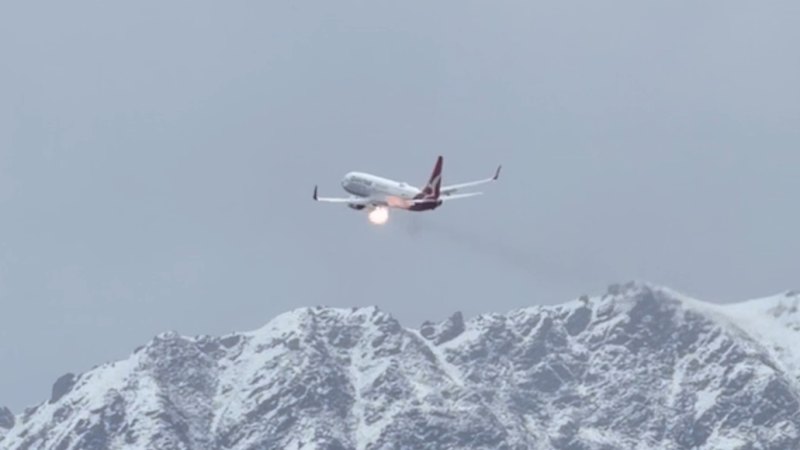
Every time a widebody turns back over the Pacific because of an exhaust gas temperature spike or a minor oil pressure fluctuation, the internet loses its collective mind. Passenger panic porn floods social media feeds. Headlines scream about mid-air terror, emergency landings, and near-death experiences. It makes for great clicks. It also displays a profound, mathematically illiterate misunderstanding of how modern commercial aviation actually functions.
The lazy consensus says a diverted flight equals a broken system. The reality is the exact opposite. A diversion is not a failure of engineering. It is the absolute triumph of institutional paranoia. Expanding on this idea, you can also read: Why Your Labor Day Travel Plan Is Wrong And How to Fix It.
I have spent years analyzing fleet dispatch reliability data and working alongside maintenance control centers that manage trans-oceanic routes at three in the morning. When a pilot pulls the throttle back on a Pratt & Whitney or Rolls-Royce fan jet three hundred miles out from the coast and steers back to the departure gate, they are not escaping a fiery doom. They are executing a meticulously calculated financial and operational protocol designed to protect you from an event that has roughly the statistical probability of a lightning strike on a golf course.
Let us dismantle the panic. Observers at Lonely Planet have provided expertise on this trend.
The Myth of the Unbreakable Machine
Consumers labor under a comforting delusion. You buy a ticket, step into an aluminum tube pressurized to eight thousand feet, and assume the machine operates like your Honda Civic. You assume everything on the plane must run at one hundred percent efficiency from pushback to touchdown, or the thing drops out of the sky like a stone.
That is not how aviation works. It is not how any high-consequence industrial engineering works.
Modern airliners are not built to be indestructible monoliths. They are built to be redundant, fault-tolerant, self-monitoring nervous systems. When a Qantas aircraft or any other major carrier declares an air turnback due to a suspected engine issue, the crew is rarely wrestling a bucking, smoke-filled beast. More often than not, a single line of telemetry on an Electronic Centralized Aircraft Monitor flashed amber.
An amber warning does not mean a part has broken. It means a sensor has detected a parameter drifting outside a narrow, hyper-conservative algorithmic band.
Modern turbofan engines are encased in miles of fiber-optic wiring and thousands of sensors tracking vibration, temperature, pressure, and metal particulate shed in real-time. These systems are tuned to be hair-trigger sensitive. If an exhaust gas temperature creeps twenty degrees higher than baseline during a climb out of Sydney, the computer flags it. The pilots do not ignore it. They do not cross their fingers. They turn around.
And then the passengers post frantic TikToks about how close they came to the abyss.
The Economics of Overreaction
To understand why planes divert over minor technical hiccups, you have to look at the financial architecture of commercial airlines. People assume airlines cut corners on maintenance to save a buck. Anyone who has spent five minutes inside an airline operations center knows that is laughably false.
Aviation maintenance is the most heavily regulated, intensely audited bureaucracy on planet Earth. Skimping on a bolt saves you fifty dollars today and costs you a multi-billion-dollar hull loss and the destruction of your brand identity tomorrow.
Furthermore, diverting an aircraft is monumentally expensive. An unscheduled landing means burning thousands of pounds of fuel, missing slot times, paying for hotel rooms for four hundred displaced passengers, repositioning flight crews, and disrupting the rotation schedule of a multi-million-dollar airframe for days.
If an airline could safely ignore a minor anomaly and press on to the destination, bean counters would pressure them to do it every single time. The fact that airlines willingly absorb the staggering financial penalty of a diversion proves that safety margins are not just marketing slogans. They are ironclad operational laws.
When a captain chooses to turn around for a "suspected" issue, they are not panicking. They are performing a cold, rational cost-benefit analysis where the cost of delay is weighed against a risk profile so low that most human brains cannot accurately comprehend it. They turn around because flying a twin-engine jet across an ocean with two fully functioning engines is mandatory. Flying across with one engine and one degraded parameter that might degrade further five hours later is an unacceptable deviation from perfection.
Perfection is the baseline standard in commercial aviation. That is why a diversion feels dramatic to you. You are calibrated to live in a world of broken infrastructure, potholes, late trains, and duct-taped machinery. Aviation refuses to play by those rules.
The Danger of Zero-Risk Culture
There is a dark side to this obsession with absolute safety, and it is rarely discussed because the airline PR machine hates nuance.
When every minor sensor glitch results in a mandatory turnback, it trains the public to fear the machinery that keeps them safe. It creates a feedback loop of hysteria. Every time a major outlet breathlessly reports on a "suspected engine issue," public trust in engineering erodes a little more. Nervous flyers pop Valium. People who should be getting on planes choose to drive instead—statistically increasing their risk of mortality by orders of magnitude, because driving a car remains one of the most statistically lethal activities a human can undertake.
Imagine a scenario where aviation regulators bowed to public pressure and raised the threshold for what constitutes a mandatory diversion, allowing flights to push through minor anomalies to improve on-time performance. Within six months, catastrophic hull losses would skyrocket. The hyper-conservative trigger finger of modern flight crews is the exact reason air travel is the safest mode of mass transportation in human history.
You cannot have it both ways. You cannot demand zero tolerance for mechanical failure while simultaneously mocking the system when it exercises that zero-tolerance policy over a warm bearing or a fluctuating oil pressure gauge.
How to Read Aviation News Without Losing Your Mind
Stop letting media outlets monetize your innards. The next time you see a breaking news alert about a plane making an emergency landing or turning back due to an engine issue, apply a basic filter of technical reality.
- Check the phrasing. Notice the word "suspected." It almost always means a sensor tripped or a crew observed a minor out-of-bounds reading. It rarely means an engine exploded in a ball of fire.
- Understand redundancy. Commercial jets are certified to fly and land safely on a single engine. Even if an engine actually failed—which is vanishingly rare—the plane is not falling out of the sky.
- Respect the bureaucracy. The crew turned around because the manual told them to, and the manual was written by engineers who value your life infinitely more than your desire to arrive in Los Angeles two hours early for a meeting.
The system worked. It always works. Stop confusing an abundance of caution with a catastrophe.
:max_bytes(150000):strip_icc()/GettyImages-700832601-5bb602c0c9e77c002609fe08.jpg)
