The light on the surface of Lower Peirce Reservoir never stays still. In the humid stillness of a Singapore afternoon, the water catches the glare of the tropical sun, fracturing it into a million shimmering shards. It looks peaceful. It looks deep.
And then, a phone buzzes.
For most of us, an image flashing across a screen is a fleeting thing. A thumb flicks upward, a synapse fires, and the moment vanishes into the digital ether. We have grown accustomed to consuming reality in bite-sized, glowing fragments. We trust our eyes because evolution trained us to trust them. If we see teeth, we run. If we see scales, we look closer.
Except when those scales were never really there.
The Ripple in the Digital Pond
Consider what happens when a single photograph alters the physical trajectory of emergency responders.
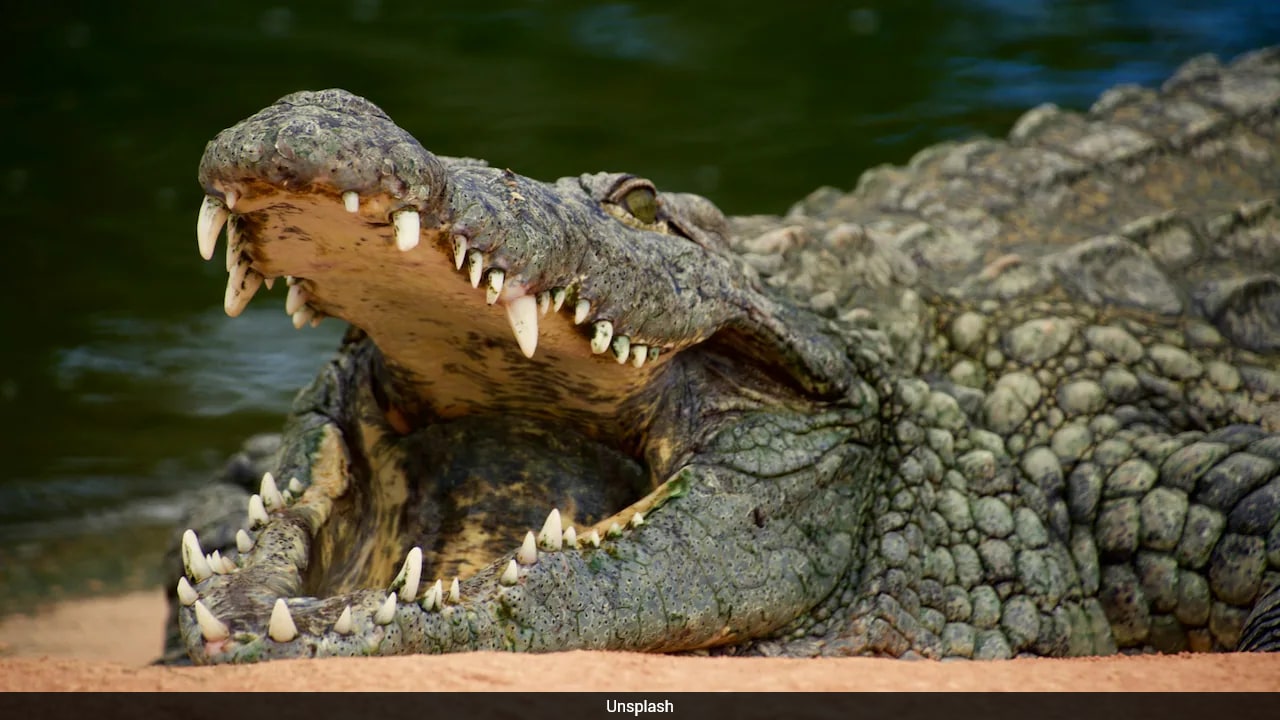
It starts quietly. A digital creation—slick, convincing, and entirely synthetic—is conjured into existence by artificial intelligence. A reptile that belongs in a tropical swamp or a cinematic frame is dropped seamlessly into the placid, urban-adjacent waters of a reservoir. To the untrained eye scrolling through a feed, it is a chilling spectacle. A massive, prehistoric-looking predator lurking just beneath the placid surface where joggers run and families stroll.
Panic spreads faster than water.
Within hours, reports reach authorities. Think about the dispatcher sitting behind a console, hearing the tremor in a caller's voice. Think about the institutional duty that kicks in instantly. You cannot ignore a threat to human life. You cannot look at a photograph of a giant apex predator in a public park and shrug it off as a joke until proven otherwise.
Resources mobilize. Engines turn over. Uniformed personnel deploy to the water's edge, scanning the ripples, holding heavy equipment, preparing for the worst-case scenario. Boats cut through the quiet water. Divers ready their gear. Hours of human labor, public funds, and acute anxiety are funneled into a desperate search for a phantom.
And all because a few pixels were arranged in the right order to mimic life.
The Anatomy of a Modern Hoax
We live in an era where seeing is no longer believing, yet our brains refuse to catch up with the technology we have built.
For generations, photography was held as an anchor to truth. The camera did not lie; it merely recorded the light that hit the lens. Even when Photoshop arrived, it required skill, time, and deliberate effort to doctor an image. Today, a prompt typed into a text box can generate a photo-realistic nightmare in seconds.
The danger is not just that the image is fake. The danger is the frictionless speed of its deception.
When a man in Singapore allegedly uploaded that AI-generated crocodile image, he likely viewed it as a harmless prank or an experiment in digital mischief. Perhaps he wanted to see how many reactions he could get, how many shares, how many gasps of shock. It is the modern itch for attention, scratched by digital tools that carry zero physical friction.
But physical reality always pushes back.
The men and women who rushed to the reservoir do not live in the feed. They live in the mud, the heat, and the immediate urgency of public safety. When a hoax pulls emergency services away from genuine crises, the cost is measured not in pixels, but in time, risk, and misdirected protection.
The Cost of Cheap Wonder
We have democratized the ability to deceive.
When creating a convincing falsehood becomes as easy as spelling out a sentence, the baseline of human trust erodes just a fraction more. Every time a viral hoax makes national news, a quiet cynicism settles into the public consciousness. Next time, when a real warning is issued, hesitation creeps in. Is it real? Or is it just another digital ghost?
That is the hidden tax of our new technological reality. It is not just the wasted hours of a reservoir search. It is the gradual decay of our shared baseline of fact.
Standing by the water’s edge after the search is called off, the surface is smooth again. The wind whispers through the secondary forest surrounding the park. The digital noise fades into the background hum of the city.
Yet the question remains, drifting just beneath the surface like the creature that never was: How do we navigate a world where our own creations are coming back to haunt us?