Stone remembers. Long after the prayers stop echoing against vaulted ceilings and the heavy oak doors swell against the damp Highland rain, the mortar holds its breath.
Walk into the nave of a converted Scottish kirk, and the first thing that hits you isn't the smell of fresh timber or the slick sheen of modern varnish. It is the cold. A centuries-old chill that seeps right through the soles of your shoes, stubbornly refusing to yield to underfloor heating or the hum of a newly installed boiler. It is the weight of silence.
For generations, these buildings anchored rural communities. They were the geographic and spiritual heartbeats of stone-built villages where everyone knew whose grandfather had carried the heavy slate for the roof. But congregations shrank. Roofs leaked. Heating bills skyrocketed into the thousands. The difficult math of survival forced hard choices, leaving parishes across Scotland with empty sanctuaries and a profound question: what do you do with a sacred space when the faithful move away?
Enter the modern renovator. Not a developer looking to bulldoze history for a row of identical flats, but someone willing to look past the damp plaster and the looming threat of heritage preservation laws to see a home.
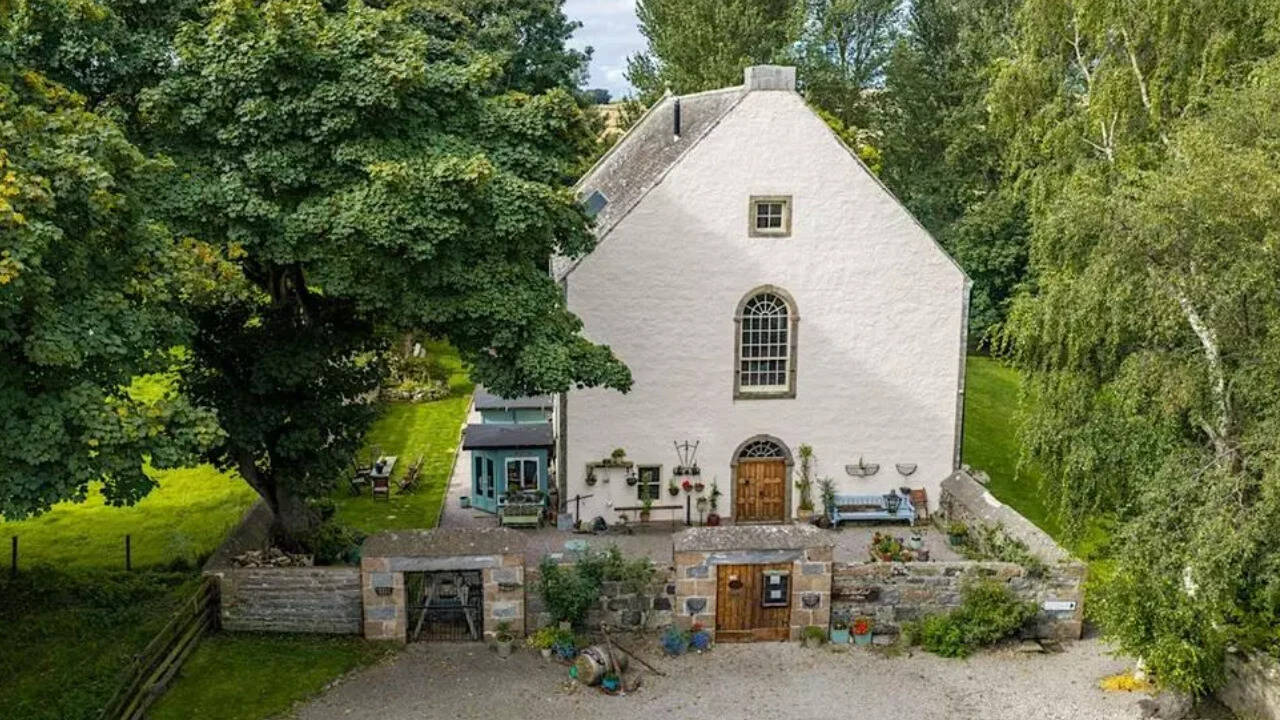
Consider what happens when you step inside one specific transformation: a towering nineteenth-century church that now houses a five-bedroom residence alongside a working bistro.
At first glance, the juxtaposition feels almost sacrilegious. Where the altar once commanded quiet reverence, a commercial espresso machine hisses and rattles. Where parishioners knelt on crimson hassocks, diners now debate the merits of locally sourced venison over buttery mashed potatoes. Yet, walk a little further back, past the dining area and up the spiral staircase tucked discreetly into the corner where the vestry used to be, and the noise fades.
Up here, among the timber trusses that once sheltered Sunday school choirs, bedrooms have been carved out of the open air. Architects faced a staggering challenge: how do you warm a cavernous space designed to trap cold air without destroying the very features that make it magnificent?
The answer lay in restraint. Instead of subdividing the main hall into cramped boxes, the design respects the verticality. The stained glass remains, casting long, jewel-toned shards of ruby and sapphire across polished concrete floors. Light moves differently here. It stretches in the morning, sharp and slanted, turning dust motes into tiny constellations. By evening, the amber glow from the bistro spills outward, cutting through the encroaching Scottish dusk and offering a warm beacon to anyone walking the winding country lane outside.
This is not merely interior design. It is preservation by adaptation.
Across Scotland, hundreds of redundant churches face a bleak future of dereliction or demolition. Local councils eye them with anxiety; English Heritage and its Scottish counterparts guard their facades with hawk-like strictness. Turning a kirk into a home requires a rare breed of stubborn optimism. It means arguing with conservation officers over double glazing. It means spending months tracking down masons who still know how to cut lime mortar by hand. It means accepting that your kitchen island might sit precisely where the pulpit once stood.
And yet, people do it. They sink their life savings into stone walls three feet thick, betting everything on the romantic notion that history is worth rescuing.
Downstairs, the bistro hums with life. A group of hikers, cheeks red from a wind-scoured trek across the nearby hills, shake off their wet jackets by the door. They order hot soup and crusty bread, laughing beneath a ceiling that has witnessed a century of quiet grief and loud celebration. They do not whisper. The acoustics that once carried Latin hymns now bounce with the clatter of silverware and the chatter of everyday life.
That is the hidden triumph of these spaces. They do not stay frozen in amber as museums of a forgotten past. They evolve. They breathe.
When you sit by the massive gothic window with a cup of coffee, watching the rain mist over the distant hills, you realize something about old buildings. They do not belong to the people who built them, nor do they strictly belong to the people who buy them. They belong to the landscape. They are landmarks of memory, anchors in a shifting world that constantly tears down the old to make room for the disposable.
The pews are gone. The choir loft is a bedroom. But the stone remains, warm now, holding fast against the cold.