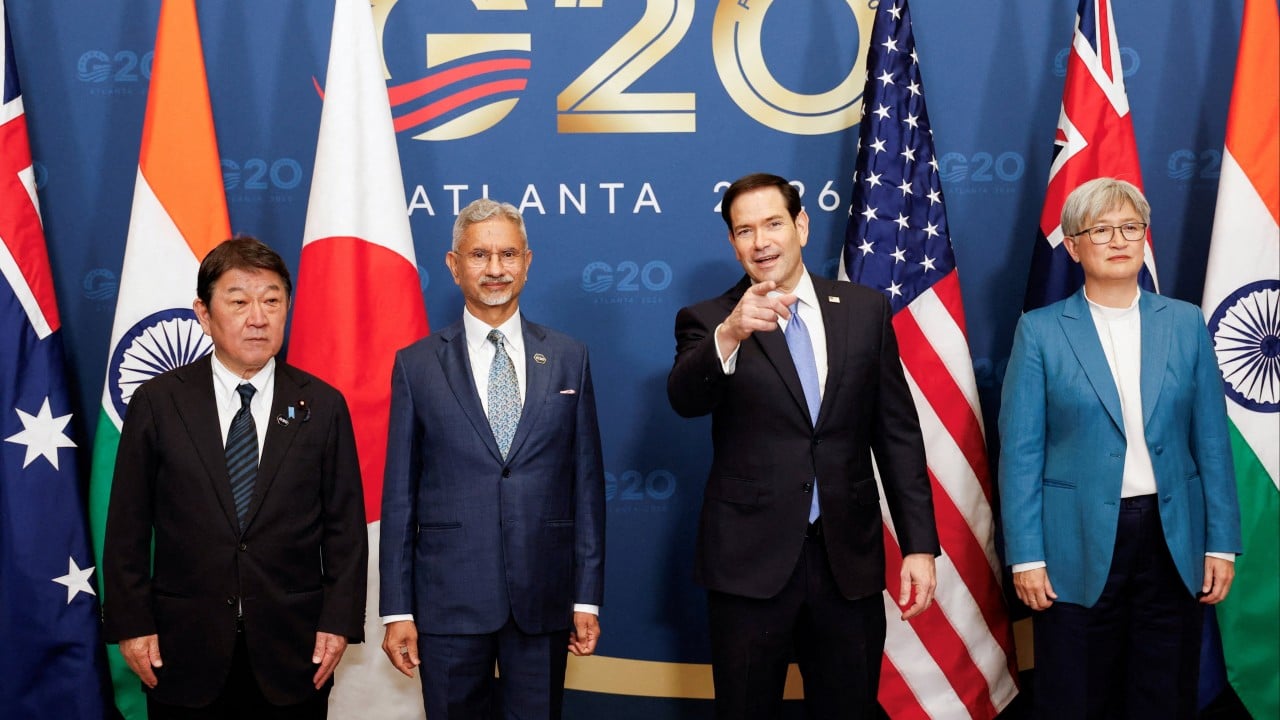
Diplomacy rarely sounds as blunt as it actually is, especially when Washington tries to lower the temperature right before a high-stakes presidential trip. When US Secretary of State Marco Rubio declared that the Quad isn't "anti-China" ahead of the group's first leaders' summit in two years—and right before President Donald Trump sits down with Chinese President Xi Jinping—plenty of observers raised an eyebrow.
You can't blame them for being skeptical. For years, Beijing has blasted the Quadrilateral Security Dialogue—made up of the United States, Australia, India, and Japan—as an "Asian NATO" designed purely to box China in. Having Rubio, a longtime China hawk, suddenly insist the grouping isn't aimed at any single nation feels like a massive rhetorical shift. Don't forget to check out our previous article on this related article.
It isn't. At least, not in the way most headlines suggest.
Why Rubio Is Softening the Rhetoric Right Now
Timing explains almost everything in foreign policy. If you look at the diplomatic calendar, the upcoming Quad leaders' summit—the first in-person gathering of the four heads of government in two years—falls directly ahead of planned bilateral talks between Trump and Xi. If you want more about the context of this, Al Jazeera provides an excellent breakdown.
Walking into a room with Xi Jinping while loudly waving an anti-Beijing coalition banner doesn't help Washington get what it wants on trade, fentanyl precursors, or regional stability. Rubio knows this. So does the White House.
By framing the Quad around shared positive goals rather than containment, Rubio gives Beijing less ammunition to accuse the US of Cold War thinking. It's a classic diplomatic head-fake. You lower the volume in public while keeping the structural machinery running at full speed behind closed doors.
Think about the audience here. Rubio wasn't just speaking to reporters or even to Beijing. He was speaking directly to New Delhi, Tokyo, and Canberra. None of those three capitals wants to be dragged into an explicit, zero-sum military confrontation with their largest trading partner unless they have no other choice.
The Myth of the "Asian NATO"
Let's clear up the biggest misconception about this partnership. People love comparing the Quad to NATO, mostly because it makes for punchy cable news segments. That comparison falls apart the second you look at how the four countries actually operate.
NATO has a binding mutual defense treaty under Article 5. An attack on one is an attack on all. The Quad doesn't even have a permanent headquarters, a shared budget, or a formal secretariat. It is a loose, flexible alignment of four maritime democracies that share overlapping worries about coercion in the Indo-Pacific.
India, in particular, guards its strategic autonomy fiercely. New Delhi refuses to sign formal military alliances, buys defense hardware from multiple global suppliers, and participates in rival groupings like BRICS alongside China and Russia. If Washington ever tried to turn the Quad into an explicit anti-China military bloc, India would walk out the door before the ink dried.
Rubio’s insistence that the group isn't "anti-China" isn't just a courtesy to Xi. It is the exact price of admission required to keep India at the table.
What the Quad Actually Does Behind the Scenes
If the Quad isn't a military alliance, skeptics often ask why Beijing hates it so much. The answer lies in the quiet, unglamorous work the four nations do to reduce China's economic and technological leverage across Asia.
When you look past the summit photo ops, the Quad focuses heavily on public goods and infrastructure alternatives. Take undersea cables, for example. Roughly 95% of intercontinental internet traffic travels through fiber-optic cables on the ocean floor. For years, Chinese state-backed firms dominated the construction and repair of those networks across the Pacific Islands.
Through the Quad Partnership for Cable Connectivity and Resilience, the US, Japan, Australia, and India started pooling technical expertise and financing to build secure cable links for smaller Indo-Pacific nations. No missiles are involved. No naval blockades happen. Yet it directly undercuts Beijing's ability to control regional telecommunications infrastructure.
The same pattern shows up across other sectors:
- Maritime Domain Awareness: The Indo-Pacific Partnership for Maritime Domain Awareness uses commercial satellite data to help smaller coastal states track illegal fishing and dark vessels—activities often linked to China's distant-water fishing fleet and maritime militia.
- Critical Minerals: Australia brings vast lithium and rare earth reserves, Japan and the US bring processing tech and capital, and India brings manufacturing scale, slowly chipping away at China's near-monopoly on clean energy supply chains.
- Health Security and Infrastructure: From vaccine distribution efforts in earlier years to port development and clean energy financing, the four nations focus on giving Southeast Asian and Pacific countries options besides Beijing's Belt and Road Initiative.
None of these programs carry an "anti-China" label on the front door. Every single one of them makes the region less dependent on Chinese state power. That is why Rubio can honestly say the grouping isn't organized against a country while Beijing still views it as a major strategic headache.
Why a Two-Year Gap Between Summits Matters
Going two full years without a leaders-level summit created real doubts about whether the Quad still had momentum. Political transitions in Washington and Tokyo, shifting domestic priorities in Canberra, and New Delhi's delicate balancing act along its disputed Himalayan border with China all complicated scheduling.
In diplomacy, if leaders stop showing up, bureaucracies stop prioritizing the work. Lower-level working groups keep meeting, sure, but without the pressure of an upcoming presidential deadline, bold initiatives tend to stall in committee.
Putting the leaders back in the same room—especially after a two-year hiatus—sends a clear signal that the partnership survived a change in US administrations. During Trump's first term, his administration actually revived the dormant Quad in 2017 after a decade-long freeze. Seeing the group reconvene now proves that despite shifting trade policies and "America First" rhetoric, Washington still views coalition-building in the Indo-Pacific as non-negotiable.
The Tightrope Before the Trump-Xi Meeting
Setting the Quad summit right before Trump meets Xi creates a delicate diplomatic sequence. Beijing hates feeling like Washington is "negotiating from a position of strength" by rallying allies immediately prior to bilateral talks. Chinese diplomats regularly complain about this exact tactic.
Rubio’s careful phrasing is designed to smooth over that friction just enough to keep the Trump-Xi summit on track. Washington wants tangible deliverables from Beijing—whether that means agricultural purchases, stricter enforcement against chemical exports, or predictable guardrails around Taiwan and the South China Sea.
At the same time, Tokyo, Canberra, and New Delhi harbor quiet anxieties of their own. Whenever an American president sits down with Xi Jinping, US allies in Asia worry about a "G2" dynamic—the fear that Washington and Beijing might cut a bilateral trade or security deal over their heads, trading away regional interests for short-term economic wins.
Holding the Quad summit first reassures those partners. It allows the US to coordinate positions with its closest regional friends before entering the room with Xi, proving that Washington isn't going it alone.
How to Read Diplomatic Signals Like an Insider
When you follow international politics, taking official statements at face value usually leads you down the wrong path. The gap between what diplomats say at a podium and what their governments actually build on the ground is where the real story lives.
If you want to track whether the upcoming Quad summit actually succeeds—beyond the headlines about Rubio's tone—watch three concrete indicators over the next few months:
- Follow the money, not the communiqués. Joint statements always sound inspiring. Look instead for specific dollar commitments tied to Pacific infrastructure, open-RAN telecom networks, or joint coast guard training.
- Watch New Delhi's comfort level. Pay attention to how prominently Indian officials feature the summit in their own domestic messaging. Enthusiastic buy-in from India means the Quad's non-military, development-heavy agenda is hitting the mark.
- Track Beijing's reaction after the Trump-Xi talks. If Chinese state media attacks the Quad furiously after Xi meets Trump, it means Washington refused to trade away its regional partnerships during the bilateral negotiations.
Rubio didn't soften US policy toward Beijing by saying the Quad isn't anti-China. He simply used the exact language required to keep a fragile, asymmetric coalition intact while setting the table for the biggest bilateral meeting of the year.


