Peru’s political system is broken, and everyone knows it. The nation has gone through eight different presidents in just ten years. On June 7, 2026, over 27 million voters head back to the polls for a high-stakes presidential runoff, but nobody is celebrating.
Instead, the country faces a grueling choice between two fiercely opposing sides. On the right stands Keiko Fujimori, making her fourth attempt at the presidency. On the left is Roberto Sánchez, a congressman who served as a minister under the ousted, now-imprisoned former president Pedro Castillo.
Mainstream media outlets frame this race as a simple, classic battle of ideologies: left versus right, socialism versus free markets. But that narrative misses the real story completely. This isn't a deep ideological awakening across the Peruvian Andes. It's a symptom of pure, unfiltered exhaustion.
The Illusion of a Mandate
Let's look at the actual numbers because they expose the biggest myth of this election. International headlines make it look like the country is split down the middle by passionate political movements. The reality is far bleaker.
During the first round of voting in April, a record field of 35 candidates fractured the electorate into tiny pieces. Fujimori advanced to the runoff with just 17.19% of the vote. Sánchez squeezed through with a mere 12.03%.
Think about that. Combined, the two people fighting to lead Peru represent less than 30% of the active electorate. If you factor in the six million Peruvians who refused to vote despite mandatory voting fines, alongside the three million who deliberately spoiled their ballots, the true winner of the first round wasn't a politician. It was "none of the above." Blank and spoiled ballots completely outpaced the actual candidates.
So why are these two specific figures left standing? It comes down to identity, memory, and the strategic exploitation of a deeply divided geography.
The Daughter of the Dictator vs. the Hat of the Ousted
Keiko Fujimori carries one of the heaviest political legacies in Latin America. She is the leader of the Fuerza Popular party and the daughter of Alberto Fujimori, the former president who stabilized Peru's hyperinflation in the 1990s but ended up serving 16 years in prison for human rights abuses before dying in 2024.
To her loyal base in Lima and the urban middle class, the Fujimori name stands for mano dura—an iron fist that crushed terrorism and fixed a broken economy. With extortion and violent crime hitting record highs in Peru, her campaign message of building mega-prisons and restoring order hits a nerve. But to her equally passionate detractors, she represents a terrifying slide back toward authoritarianism and corruption.
On the other side of the divide, Roberto Sánchez is running a brilliant, highly symbolic campaign. A former trade and tourism minister, Sánchez has wrapped himself in the legacy of Pedro Castillo. Castillo, a rural schoolteacher, shocked the political establishment by winning the presidency in 2021, only to be impeached and jailed after trying to dissolve Congress in late 2022.
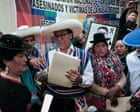
Sánchez doesn't run away from that chaotic history. Instead, he leans directly into it. He regularly campaigns wearing the traditional tall, wide-brimmed "Chota" hat that became Castillo's trademark.
For the rural, Indigenous communities in the southern Andes, that hat isn't just clothing. It's an explicit signal that Sánchez sees them. These are regions that feel completely abandoned by the wealthy elites in Lima. They don't necessarily want a complicated socialist utopia; they want someone who doesn't look down on them. Sánchez promises to free Castillo and rewrite the constitution to give the state control over mining, energy, and ports.
Fear Is the Only Real Currency
Right now, the latest Ipsos polling shows both candidates trapped in a dead heat. Sánchez holds a microscopic lead at 43.8% to Fujimori's 43.2%. The remaining voters are either completely undecided or plan to cast blank ballots.
This narrow margin means the election won't be won by inspiration. It will be won by fear.
- The Anti-Fujimorismo Factor: Millions of voters will support Sánchez simply because they cannot stomach the idea of a Fujimori presidency. They worry she will dismantle the separation of powers and use her party’s significant strength in Congress to protect her own interests.
- The Anti-Castillismo Factor: Conversely, a massive portion of the population will vote for Fujimori because they are terrified of Sánchez. They see him as an incompetent populist who will tank the economy, chase away foreign investment, and repeat Castillo’s disastrous attempt to subvert democracy.
It’s an election where nobody is voting for a vision. Everyone is voting against a nightmare.
What Lies Beyond Election Day
The true tragedy of Peru’s political crisis is that the upcoming vote offers no guarantee of stability, no matter who wins. The country's unicameral Congress has spent years systematically undermining independent institutions and shifting power away from the executive branch.
If Fujimori wins, she will have a significant bloc of seats to help her govern, but she will face immediate, massive street protests from a furious left-wing opposition. If Sánchez wins, he will face a hostile, right-wing dominated Congress that will likely try to impeach him the moment he makes a misstep.
If you want to track how this volatile situation unfolds, keep a close eye on the official results from the ONPE (National Office of Electoral Processes) and independent analyses from organizations like the Washington Office on Latin America (WOLA). Watch the margin of victory. If the gap is incredibly tight—just like the razor-thin margins of 2011, 2016, and 2021—expect immediate accusations of fraud from the losing side. This will paralyze the incoming government before it even takes the oath of office on July 28. Prepare for a bumpy ride; Peru's decade of chaos isn't over yet.