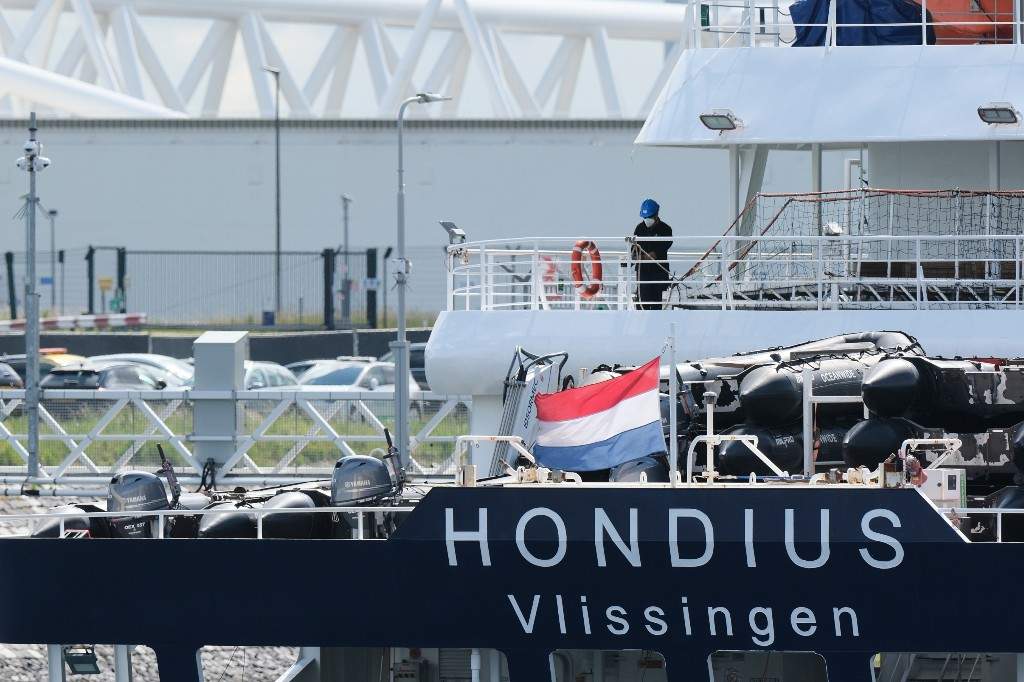
The global health community just breathed a collective sigh of relief. The World Health Organization officially declared the hantavirus outbreak tied to the Dutch expedition cruise ship MV Hondius over.
For two months, this luxury polar vessel was a floating nightmare. Out of 13 total cases, three people died. Because hantavirus usually doesn't jump from person to person, the outbreak triggered massive red flags at WHO headquarters. It sparked an international scramble involving health authorities across 33 countries and territories tracking down over 650 close contacts.
The emergency ended after the final exposed contact finished quarantine, tested negative, and headed home. But don't let the "all clear" fool you. What happened on the MV Hondius reveals a terrifying vulnerability in how we travel and how fast rare pathogens can exploit tight spaces.
The Myth of the Dirty Cruise Ship
When news of the outbreak broke in early May 2026, the internet did what it always does. People blamed the ship's hygiene. Commenters assumed the MV Hondius was crawling with infected mice.
That is flat-out wrong.
The MV Hondius is a state-of-the-art polar class vessel. It didn't have a rodent problem. Epidemiologists figured out that the initial passengers who caught the virus contracted it weeks before they even stepped onto the gangway. They had been backpacking and touring rural areas in Argentina and Chile.
They likely breathed in dust contaminated with rodent urine or droppings during an excursion. Because the virus has a massive incubation period ranging anywhere from one to eight weeks, these travelers felt completely fine when they boarded the ship in Ushuaia on April 1. They carried a ticking biological time bomb inside them.
The Terror of the Andes Strain
Most hantaviruses are a dead end for transmission. If you get infected by a rodent in North America, you can't pass it to your spouse. But the MV Hondius was dealing with the Andes virus strain.
Andes virus is the wildcard of the hantavirus family. It is indigenous to the mountains of Chile and Argentina, and it happens to be the only hantavirus strain known to spread via human-to-human contact.
Imagine putting over 140 passengers and dozens of crew members inside a 107-meter ship for a 33-day journey. You share the same dining spaces, breathe the same recirculated air, and walk the same narrow corridors. The conditions were perfect for a rare pathogen to do something unexpected.
The virus started taking down victims one by one. The first passenger, a 70-year-old Dutch man, showed symptoms on April 6 and died just five days later. Then his wife fell ill and died in a Johannesburg hospital after disembarking. By the time the ship's doctor and a crew member contracted the virus, health agencies realized they were looking at a localized chain of human transmission.
Behind the Scenes of a Global Manhunt
We often take for granted how hard it is to stop a disease once passengers scatter. When the MV Hondius was intercepted and rerouted to Tenerife in the Canary Islands, health workers met the ship in full-body protective gear.
Passengers weren't allowed to take their luggage. They left everything behind except cellphones, chargers, and ID papers wrapped in plastic bags.
Military and government planes airlifted passengers to their home countries for immediate isolation. In the United States, 18 returning passengers faced a grueling 42-day quarantine. Sixteen of them were locked down in a specialized biocontainment unit at the University of Nebraska Medical Center in Omaha.
Think about the scale of that operation. Public health officials had to monitor 650 people scattered across dozens of nations. They even had to track down a flight attendant who simply interacted with an infected passenger during a repatriation flight.
Why This Matters for the Future of Travel
It's easy to dismiss this as a freak incident. A rare virus, a specific ship, bad luck. That's a dangerous mindset.
Hantavirus pulmonary syndrome is brutal. It starts with generic flu symptoms like fever and muscle aches, but it rapidly progresses to intense lung inflammation. Your lungs fill with fluid, leading to acute respiratory failure. The mortality rate sits around 40%. There is no cure, no targeted antiviral, and no vaccine. Doctors can only hook you up to a ventilator or dialysis machine and pray your body fights it off.
The WHO isn't just archiving this case file. They coordinated a research initiative with 21 countries to analyze samples of this specific outbreak strain. The goal is to figure out exactly how the virus mutated or behaved to allow human-to-human transmission in those tight cabins.
If you are planning an adventure cruise or a backpacking trip to remote regions, you need to change how you prepare. Don't assume luxury travel guarantees a sterile bubble.
Pack high-quality masks for rural excursions where you might encounter dusty, enclosed spaces like barns, caves, or rustic cabins. Air out wilderness accommodations before you sleep in them. Most importantly, if you develop a sudden fever or shortness of breath within two months of traveling to South America, don't wait it out. Tell your doctor exactly where you went. Early supportive care is literally the only thing that stands between survival and a statistics column.