Everybody thinks an algorithm wrote China's biggest viral song of late 2026. They're wrong.
In October 2026, a Chinese rap video titled Guo Lai Ren (过来人)—translated loosely as The One Who's Been There or The OGs—exploded past 100 million views across Chinese social media platforms. By the evening of October 22, it had cleared 120 million plays. Douyin accounted for roughly 75 million of those views, while WeChat Channels pulled in another 45 million.
Western headlines quickly framed the track as proof that artificial intelligence had finally cracked human emotion on its own. That narrative makes for punchy tech news, but it misses the actual story. A single filmmaker in Wuhan spent four days stitching the video together on a budget of a few thousand yuan. More importantly, when he let AI write the verses, the results were terrible.
The Human Hands Behind the Viral AI Rap Track
If you look closely at how Guo Lai Ren came together, the "autonomous AI hitmaker" myth falls apart fast.
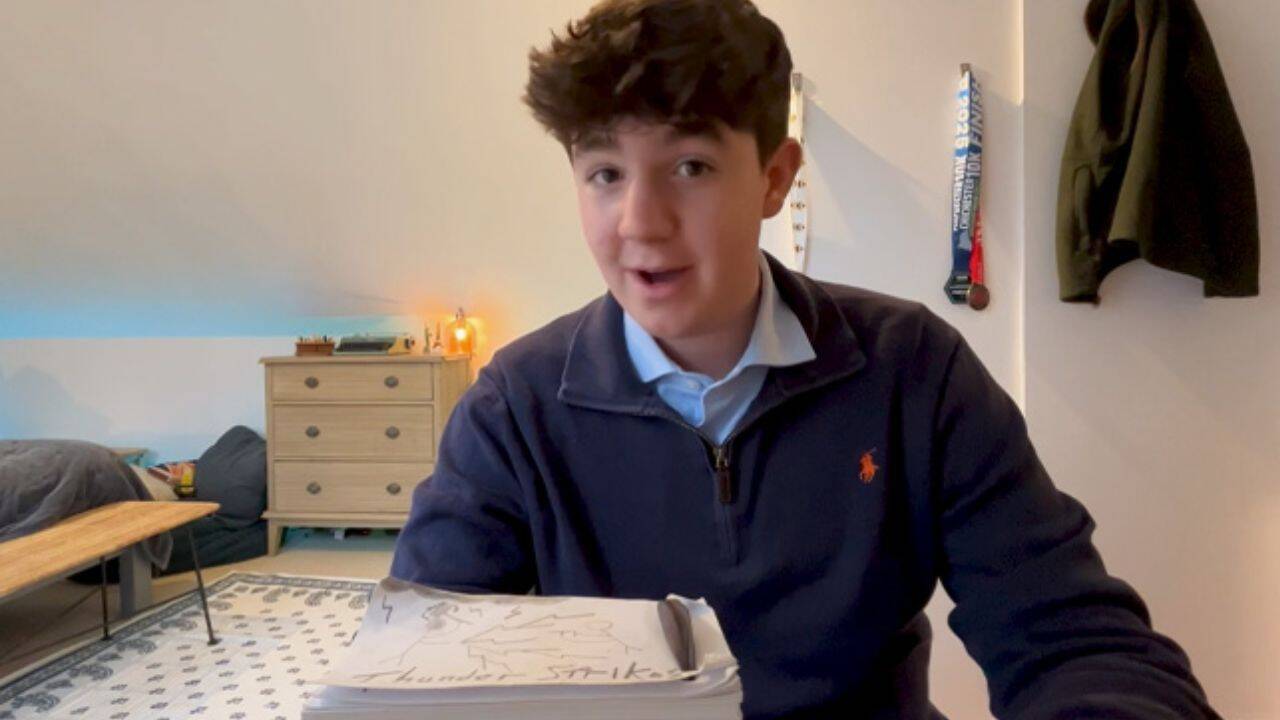
The track was created by Wang Kunzhe, a Wuhan-based director who posts online under the handle ZheFILM (喆FILM). Wang isn't a Silicon Valley prompt engineer who stumbled into music last week. He joined Wuhan Radio and Television back in 2013, spent three years in broadcast news, and then ran his own studio shooting commercials and promotional films for over a decade. He had also been writing rap lyrics and building backing tracks since his teens.
When Wang sat down to make Guo Lai Ren for his ongoing series featuring historical figures on the mic, he initially tested AI-generated lyrics. He threw them out. According to his interviews with the 21st Century Business Herald, the machine-written verses relied on forced rhymes and awkward filler sounds.
Instead, Wang wrote the lyric base himself. He pulled lines from a personal notes file he had been maintaining for at least ten years. AI handled the heavy lifting on vocal synthesis, beat arrangement, and visual generation, turning a demo from his youth into a reflective, 90-BPM hip-hop track.
Even the visual pipeline required relentless human curation. Wang built the imagery on the LibTV canvas, reusing consistent character designs from seven earlier episodes of his series. For every shot that made the final cut, he threw away three to five broken generations. Lip movements routinely drifted out of sync with the rap cadence, forcing him to manually edit the timing frame by frame.
AI didn't replace the artist here. It acted as a cheap, tireless production crew for a veteran director who already knew how to tell a story.
Why Ancient Poets Rapping About Rent Struck a Nerve
Most AI music fails because creators obsess over sci-fi gimmicks. They generate songs about neon cities, space travel, or digital immortality, and listeners scroll past in two seconds.
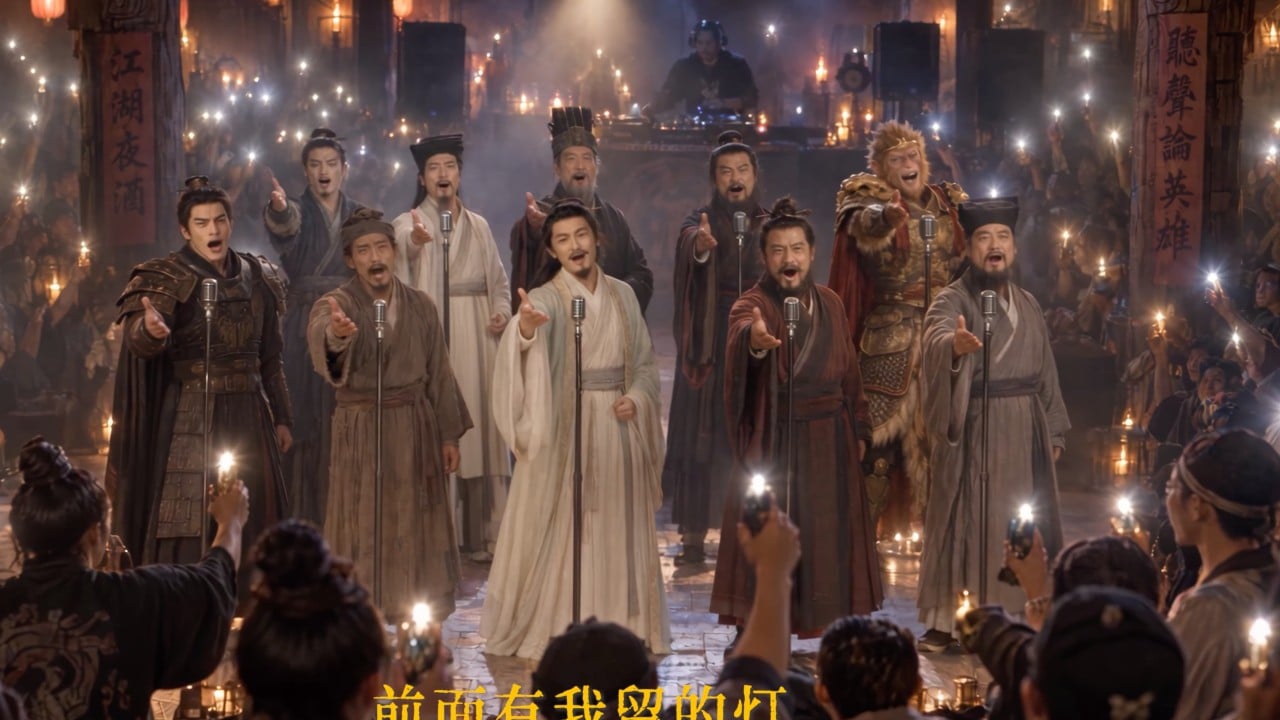
Wang flipped the formula. Instead of looking forward, he dragged ten revered figures from Chinese history and mythology straight into modern middle-class anxiety. And instead of bragging about military victories or literary fame, these legends rap about failure.
- Du Fu, the revered Tang dynasty poet, takes the opening verse to complain about still moving between rental apartments in middle age.
- Su Shi, the Song dynasty literary giant, raps about losing family and getting laid off at 35—and forcing himself to smile through it.
- Liu Bang, the founder of the Han dynasty, delivers the third verse on starting a career late in life and refusing to quit.
- Zhuge Liang, alongside seven other historical and mythic icons, joins the finale to vent about exhaustion and carrying burdens nobody else will touch.
That tonal clash stops thumbs cold. In China's major cities, young professionals are wrestling with fierce job competition, stagnant wages, and the notorious "Curse of 35"—the unwritten corporate rule that workers over 35 are too expensive and expendable.
When an ordinary office worker complains about rent or layoffs online, it can feel bleak or repetitive. When Du Fu and Su Shi deliver those exact grievances over heavy 808 drums, it creates instant emotional distance and relief. You realize that feeling broke, demoted, or behind schedule isn't a personal defect. Even the titans of history spent years broke, exiled, and overlooked.
By October 20—just one week after its October 13 release—the video had racked up over 2.3 million shares and nearly 100,000 comments. Viewers didn't leave comments critiquing the vocal synthesis. They wrote confessions about failed civil service exams, mounting debts, family illnesses, and sudden job losses. Some admitted the track moved them to tears.
Earlier episodes in Wang's historical series skewed heavily toward men aged 31 to 40. Guo Lai Ren shattered that demographic ceiling, splitting evenly between men and women while pulling in both college students and older listeners.
The Economics Behind a Few Thousand Yuan Hit
From a business standpoint, Guo Lai Ren exposes how creator economics are shifting in 2026.
Wang spent roughly three to four days of concentrated work and a few thousand yuan in subscription fees and compute credits. In traditional media, producing a music video with ten distinct period-costumed characters, lip-synced performances, and studio-grade audio mastering would require a six-figure budget and a twenty-person crew.
YetWang himself has pointed out that his low cash outlay doesn't tell the whole financial story. Because he is a signed first-release creator on Douyin and participates in LibTV's creator growth program, platform incentives and computing reimbursements offset a chunk of his expenses. An unsupported newcomer trying to replicate his workflow from scratch would burn far more money on failed renders before finding a usable take.
Wang also resisted the urge to cash out immediately. Rather than locking his workflow behind a paywall, he published the project's LibTV canvas and prompts publicly so other creators—and even local tourism boards—could remix the format. His prior March 2026 video bringing the poet Li Bai back to Wuhan had already opened the door to commercial AI music-video commissions, proving that viral IP can feed steady B2B client work without cheapening the main channel.
What Creators and Marketers Should Take From This
You don't need to make Chinese historical rap to use the mechanics that made Guo Lai Ren work. Whether you're building brand campaigns, independent media, or AI-assisted video projects, four practical rules stand out from Wang's playbook:
- Never outsource the core script to an LLM. Generative models default to predictable rhymes, safe clichés, and emotional flatness. Keep a running file of raw observations, real frustrations, and sharp lines from your own life. Write the human spine first, then use AI tools to test arrangements, voices, and pacing around your words.
- Pair high-craft aesthetics with low-status problems. Polished visuals paired with glossy, aspirational messaging feel like ads. Pairing cinematic or historical weight with unglamorous, everyday struggles—like moving boxes in your thirties or dreading a Monday layoff—creates immediate friction that holds viewer attention.
- Budget for a 4-to-1 discard ratio. Beginners assume AI generation is a one-click slot machine. Real production means generating five variations for every keeper and fixing broken lip-sync or visual artifacts manually in standard editing software. Build that culling time into your schedule.
- Reuse visual anchors across episodes. Consistency is still the hardest problem in generative video. Wang pulled off a four-day turnaround only because he had already built and tested his character assets across seven previous uploads. Develop a repeatable visual cast instead of starting from a blank prompt every time you publish.
As Wang told the 21st Century Business Herald, AI can mass-produce content, but it cannot mass-produce empathy. Audiences in 2026 are already numb to synthetic spectacle. What still breaks through the feed—and what always will—is a real human nerve touched at the exact right moment.