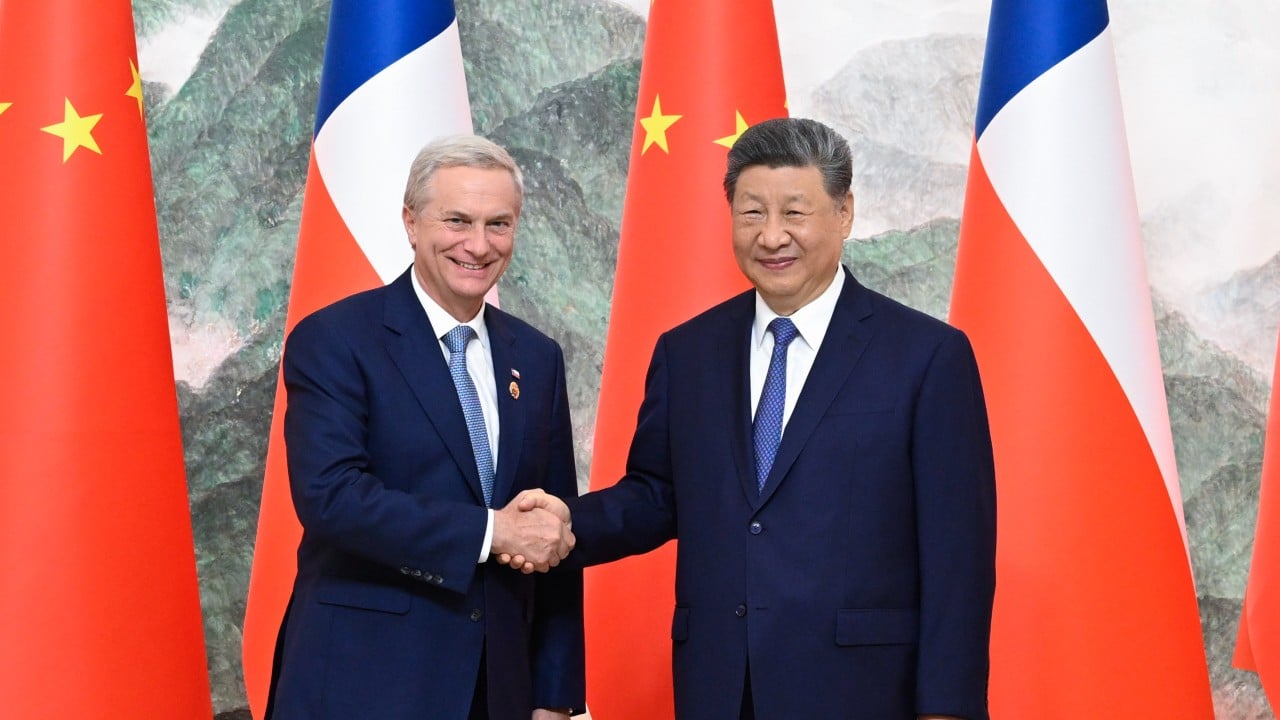
Everyone loves a clean ideological story. A hard-right Chilean leader flies to Beijing, shakes hands with Xi Jinping, and suddenly the pundits start yelling about flip-flops or geopolitical betrayal.
It’s lazy analysis.
When José Antonio Kast sat down with Xi Jinping for their first face-to-face meeting, the headlines immediately framed it as a desperate bid to steady ties strained by Washington. That angle misses the actual math running Santiago’s foreign policy. You don't govern a mineral-exporting economy on campaign slogans, and Kast knows it just as well as every Chilean president since the return of democracy in 1990.
Washington wants Santiago to pick a lane. Beijing buys the stuff that keeps Chile’s lights on. That tension isn't new, and it isn't going away just because the ideological furniture inside La Moneda shifted to the right.
Why Ideology Dies at the Port of Valparaíso
If you spend enough time tracking Latin American trade flows, you notice a pattern pretty quickly. Presidents campaign in poetry and govern in shipping containers.
In Chile, the numbers leave almost zero room for theatrical diplomacy. China has sat comfortably as Chile’s top trading partner for well over a decade, absorbing massive shares of Chilean copper, lithium, cherries, and forestry products. When Beijing sneezes, Chile’s fiscal budget catches pneumonia.
People outside South America often confuse Kast’s social conservatism and law-and-order platform with automatic alignment with every hawkish impulse coming out of Washington. They’re two different things. Kast came up through traditional Chilean conservative circles that treat free trade as gospel. To that wing of Chilean politics, slamming the door on your biggest customer isn't tough—it's economic malpractice.
During the run-up to his presidency and the early months of his term, plenty of commentators assumed Kast would cool relations with Beijing to score points in the United States. Instead, he did what pragmatic leaders do when staring at export spreadsheets. He booked a flight to China.
The Real Reason Washington Is Nervous
Let’s be honest about what’s actually driving U.S. pressure on Santiago. It isn't human rights lectures, and it isn't abstract concern over democratic norms.
It’s critical minerals and digital infrastructure.
Chile sits on some of the richest lithium brine deposits on Earth in the Atacama Desert, alongside the world’s largest copper reserves. If you want to build electric vehicle batteries, grid-scale storage, or modern defense hardware, you need what’s under Chilean soil. For years, American policymakers watched Chinese firms like Tianqi Lithium and BYD secure deep footholds in Chile’s mining and processing sectors while U.S. capital moved slowly or got bogged down in regulatory hesitation.
Washington’s message to Santiago has grown blunt. Stop letting Chinese state-backed companies lock up long-term supply agreements. Stop handing sensitive telecom, port, and energy grid contracts to Chinese bidders.
Here’s the catch that U.S. diplomats rarely acknowledge out loud. Washington hasn't put an equivalent check on the table.
When U.S. officials warn Chile away from Chinese infrastructure financing or tech partnerships, Chilean officials ask a simple question. Who’s funding the alternative? Until American private equity and federal development agencies match the speed and scale of Beijing’s capital deployment, Santiago isn't going to blow up its bilateral relationship with China just to make Washington feel secure.
What Actually Happened Behind Closed Doors
Summit readouts between Chinese and Latin American leaders usually read like they were written by a committee of tranquilized bureaucrats. You get the standard phrases about mutual respect, win-win cooperation, and deepening comprehensive strategic partnerships.
Look past the diplomatic padding, though, and the subtext of a first meeting between Kast and Xi is crystal clear.
Reassurance on Market Access
First, Kast needed to guarantee that Chilean agricultural and mining exports wouldn't face quiet regulatory slowdowns at Chinese ports. Beijing has a well-documented history of letting customs inspections drag on when it’s annoyed with a trading partner—ask Australian wine and barley exporters how that feels. By showing up in person and engaging Xi directly, Kast signaled that Chile remains open for business and won't join any Washington-led trade containment bloc.
Guardrails on Strategic Sectors
Second, Beijing wanted clarity on whether Kast’s administration would start retroactively unwinding Chinese investments in Chile’s energy distribution networks or lithium value-added projects. Chile’s power grid already features major Chinese ownership stakes through State Grid and China Southern Power Grid, a reality that has sparked recurring national security debates in Santiago. Kast’s team had to thread a tight needle: reassuring Xi that existing property rights and contracts are safe under Chilean law, while quietly tightening screening rules for future tenders in sensitive tech and telecoms.
The Diplomatic Balancing Act
Third, both sides needed a reset in tone. Political rhetoric during Chilean election cycles often spills over into sharp commentary about foreign influence, migration, and regional security. Sitting across from Xi sends an unmistakable domestic and international signal that the Chilean state runs on institutional continuity, not partisan impulse.
The Mistake Most Analysts Make About Latin American Alignment
If you view every diplomatic move in South America through a Cold War scoreboard—one point for Washington, one point for Beijing—you’re going to misread the region every single time.
Chile isn't choosing China over the United States. Chile is practicing what diplomats in Santiago have called "active non-alignment" for years, even if conservative politicians hate using that exact label because it sounds too academic.
Look at how Chile actually operates on the ground:
- Security and defense ties remain overwhelmingly anchored to the United States and Western partners, from joint naval exercises to intelligence sharing and military hardware.
- Institutional frameworks like the OECD membership, visa-free travel agreements, and bilateral free trade treaties tie Chile’s legal and financial standards directly to Washington and Brussels.
- Commercial volume flows heavily toward Asia, led by China, which buys roughly a third or more of Chile’s total exports depending on annual commodity prices.
Trying to force Santiago to pick one partner over the other misunderstands how middle-power economies survive. Chile’s entire modern development model depends on selling commodities to Asia while importing capital, governance standards, and security guarantees from the West. Break either leg of that stool, and the whole model collapses.
Where the Friction Won't Go Away
Even with a cordial handshake in Beijing, Kast faces three hard problems that no single summit can solve.
The first is lithium processing and value addition. Beijing wants raw and semi-processed lithium carbonate shipped straight to Chinese battery plants. Chile wants foreign companies to build processing and cathode manufacturing facilities inside Chile to create local jobs and capture higher margins. Washington, meanwhile, wants Chilean lithium routed through supply chains that qualify for U.S. clean-energy tax credits—which explicitly exclude Chinese-controlled entities. You can't satisfy all three demands on the same ton of mineral.
The second is subsea cables and digital sovereignty. Chile has pitched itself as the digital hub of South America, connecting the region to Asia-Pacific networks. Whenever a fiber-optic cable route or data center contract comes up for bid, U.S. intelligence and diplomatic officials push hard to keep Chinese firms out, arguing that data routed through Chinese-built infrastructure is compromised from day one. Kast’s conservative base generally shares that suspicion of Beijing’s tech apparatus, making telecoms the easiest place for Santiago to throw Washington a bone without hurting copper exports.
The third is domestic political optics. Kast built his brand on decisive leadership and standing up to perceived threats to national sovereignty. If Chinese state enterprises appear to be buying up too much strategic land, water rights, or infrastructure in northern Chile, his own voters will turn on him faster than the U.S. State Department ever could.
How to Watch What Happens Next
If you’re tracking Chilean politics, commodity markets, or U.S.-China competition in the Western Hemisphere, ignore the ceremonial speeches from Beijing. Watch three concrete indicators over the next six months instead.
- Check the tender terms for new lithium extraction contracts. Look closely at whether Santiago includes ownership caps or processing mandates that quietly favor Western or domestic consortia over Chinese state-backed bidders.
- Follow investment screening legislation in the Chilean Congress. Chile has debated creating a formal foreign investment review mechanism modeled roughly on the U.S. CFIUS process. If Kast’s coalition pushes that bill forward, you’ll know he’s building a legal shield to turn down sensitive Chinese infrastructure bids without starting a diplomatic fight.
- Track agricultural and mining customs clearance times in China. Smooth, uninterrupted shipments of Chilean copper concentrates and seasonal fruit will tell you immediately whether Xi left that meeting satisfied.
Kast meeting Xi wasn't a surprise pivot or a capitulation to Beijing. It was basic survival math for a country sitting on minerals the whole world wants, caught between two superpowers that refuse to get along.