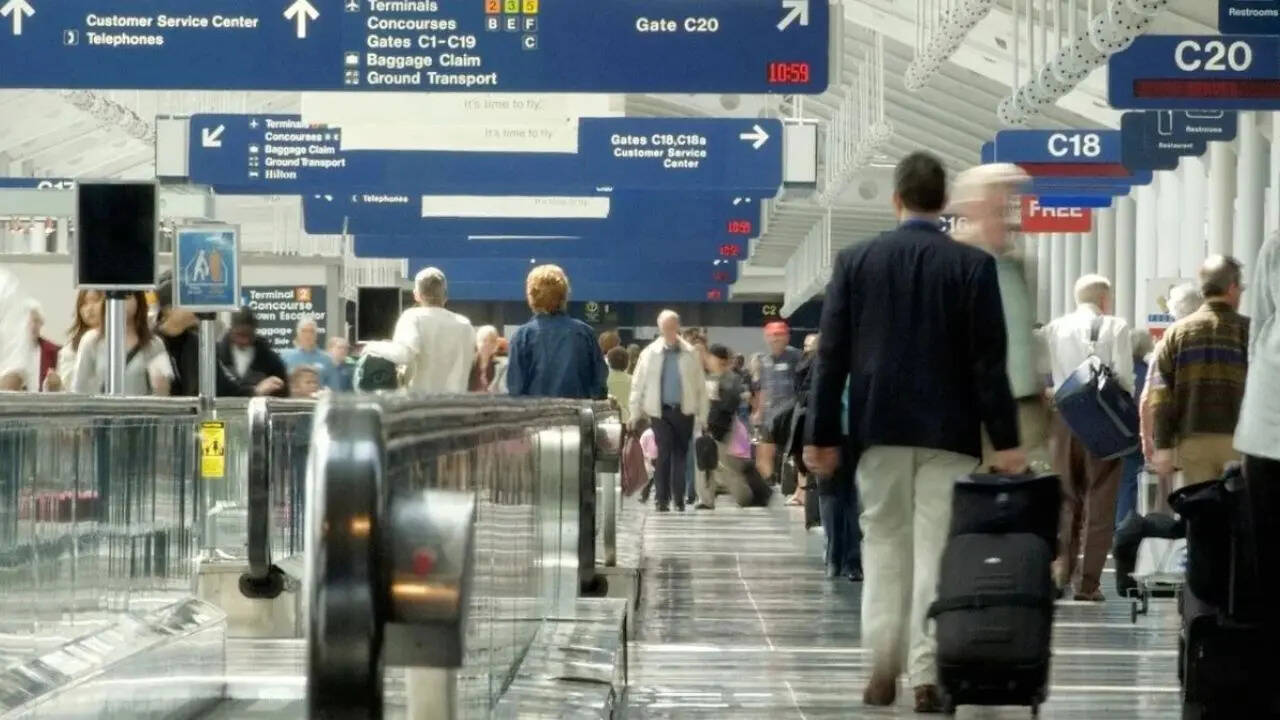
Standing in a stagnant customer service line at 2 a.m. while toddlers cry on the terminal carpet isn't just bad luck. When airports fill up with stuck families and stranded travelers, most passengers blame a single storm or one glitchy computer. They're wrong. What you're witnessing is a brittle, tightly wound transit machine snapping under pressure it was never built to absorb.
I've spent enough nights sleeping on cold terminal floors near Gate B14 to know how fast a minor hiccup turns into a full-blown crisis. The airline industry operates on thin margins and maximum aircraft utilization. Planes don't sit around waiting as spares anymore. Crew schedules are legally capped to the minute by federal safety mandates. When one hub hiccups, the entire national grid catches a fever within hours.
Why Airports Fill Up With Stuck Families So Quickly
Modern airline scheduling runs like a synchronized watch with zero slack in the gears. An aircraft flying from Chicago to Dallas might continue to Miami, then bounce back to New York before midnight. If morning fog delays that first takeoff by ninety minutes, every downstream leg inherits the deficit.
Crew timeouts make the math even worse. Under Federal Aviation Administration rules, pilots and flight attendants face strict limits on flight duty periods to prevent fatigue. A plane might sit at the gate fully fueled and mechanically sound, yet nobody can legally fly it because the crew timed out waiting on the tarmac.
Families get hit hardest by these cascading failures. Solo travelers can easily grab the last middle seat on a standby flight or pivot to a red-eye connection through a secondary city. A family of four with car seats, strollers, and checked luggage can't squeeze into scattered single seats across three different planes. They stay stuck at the terminal while solo flyers trickle out, creating those heartbreaking scenes of parents camping near charging stations.
The Hub-and-Spoke Bottleneck
Major carriers funnel millions of passengers through a handful of mega-hubs like Atlanta, Dallas-Fort Worth, Denver, and Chicago O'Hare. On a clear Tuesday, this model moves massive volumes of people efficiently. When severe weather or air traffic control staffing shortages hit a single mega-hub, thousands of connecting itineraries sever simultaneously.
Rebooking algorithms immediately start hunting for open seats. Problem is, airlines routinely fly planes at high load factors. There simply aren't enough empty seats across the rest of the network to absorb three canceled wide-body flights at once. Passengers end up stranded for days rather than hours.
What Airlines Actually Owe You When Your Flight Cancels
Most travelers walk up to the gate counter either overly aggressive or completely clueless about their legal rights. Neither approach gets you home faster. Knowing the exact line between carrier responsibility and passenger bad luck saves you hundreds of dollars and hours of wasted breath.
In the United States, your protections depend heavily on why your flight was canceled or delayed. The U.S. Department of Transportation divides disruptions into controllable and uncontrollable events.
Controllable disruptions are things inside the airline's wheelhouse:
- Mechanical failures and maintenance issues
- Crew scheduling errors or missing flight attendants
- Aircraft cleaning or baggage loading delays
- Fueling holdups
When an airline cancels or significantly delays a flight for a controllable reason, major U.S. carriers have committed to specific remedies on the DOT Airline Customer Service Dashboard. Most will rebook you on their next flight at no extra cost, cover meal vouchers after a multi-hour wait, and provide hotel accommodations plus ground transport if you're stranded overnight.
Uncontrollable disruptions tell a completely different story. Severe thunderstorms, blizzards, air traffic control ground stops, and security incidents fall outside airline control. Under current federal rules, airlines don't owe you a hotel room, a meal voucher, or cab fare when Mother Nature shuts down the airspace. They still have to refund your unused ticket if you choose not to travel, even on non-refundable basic economy fares, thanks to federal refund regulations.
Mistakes That Keep Stranded Families Stuck Longer
Watching hundreds of panicked flyers react to a cancellation screen reveals the same predictable blunders every single time. Avoid these traps if you want out of the terminal before the cots come out.
Waiting in the Physical Gate Line
The worst place to rebook a canceled flight is the line at your departure gate. Two hundred people are competing for two exhausted agents who are typing on green-screen terminals.
While you stand there, travelers using the airline's mobile app or calling the customer service line are snatching up the few remaining seats on partner flights. Always pull out your phone first. Open the airline app, start a live chat, and dial the support number simultaneously while you walk toward a less crowded customer service desk in a different concourse.
Refusing to Split Up the Group
If you're traveling with your partner and kids, insisting that all four of you stay on the exact same itinerary can trap you in an airport for forty-eight hours. Split the reservation. Have one parent fly out with one child on the afternoon flight, while the other parent takes the second child on the evening departure. Two seats together are vastly easier for an airline agent to find than four.
Checking Essential Supplies
When airports fill up with stuck families, checked bags frequently end up trapped in subterranean sorting systems for days. Airlines rarely pull luggage off canceled flights unless you demand it, and even then, retrieval takes hours.
Never put diapers, baby formula, prescription medications, phone chargers, or a spare change of clothes in your checked suitcase. Keep a dedicated survival pouch inside your personal item under the seat in front of you.
How to Get Out of a Crowded Terminal Fast
When the departure board turns red, speed and flexibility beat loyalty every time. Stop waiting for the airline to rescue you and take control of your own exit strategy.
- Search nearby airports immediately. If you're stuck in New York, check flights out of Newark, LaGuardia, and JFK—or even Westchester and Islip. Stuck in Chicago? Look at Midway alongside O'Hare, or consider taking a regional train to Milwaukee. Ask the agent to switch your departure or arrival airport to a co-terminal; airlines usually waive change fees during mass disruptions.
- Book a refundable backup seat. Don't wait for your current carrier to figure things out if flights are vanishing fast. Open an app for a competing airline and book a fully refundable ticket on the next plane out. If your original airline comes through with a free rebooking, cancel the backup ticket for a full refund.
- Check one-way rental cars before they sell out. Within thirty minutes of a major airport meltdown, every rental car counter in the terminal sells out of vehicles. If your destination is within a six-to-eight-hour drive, reserve a one-way rental car from an off-airport neighborhood branch the second you hear rumors of a ground stop. Take a rideshare to that local branch and drive home while everyone else sleeps on luggage carousels.
- Use your credit card's trip delay insurance. Many mid-tier and premium travel credit cards include trip delay reimbursement that kicks in after a six-to-twelve-hour delay, regardless of whether weather caused the mess. Save every itemized receipt for your hotel room, Uber rides, meals, and toiletries. You'll need a formal statement from the airline confirming the delay reason to file your claim later.
- Request interline rebooking politely. If your airline has no flights for two days, ask the agent if they have an interline agreement with another carrier that still has seats. Most legacy airlines maintain agreements allowing them to endorse your ticket over to a rival carrier during major operational meltdowns, though agents rarely volunteer this option unless you specifically ask.
Realities of Airport Meltdowns Nobody Mentions
Airline executives love talking about recovery timelines, yet the human toll inside the terminal rarely matches the press releases. Airport infrastructure simply isn't designed for thousands of people living inside secure concourses overnight.
Restrooms run out of supplies. Food courts close by 9 p.m., leaving vending machines empty before midnight. Charging outlets become scarce real estate, sparking petty arguments between exhausted strangers. Even when airport authorities bring out folding cots and thin blankets, bright overhead fluorescent lights and constant public address announcements make genuine sleep nearly impossible.
Travel insurance won't magically make a plane appear on the runway, and knowing federal passenger rights won't stop a blizzard over the Rockies. What preparation actually buys you is leverage and speed. Keep your essentials in your carry-on, load every major airline app onto your phone before you leave home, and never hesitate to pivot to a rental car or split your family across two flights the moment the departure board starts flashing red.