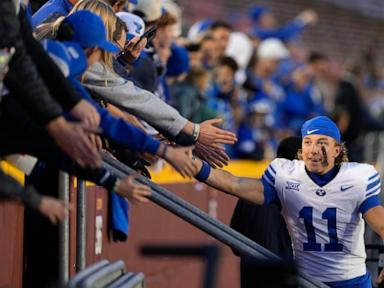
The legal battle surrounding former BYU star wide receiver Parker Kingston just took a massive turn. A Utah judge threw out the first-degree felony rape charge against him.
If you think this means the books are closed, you're looking at it wrong.
The dismissal comes with a massive asterisk. Judge Jay Winward of Utah's 5th District Court dismissed the case without prejudice. That is the ultimate legal loophole here. It means the prosecution can refile the exact same charge whenever they want.
This isn't an acquittal. It's a procedural hard stop.
The Breaking Point in Court
The decision came down on Thursday in St. George, Utah. A jury trial was locked in for July 6 through July 10. Then, the Washington County District Attorney's Office asked for a delay. They wanted to push the trial back to September.
Their reasoning? The alleged victim simply wasn't ready to testify in open court.
The prosecution had already waited a full year after the initial report to even file charges in February 2026. When they asked for yet another extension, Judge Winward drew the line. He denied the request to delay and chose to kill the case for now.
He noted that nobody has a constitutional right to constantly delay a trial. Kingston, however, has a constitutional right to a speedy trial.
The legal system shouldn't just leave people hanging indefinitely. The judge was visibly baffled that the state didn't just ask for a dismissal without prejudice themselves if they weren't ready to go to court.
How We Got Here
The timeline matters. The allegation stems from an incident on February 23, 2025. A 20-year-old woman reported a sexual assault at a St. George hospital. Police spent a year gathering forensic and digital evidence before arresting Kingston on February 11, 2026.
The fallout for Kingston was immediate and absolute.
- Expelled from school: Within days of his arrest, BYU cut ties completely.
- Kicked off the team: The football program removed him instantly.
- Life on pause: The defense argued the ongoing delays wrecked Kingston's education, mental health, and family plans.
Before his legal trouble, Kingston was the focal point of the BYU offense. During the 2025 season, he caught 67 passes for 928 yards and five touchdowns. He was a weapon. Now, he's a player without a team, sitting on one remaining year of college eligibility.
That Practice Video and What Happens Next
Just days before the dismissal, a video surfaced online showing Kingston running drills inside BYU’s indoor practice facility. It sparked immediate outrage and confusion. Was he back?
BYU athletics shut that down fast. They claimed they had no idea he was there, stating the workout wasn't run by BYU staff or players. It was an unauthorized session organized by an alumnus.
Now that the charges are gone, the question shifts to his football career. Can he play again?
Technically, yes. He has eligibility. But don't expect BYU to welcome him back with open arms anytime soon. The university has strict honor code policies and already expelled him. Transferring to another program seems like the only viable path if he wants to salvage his football career.
But any coach looking to sign him faces a massive risk. Because the case was dismissed without prejudice, prosecutors can revive these charges the moment the alleged victim feels ready to testify. Kingston is free today, but the shadow of this case will follow him into every locker room he enters.