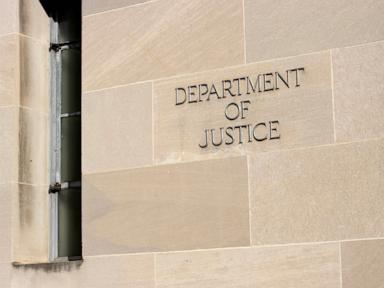
The federal government just handed Hollywood the biggest regulatory blank check in a generation. On Friday, Donald Trump's Department of Justice officially closed its eight-month antitrust investigation into Paramount Skydance’s $111 billion acquisition of Warner Bros. Discovery. The verdict? No conditions. No forced asset sales. No behavior remedies.
The Antitrust Division basically wrapped up the keys to a century of cinematic history, handed them to David Ellison, and said, "Have fun."
According to the official DOJ statement, this staggering tie-up is "not likely to result in harm to competition or American consumers." In fact, federal regulators went so far as to argue that putting Warner Bros. Pictures, Paramount Pictures, HBO Max, Paramount+, CBS News, and CNN under one corporate roof would actually increase competition. They claim it gives the market a viable heavyweight to push back against dominant tech platforms like Netflix and Apple.
If you think this means the ink is dry and the corporate logos are being swapped out tomorrow, you're missing the real battle. The federal sign-off isn't the final curtain. It's just the end of act one.
Between deep-pocketed foreign backers, furious state attorneys general, and a terrified Hollywood creative community, this merger is walking straight into a legal and political buzzsaw.
The State Level Backlash Brewing in California
While federal antitrust enforcers are packing up their boxes, California Attorney General Rob Bonta is just getting started.
Historically, state attorneys general don't just roll over when Washington blinks. We’ve seen this playbook before. Under federal antitrust law, individual states have the independent authority to challenge mergers in federal court, even if the DOJ or Federal Trade Commission gives a green light.
Bonta is reportedly quiet-launching a coalition of roughly 10 states to sue to block the deal. His office confirmed that the acquisition "remains an active investigation."
Why does California care so much? It’s simple. Jobs and cultural infrastructure.
The combined Paramount-Warner entity is promising a massive $6 billion in "synergies." In corporate speak, synergy means layoffs. When you merge two historic studio lots, duplicate marketing departments, and parallel distribution teams, thousands of rank-and-file entertainment workers lose their livelihoods. For a state economy heavily reliant on the entertainment industry tax base, Bonta practically has no choice but to fight. A lawsuit could land as early as this month, dragging the timeline out by quarters, not weeks.
The Sovereign Wealth Problem at the FCC
Then there’s the money trailing behind David Ellison.
To fund this $111 billion behemoth, Paramount Skydance didn't just rely on the deep pockets of Ellison’s father, Oracle co-founder Larry Ellison. They secured roughly $24 billion in backing from the sovereign wealth funds of Saudi Arabia, the United Arab Emirates, and Qatar.
To avoid triggering an immediate, agonizing federal review during the DOJ phase, these Gulf funds agreed to take non-voting shares and stay far away from board seats. It was a slick corporate maneuver. But it won't fly quite as easily at the Federal Communications Commission (FCC).
Paramount has already petitioned the FCC to approve these foreign investments. The issue? CBS News.
The FCC regulates broadcast television licenses. By law, there are strict statutory caps and heavy scrutiny on foreign ownership of American broadcast networks. You can bet political opponents are going to weaponize this.
Democratic Senator Elizabeth Warren has already blasted the DOJ's approval, calling it a disaster that allows "Trump-aligned billionaires" to consolidate media power. The political optics of passing control of CBS News and CNN to an empire heavily leveraged by foreign government money will make the upcoming FCC review a complete circus.
International Regulators Aren't Blinking
If you look outside the United States, the regulatory landscape looks even rockier.
- United Kingdom: The Competition and Markets Authority (CMA) formally opened its own investigation into the merger. They’ve set an August 7 deadline to decide if the deal requires a deeper, multi-month Phase 2 review.
- European Union: European Commission regulators are actively digging into the exact mechanics of the Middle Eastern funding structure, with their own review deadlines looming in July.
Australia already approved the transaction, noting it wouldn't kill competition for theatrical film supply. But Europe and the UK have historically been far more aggressive than American courts in blocking tech and media mega-mergers. If the CMA or the European Commission demands major divestitures—like forcing the combined company to sell off certain overseas broadcast networks or streaming operations—the financial math of the entire deal could fall apart.
The Looming Newsroom Identity Crisis
Forget the spreadsheet math for a second and think about the cultural reality of this merger.
This deal plans to smash CBS News and CNN into the same corporate family. For journalists inside those organizations, the anxiety is palpable. Merging these newsrooms wouldn't just mean slashing duplicate technical crews and international bureaus; it represents an unprecedented consolidation of independent news gathering.
The editorial clash will be fierce. You have CBS, a legacy over-the-air broadcast network with strict traditional standards, being paired with CNN, a 24-hour cable news giant defined by live, personality-driven political commentary. Striking a balance while cutting costs to satisfy the $6 billion synergy target is a recipe for internal warfare.
What Hollywood Creatives Stand to Lose
The creative community isn't staying quiet, either. Back in April, more than 1,000 directors, writers, and actors signed an open letter begging regulators to kill the deal.
The entertainment industry is already reeling from years of brutal contraction, streaming pullbacks, and shifting corporate strategies. When Warner Bros. Discovery was busy hacking down its debt over the last few years, it became infamous for shelvings and tax write-offs, famously killing near-finished movies like Batgirl for a quick balance-sheet fix.
Creatives are terrified that a unified Paramount-Warner entity will have an effective monopoly on what gets greenlit. Fewer buyers in town means lower fees for talent, less leverage for unions, and a homogenous approach to storytelling.
The DOJ flatly dismissed these fears, stating that theatrical production competition has actually ticked up since the deal was announced. Honestly, that sounds incredibly out of touch to anyone actually working on a Hollywood set right now.
Your Strategic Next Steps
If you are an investor, media professional, or creator trying to navigate this landscape, don't build your 2026 strategy on the assumption that this deal is a slam dunk.
First, watch the state attorneys general. The moment California files its lawsuit, the closing timeline stalls. Track the specific legal arguments they use regarding labor monopsony—the idea that a combined studio hurts the job market for creators. That will tell you how long this will drag out in court.
Second, monitor the European Commission’s July deadlines. If Europe blinks, the deal moves forward. If Europe fights, expect Paramount to start looking for pieces of its international business to spin off or sell entirely.
The DOJ gave David Ellison a massive victory, but the real war for the future of media is just getting started. Stay nimble, watch the regulatory choke points, and don't assume the legacy studios we know today will look anything like this by Christmas.