The ink on a federal election form is uniquely cold. It does not bleed with the anxiety of the person signing it, nor does it reflect the quiet, grueling calculation required to keep a seat in the United States Congress. To the Federal Election Commission, a Form 2 is just data. A bureaucratic box checked.
But in the high-stakes theater of American politics, a single signature is a flare fired into the dark.
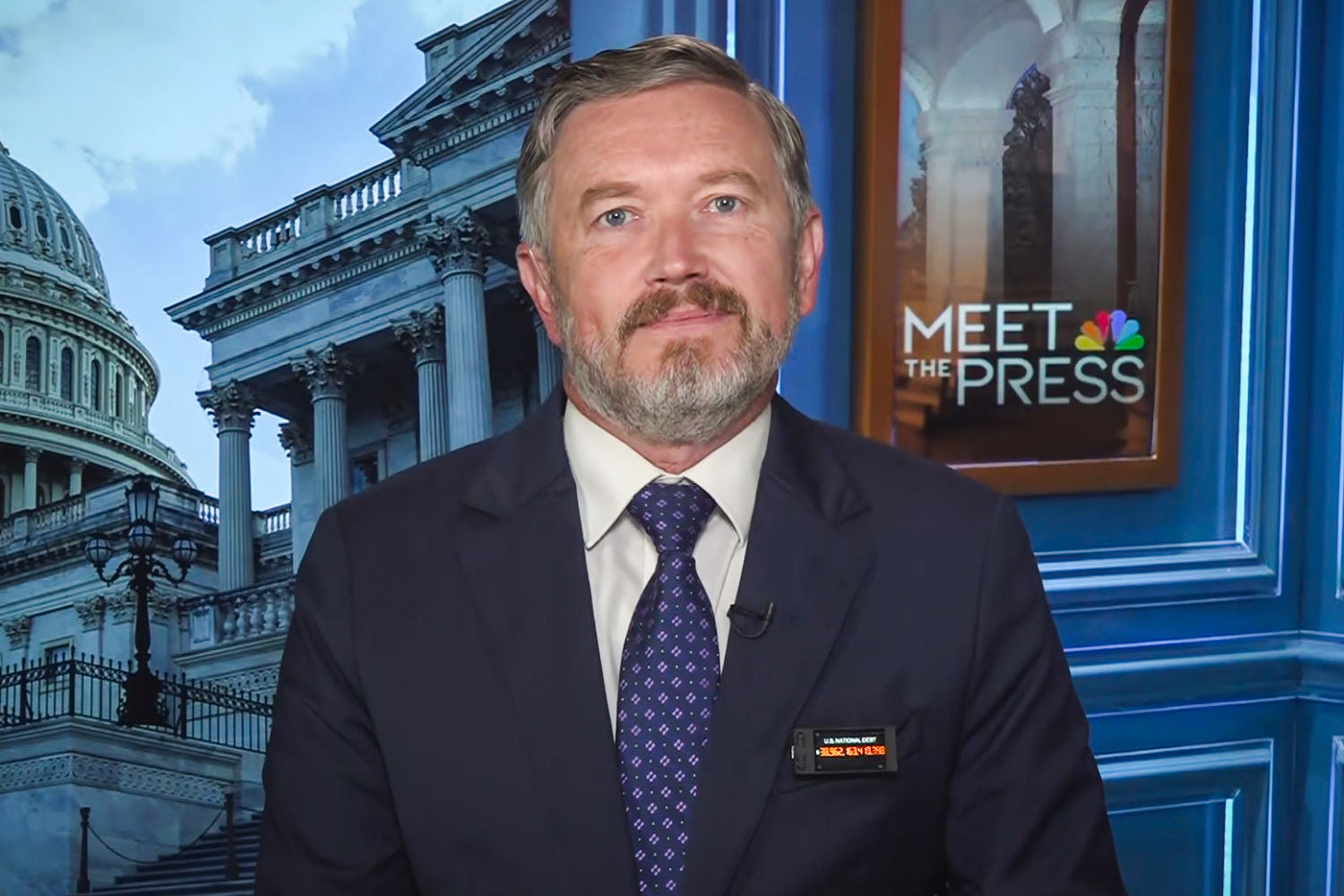
Kentucky Representative Thomas Massie recently filed the initial paperwork required to run for re-election in 2028. To the casual observer tracking campaign finance feeds, it looked like business as usual. A powerful incumbent securing his fortress. Yet, almost immediately after the digital ink dried, Massie threw a bucket of ice water on the assumptions of political pundits. He publicly stated he has not made a "final decision" about his political future.
It was a classic Washington paradox. He is running, but he might not run. He is in, but he might step out.
To understand why a politician would declare a candidacy they might not actually want, you have to look past the talking points. You have to look at the invisible architecture of power, the exhaustion of the legislative grind, and the strategic calculus of holding a map hostage.
The Threat of the Lame Duck
Consider a hypothetical state legislator we will call Representative Vance. Vance has spent a decade building seniority, securing committee assignments, and mastering the art of the leverage game. The moment Vance whispers to a reporter that this term might be his last, a subtle but devastating shift occurs.
The phone stops ringing.
Lobbyists who once queued outside his office suddenly find reasons to meet with his rivals. Colleagues who needed his vote on a infrastructure bill look elsewhere, knowing Vance won’t be around to collect the favor next session. In politics, perceived weakness is a blood slick in shark-infested waters. The moment you are confirmed as a departing figure, your political capital vaporizes. You become a ghost in your own office.
By filing the paperwork for 2028, Thomas Massie effectively freezes the clock. He signals to donors, challengers, and leadership that he is still a formidable force to be reckoned with. It preserves his authority on the committees where he wields influence. It keeps his staff focused and his fundraising apparatus humming.
It is a shield disguised as an application.
The Burden of the Maverick
Massie has never been a conventional politician. An MIT graduate with a degree in mechanical engineering, he has often approached governance less like a partisan cheerleader and more like a scientist looking at a deeply flawed machine. He is the man who built his own off-grid home in Kentucky, complete with solar panels and a Tesla battery pack, while simultaneously fighting federal regulations with a fierce, libertarian stubbornness.
He has frequently been a lonely voice in the House, earning the nickname "Mr. No" for his habit of voting against bipartisan consensus bills that he argues are fiscally irresponsible or unconstitutional.
That kind of isolation takes a toll.
Living as a professional contrarian means every day is a battle against both the opposing party and your own leadership. It means long flights between the rolling hills of Kentucky’s 4th congressional district and the suffocating swamp of Washington, D.C. The glamour of the Capitol wears off fast when you spend your evenings reading thousand-page omnibus bills that your colleagues intend to pass without looking at.
When Massie admits he hasn't made a final decision, it isn't a political gaffe. It is a rare flash of human vulnerability. It is the admission of a man wondering if the sacrifice is still worth the return on investment. The constant fundraising, the polarization, the endless cable news cycle—it can break even the most resilient minds.
Freezing the Board
There is also a profound tactical dimension to this hesitation. The 4th district of Kentucky is a deeply conservative stronghold. Whoever wins the Republican primary is essentially guaranteed a ticket to Washington.
If Massie were to abruptly announce his retirement today, it would trigger a political gold rush. Dozens of ambitious local politicians, state senators, and wealthy outsiders would immediately jump into the vacuum. The resulting primary would be a brutal, multi-million-dollar civil war that could leave the local party fractured and exhausted.
By filing the paperwork but remaining non-committal, Massie keeps the field clear. Potential challengers cannot announce their campaigns without looking like they are disrespecting a popular incumbent. They are forced to wait in the wings, rehearsing their speeches in the mirror, waiting for a signal that may or may not come.
Massie retains total control over the succession plan. If he decides to walk away, he can choose the exact moment to do so, perhaps throwing his immense local influence behind a hand-picked successor before anyone else can mount a serious challenge.
The Human Cost of Public Life
We tend to view our politicians as characters in a television drama, chess pieces moving across a board of red and blue. We forget that they go home to real houses, look at their bank accounts, and face the same existential fatigue that hits every worker approaching a milestone in their career.
Massie’s uncertainty highlights a deeper truth about modern governance. The system is designed to be exhausting. The relentless pace of the two-year election cycle means a member of the House is always running for office. The campaign never actually ends. It just changes flavors.
For an engineer who prefers solving tangible problems with tools and physics, the abstract, often performative nature of Washington must occasionally feel like a prison. The paperwork filed for 2028 isn't a guarantee of a future campaign. It is an option bought and paid for. It bought him time to breathe, time to think, and time to decide if he wants to spend another two years tilting at windmills, or if it is finally time to return to the quiet of his off-grid homestead, leaving the chaos of the capital behind for good.
The Capitol dome still shines under the Washington lights, a monument to permanence in a city where everything else is fleeting. Inside its corridors, men and women sign papers that dictate the future of the nation, while quietly wondering how much of their own lives they are willing to leave behind on the senate floor. Massie has ensured his voice will still carry weight tomorrow. But the question of where he will be when the gavel falls in 2028 remains entirely his own to answer.