The fluorescent lights in a suburban county party headquarters never quite stop buzzing. They hum at a frequency that settles right behind your eyes after fourteen hours of cold coffee, lukewarm pizza, and spreadsheet columns that refuse to turn green.
If you have ever worked a losing campaign—or even a winning one that felt like a slow-motion car crash until midnight—you know the smell of that room. Stale cardboard. Damp wool coats. The sharp, metallic tang of anxiety sweating through crisp button-down shirts. Outside, the autumn wind strips the last yellow leaves from the oaks in swing districts across Pennsylvania, Michigan, and Arizona. Inside, operatives are staring at cross-tabs that tell a story nobody in Washington wants to say out loud.
The wave is coming.
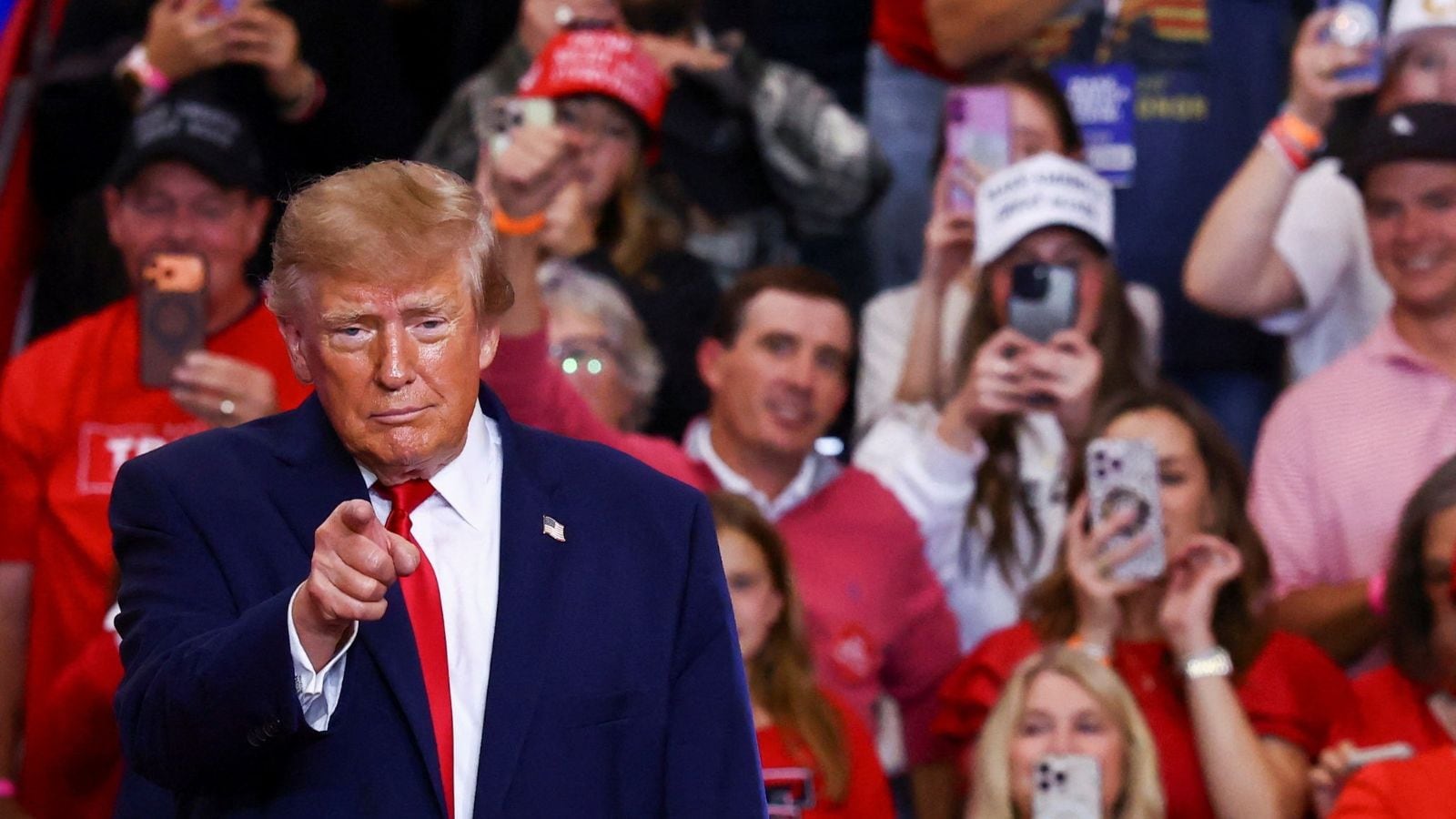
In the sterile, wire-service version of American politics, this moment gets reduced to dry arithmetic. We read that Republicans aligned with Donald Trump are scrambling to defend narrow majorities in the House of Representatives and the Senate. We see percentages, historical averages, and quotes from anonymous strategists talking about "messaging discipline" and "suburban turnout." Those reports treat a midterm election like a weather forecast for a distant coastline.
They miss the blood and bone of it. They miss what happens when an entire political movement realizes that the gravity of history is pulling it toward a cliff, and the brakes are smoking.
The Ghost of Elections Past
To understand the frantic energy pulsing through Republican war rooms right now, you have to look at the ghost haunting every modern president's second year in office.
Political scientists have a polite name for it. They call it the midterm penalty. In reality, it is a brutal, reliable pendulum that swings back against whoever holds the keys to the White House. Since the end of World War II, the president's party has lost seats in the House of Representatives in almost every single midterm cycle. Think about that consistency. Across decades of economic booms, foreign wars, cultural revolutions, and shifting demographics, the American electorate has acted like a restless homeowner who hires a contractor to fix the roof, immediately hates the noise of the hammers, and fires the crew halfway through the job.
Consider a hypothetical voter—let’s call her Sarah—living in an exurban cul-de-sac outside Grand Rapids, Michigan. Sarah is forty-two, manages logistics for a mid-sized manufacturing firm, and spends half her Saturdays watching youth soccer through the windshield of a crossover SUV. She does not watch cable news panels screaming at each other at ten o'clock at night. She does not follow congressional floor procedures.
In the last presidential cycle, Sarah voted with her gut and her wallet. She was frustrated by the cost of groceries, weary of institutional lectures, and willing to bet on disruption. She wanted results fast.
Now, two years into the term, Sarah is standing in the dairy aisle holding a carton of eggs and looking at her bank balance on her phone. The grand promises of national renewal feel abstract. What feels concrete is the uncertainty rattling her company's supply chain, the endless, exhausting noise coming out of Washington, and the nagging sense that the people in charge are spending more energy settling old scores than fixing her daily life.
Multiply Sarah by four million voters scattered across forty competitive districts. That is not a polling anomaly. That is an earthquake.
When Loyalty Becomes a Trap
Here is the dilemma keeping Republican strategists awake at three in the morning, and it is a trap of their own making.
In American politics, primaries and general elections are two entirely different animals. A primary election is a closed-door family argument where the loudest, purest, most uncompromising voice wins the room. A general election is a neighborhood block party where you have to convince people who barely tolerate your cousins to come inside and eat your potato salad.
For years, the Republican Party’s primary ecosystem has rewarded one currency above all others—absolute, unblinking fealty to Donald Trump. You do not survive a primary in a deep-red district by talking about fiscal restraint or bipartisan infrastructure bills. You survive by proving you are the fiercest fighter in the arena.
It works brilliantly in May and June. It becomes an anchor around your neck in November.
Imagine a newly minted Republican congressman in a purple district—a district that Trump won by two points, or lost by one. Let’s call him Mark. Mark spent his primary campaign promising to burn down the administrative state and stand shoulder-to-shoulder with the president on every single fight, no matter how polarizing. Now it is autumn. Mark is sitting in a town hall in a high school gymnasium, and a retired schoolteacher stands up with a microphone. She does not want to hear about deep-state conspiracies. She wants to know why her property taxes are climbing, why local hospitals are struggling, and why Congress seems locked in perpetual theater.
Mark is trapped. If he softens his rhetoric to win over the schoolteacher and Sarah from the grocery store, he risks depressing the core populist base that only shows up when the political temperature is boiling at two hundred degrees. If he turns up the heat to keep the base happy, he hands the Democratic challenger a thirty-second television ad that plays on repeat during the evening news, reminding independent voters why they grew exhausted with the chaos in the first place.
That is why you are seeing a sudden, desperate scramble in campaign war rooms across the country. Operatives who spent months cheering for maximalist rhetoric are suddenly begging candidates to talk about gas prices, kitchen-table economics, and local issues. They are trying to repaint a bright-red fire engine in soothing pastel shades while it is already screaming down the highway at eighty miles an hour.
The Invisible Engine of the Opposition
While Republicans wrestle with their own reflection, the Democratic Party has spent the last eighteen months building something far less flashy, and far more dangerous—an anger engine fueled by institutional dread and grassroots organization.
It is easy to underestimate an opposition party when it is out of power. From the outside, Democrats often look fractured, bogged down by internal debates between progressive activists and cautious moderates. Cable pundits love to write obituaries for Democratic unity every Tuesday before lunch.
Yet on the ground, away from the television cameras, anger is the ultimate organizing tool.
Think of the psychology of political motivation. Contentment is lazy. People who feel like their side is winning stay home on rainy Tuesdays in November. They assume someone else will handle it. Fear and indignation, on the other hand, are rocket fuel. They make people knock on doors in freezing drizzle. They make retired lawyers spend six hours a day verifying voter registration rolls. They turn small-dollar donors into an automated, relentless fundraising machine that pours millions of dollars into House races nobody outside the district had ever heard of six months ago.
Let’s look at the mechanics of a wave election, using a simple analogy. Picture a dam holding back a mountain reservoir. For months, the water rises quietly behind the concrete wall. From the valley below, everything looks dry, solid, and permanent. Engineers walk along the top and assure the townspeople that the structure is sound. Then one night, a hairline crack opens near the base. Water begins to seep through—just a trickle at first, easily ignored. By dawn, the pressure of millions of tons of water finds every weak seam in the concrete, and the entire wall gives way at once.
In midterm elections, the "dam" is the incumbent party's structural advantage, and the "water" is the enthusiasm gap.
Right now, that enthusiasm gap is showing up in the places where political pros actually look when they want the truth—not national horse-race polls, which are notoriously noisy, but special election swings, voter registration surges among younger cohorts and suburban women, and the sheer volume of small-dollar donations flowing into Democratic coffers. When a district that voted Republican by ten points suddenly becomes a nail-biter in a sleepy Tuesday special election, every incumbent in a five-point district starts updating their resume.
The Money Panic and the Map
Follow the money if you want to see where the panic is real.
Campaign committees do not lie with their budgets. A party chairman can go on Sunday morning television and smile broadly, declaring that the electorate is thrilled with their agenda and predicting historic gains. Then, on Monday morning, that same chairman’s super PAC cancels three million dollars in planned television ads in an offensive target district and quietly shifts every dime to defend an incumbent in a seat that was supposed to be completely safe.
That quiet triage is happening right now.
Look at the electoral map. To hold onto the House of Representatives, Republicans have almost zero margin for error. A swing of just a handful of seats flips the gavel, ends the legislative agenda overnight, and hands Democrats subpoena power over every cabinet agency, every executive order, and every corner of the administration.
For a president in the second half of a term, losing the House is not merely an embarrassment. It is the end of legislative governance. Every bold initiative stalls in committee. Every week brings a new wave of congressional oversight hearings designed to dominate the headlines and bleed political capital ahead of the next presidential cycle. The White House pivots from passing laws to playing defense, surviving one news cycle at a time.
And the Senate—long considered a safer fortress for Republicans because of the favorable map of states up for grabs—suddenly looks less impenetrable when a national wave begins to swell. Wave elections do not respect state borders or conventional wisdom. When the tide rises high enough, it floods the second floor, too.
The Human Cost of Political Whiplash
It is tempting to treat all of this like a high-stakes sporting event. We check the box scores, admire the tactical feints, and argue over which strategist made the sharper move.
I have sat in enough living rooms during election cycles to know that for the people actually casting the ballots, this isn't a sport. It is a exhausting cycle of hope and disillusionment.
Voters are tired. You can hear it in their voices when you talk to them at county fairs, outside grocery stores, or on their front porches. They feel whipsawed by a political system that swings violently from one extreme to the other every two years, leaving very little settled and very little built to last. One administration signs executive orders on Monday; the next administration shreds them on Friday. Congress spends months locked in brinkmanship over basic government funding, threatening shutdowns that rattle small business owners and federal workers alike, only to pass a temporary patch at midnight that solves nothing.
Sarah in Grand Rapids does not want a political revolution every twenty-four months. She wants predictability. She wants to know what the tax code will look like next year, whether her healthcare premiums are going to spike, and whether the people she sends to Washington are capable of acting like adults when the cameras turn off.
When voters feel like Washington is ignoring their exhaustion, they reach for the only lever of power they actually possess. They pull the emergency brake. They vote for divided government not because they suddenly fell in love with the opposition party, but because they want someone—anyone—to put a check on the people currently holding the wheel.
The Final Sprint
So what does the scramble look like in these closing weeks?
It looks like frantic mid-course corrections. It looks like Republican candidates quietly scrubbing the sharpest edges off their campaign websites while still trying to keep the president’s endorsement front and center on their mailers. It looks like massive infusions of last-minute cash into media markets from Ohio to California, saturating local television with frantic warnings about crime, taxes, and border security in an effort to override voters' economic frustrations with visceral fear.
It is a high-wire act without a net.
Maybe the economy delivers a sudden, unmistakable burst of good news at the eleventh hour. Maybe Democratic overreach in blue cities gives Republicans the exact foil they need to rally reluctant moderates back into the fold. Politics is wildly unpredictable, and waves have broken short of the shore before.
Yet if you walk into one of those buzzing, fluorescent-lit war rooms tonight and look closely at the faces around the table, you won't see the swagger of a party marching toward a triumph. You will see people watching the horizon, sandbagging the doors, and praying the rain stops before morning.