The lazy consensus in modern political commentary treats every dramatic departure, every rumor of a leader fleeing, and every muttered soundbite about missing persons as an existential theater piece. When headlines scream about ominous warnings or figures vanishing from the immediate spotlight, mainstream analysts rush to write obituaries for political careers. They mistake a tactical retreat for total collapse.
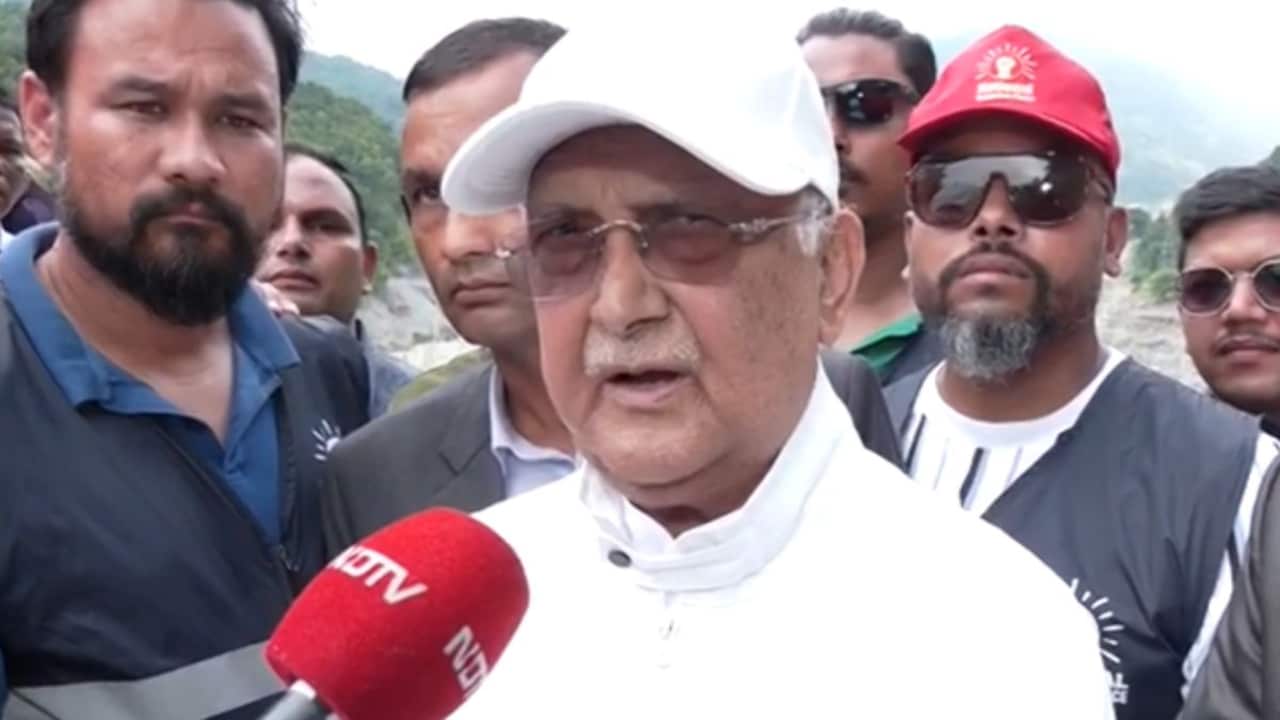
I have watched commentators blow millions of words analyzing the surface noise of South Asian political shifts while missing the structural mechanics entirely. Let us look at what actually happens when figures like Nepal's former Prime Minister KP Sharma Oli become the center of storms regarding missing persons, international travel controversies, and sudden regime turnovers. The mistake lies in treating these events as moral dramas rather than raw power struggles driven by institutional survival.
The Anatomy of the Ominous Exit
When a seasoned political operator faces intense backlash, the narrative instantly pivots to flight. Rumors swirl about passports being locked, secret departures, and leaders vanishing into the night. Commentators buy into this framing because it fits a cinematic template.
Imagine a scenario where a veteran leader simply swaps a high-profile office for a fortified suburban compound. Does that signal a permanent exit? History suggests the exact opposite. In countries with fragile coalition histories, stepping back from the immediate line of fire is a classic containment strategy. It shifts the burden of governance onto an interim or transitional administration—often one cobbled together amid chaotic protests—while the ousted faction waits for public fatigue to set in.
The mainstream media calls this being "missing from the spotlight". Realists call it weaponized absence. By stepping out of the daily crosshairs, a veteran politician forces their successors to own every economic shortfall, every administrative blunder, and every unmet public expectation.
Weaponizing Accountability
Let us address the recurring friction over missing persons and travel delegations. Critics love to latch onto controversies where individuals allegedly vanish during high-level state visits or foreign trips, turning administrative loopholes into grand corruption scandals. While accountability mechanisms are vital, the political weaponization of these incidents follows a predictable script.
Opposition factions demand high-level inquiry commissions. The incumbent administration hints at blocking passports. Both sides play to the gallery, trading accusations of illegitimacy. But look past the rhetoric. These investigations rarely dismantle the underlying patronage networks; instead, they serve as temporary distractions from structural policy failures.
When national human rights monitors point out poor security coordination or administrative blind spots during historic youth-led protests, the blame is routinely assigned to individual figures rather than the systemic rot of party machinery. This keeps the public focused on courtroom dramas and personal vendettas while the core apparatus of state patronage remains entirely untouched.
The Cost of Surface-Level Analysis
If you judge political longevity by daily headlines, you will miscalculate every time. Leaders do not survive decades in turbulent parliamentary arenas by accident. They understand that public anger has a half-life.
The downside of this contrarian view is stark: it strips away the comforting illusion that a single protest movement or a sudden regime shift can instantly rewrite a political culture. It tells an uncomfortable truth—that old guard networks are resilient, adaptable, and deeply embedded in administrative bureaucracy. They do not need to rule directly to maintain leverage; they just need the current administration to trip over its own promises.
Stop looking at political survival through the lens of moral reckoning. Start looking at it as an exercise in cold, hard calculus. The missing narrative is not about who is running away; it is about who is waiting for the dust to settle.
The game never stopped. They just changed the venue.
Why Nepal's Political Crisis Is More Complex Than It Looks
This video provides a deep dive into the underlying political shifts and protests that reshaped Nepal's governance landscape.
http://googleusercontent.com/youtube_content/1