The clock is ticking down to a massive political explosion in Pakistan-administered Kashmir (PoK). You might have seen snippets of the chaos online, but the reality on the ground is far more dangerous than simple economic unrest. The Jammu Kashmir Joint Awami Action Committee (JAAC) just handed Islamabad a brutal 48-hour ultimatum. Accept all 38 points of their charter, or face a "grand and final" region-wide shutdown.
The deadline has expired, and the region is on a knife-edge. This isn't just about inflation anymore. It's a fundamental breakdown of trust between the local population and the Pakistani state.
If you think this is just another brief border flare-up, you're missing the bigger picture. The ground has shifted. Decades of quietly simmering anger over resource exploitation, political disenfranchisement, and heavy-handed military crackdowns have crystallized into an organized, defiant civil resistance movement.
The Core Defiance Behind the 38 Demands
To understand why people are risking their lives in towns like Rawalakot and Muzaffarabad, you have to look at what they're actually asking for. The mainstream narrative usually boils this down to "subsidies on wheat and electricity". That's a massive oversimplification.
Yes, cheaper flour and power bills triggered the initial mobilization back in 2023. But the JAAC’s 38-point charter goes deep into structural exploitation.
The most explosive demand focuses on local resources. Locals want electricity tariffs calculated strictly on the actual production cost of power generated by local hydro-projects, like the massive Mangla Dam. Right now, the region generates cheap, clean hydroelectric power that feeds directly into Pakistan's national grid, yet local consumers are slammed with exorbitant bills loaded with taxes. It feels like daylight robbery to them, and honestly, it’s hard to argue with their logic.
Then there's the political elite's lifestyle. The charter demands an absolute end to the luxury perks, massive official fleets, and endless privileges enjoyed by the local bureaucracy and politicians. While ordinary citizens face skyrocketing living costs, the ruling class lives large on the public dime.
Another major structural flashpoint is the demand to abolish the 12 seats in the AJK Legislative Assembly currently reserved for Pakistan-based refugees. The JAAC views these seats as a tool used by Islamabad to rig local elections and keep puppet governments in power. They want these seats gone, or at least heavily restricted, to ensure true local representation.
Guns for Militants, Bullets for Citizens
The state's response to these demands has turned a political protest into a bloodbath. Government officials claim they've already conceded to 35 out of the 38 demands, pointing out that they downsized the local cabinet from 36 ministers to 20. But the remaining points are the ones that actually threaten Islamabad’s structural control, and that’s where the state has drawn a hard, bloody line.
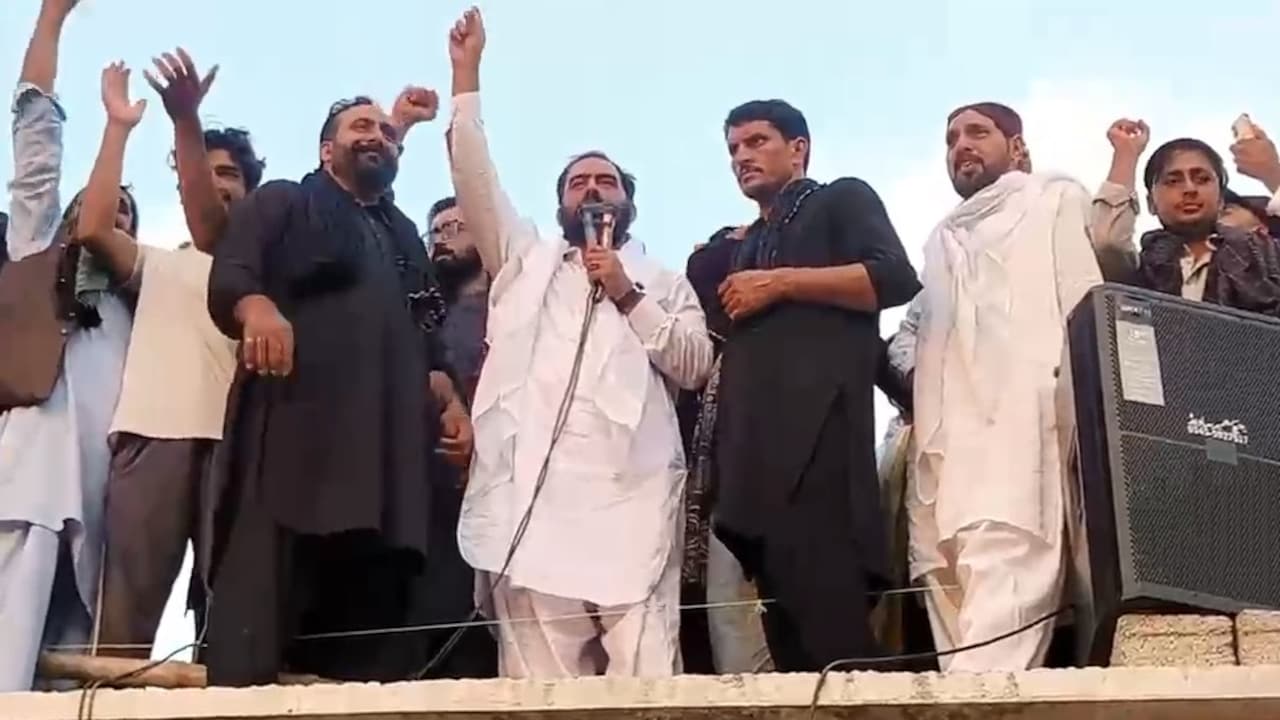
The crackdown in Rawalakot shocked the region. Security forces opened fire on a peaceful rally of tens of thousands of citizens. Activists like Sardar Aman Khan and international observers have exposed a terrifying ground reality:
- Enforced internet blackouts and mobile data cuts to block information.
- Severe blockades on food and medical supplies lasting for weeks, pushing parts of the population to the brink of starvation.
- Over 600 civil rights activists thrown into jail under sweeping anti-terror laws.
The hypocrisy is what infuriates the local population the most. Activists openly point out that the state apparatus heavily protects armed militant groups marching through the region, while treating ordinary citizens asking for fair electricity bills like high-level security threats. When a state protects men with AK-47s but fires live ammunition at unarmed protesters, it loses all moral authority.
Why the Old Tactics Aren't Working Anymore
Historically, Islamabad has managed unrest in the territory using a very predictable playbook: offer a temporary financial band-aid, deploy the police to break a few heads, blame foreign instigators, and wait for the momentum to die down.
That playbook is completely useless right now.
The JAAC isn't a single political party you can easily ban or buy off. It’s an organic coalition of traders, transport unions, student bodies, lawyers, and ordinary citizens. They've built an incredibly resilient infrastructure. They've organized massive strikes through brutal winters and scorching summers. They've seen the government make empty promises before—specifically in late 2023 and mid-2025—and they refuse to be fooled a third time.
By cutting off the internet, banning the JAAC under anti-terror legislation, and locking down towns, the state has effectively backed a highly organized population into a corner. When you give people nothing left to lose, you lose the ability to threaten them.
The Immediate Fallout
The situation is changing by the hour, but several critical shifts are already happening right now:
A complete breakdown of local governance is underway. The local administrative machinery has lost total control of the streets. Police forces are heavily deployed, but their presence only serves to escalate tensions rather than restore order.
A massive humanitarian crisis is brewing. The supply blockades have left local hospitals running dangerously low on basic life-saving medicines. Food scarcity is becoming a very real danger in remote districts.
Geopolitical stakes are rising. Desperate locals are openly calling for the opening of the Line of Control (LoC) for humanitarian relief, a move that has forced neighboring India to heavily tighten its border security. What started as a local economic protest is rapidly turning into an international security headache.
The 48-hour ultimatum was a clear line in the sand. With the deadline gone and the state refusing to budge on the core constitutional issues of resource rights and political autonomy, the grand protest is no longer a threat—it’s a reality. Islamabad needs to realize that brute force won't solve a crisis built on decades of systemic exploitation. Until they address the root cause of the exploitation, the region will remain a ticking time bomb.