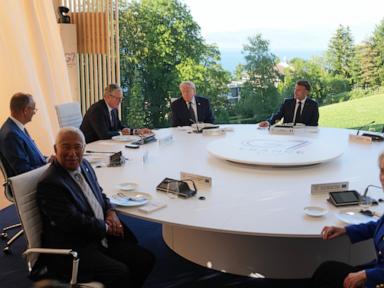
The traditional North American security and economic compact is fractured. Mark Carney is currently positioning Canadian interests toward European capitals, attempting to construct a viable economic and strategic buffer against a volatile Washington. Donald Trump's return to the White House fundamentally altered the baseline of cross-border relations, rendering decades of predictable bilateral diplomacy obsolete overnight. Ottawa can no longer rely on quiet backroom negotiations or shared continental assumptions. Instead, Canadian leadership is looking eastward to hedge its bets against a partner that treats sovereign neighbors as transactional leverage.
For generations, the architecture of Canadian foreign policy rested on a simple premise. Washington was the anchor, and European capitals were distant historical cousins. Trade flowed north and south beneath the umbrella of continental defense arrangements. That architecture is now structurally unsound. When tariffs are deployed as casual bargaining chips and historical alliances are dismissed as bad business deals, middle powers must adapt or face irrelevance. Carney’s pivot toward European markets and institutional frameworks is an acknowledgment that the old status quo is never coming back.
The Economic Realities of Decoupling
Capital follows stability. When the rules of trade shift with every electoral cycle, long-term planning becomes an exercise in risk mitigation rather than growth. Canadian industry has spent decades integrating supply chains directly into the American industrial base. Untangling those knots is neither fast nor cheap.
Energy security remains the primary currency of this new geopolitical alignment. Europe needs reliable, non-authoritarian sources of critical minerals, liquefied natural gas, and green tech inputs. Canada sits on vast reserves of these exact commodities. Yet the logistical hurdles are immense. Pipelines do not point east by default. Ports require massive capital infusion. Turning a Pacific-and-South-facing export economy toward the Atlantic requires infrastructure investments that will take years to mature.
Mark Carney understands the balance sheets involved. His background in central banking gives him a distinct lens through which to view geopolitical shifts. He is not approaching Europe with empty rhetoric about shared values. He is offering transactional stability in a fractured world. European leaders, currently grappling with their own security anxieties regarding American reliability, are listening.
The Defense Dilemma and Continental Security
Economic integration cannot be separated from security guarantees. For nearly a century, Canada enjoyed a free ride on the American defense shield, maintaining minimal military spending while relying on NORAD and NATO commitments. That luxury has an expiration date.
Washington increasingly views allies through a ledger-sheet mentality. If Canada wants trade protections, it must pay for its own defense perimeter. Yet turning toward Europe for defense partnerships does not solve the geographic reality of sharing a continent with a superpower. Canada cannot relocate its geography.
Instead, European partnerships offer diplomatic and technological leverage. Joint defense procurement programs, intelligence-sharing agreements, and technological collaborations with nations like the United Kingdom, France, and Germany provide Ottawa with alternative diplomatic weight. When dealing with an unpredictable neighbor to the south, having friends across the ocean changes the dynamics of the negotiating room.
Navigating the Domestic Political Friction
Foreign policy pivots are rarely neat. They require sustained domestic political will, which is often in short supply in Ottawa. Provincial rivalries complicate national strategies, particularly when energy corridors must cross multiple jurisdictions with competing economic priorities.
Western resource producers want immediate access to global markets, while central and eastern provinces navigate complex federal-provincial jurisdictional battles over environmental regulations and industrial subsidies. Carney has to sell a coherent national vision to a fractured federation that is deeply fatigued by economic inflation and housing crises.
Furthermore, the Canadian public remains culturally and economically intertwined with the United States. Media consumption, tourism, professional migration, and sports leagues bind the two populations together in ways that cannot be legislated away by trade ministers. Reorienting a country's mindset away from its dominant neighbor requires a generational cultural shift, not just a series of trade delegations to Brussels and London.
The New Middle Power Playbook
Middle powers survive by diversification. Putting all diplomatic and economic eggs into one continental basket was a viable strategy when the rules-based international order functioned predictably. In an era of great power competition and transactional diplomacy, it is an existential vulnerability.
By engaging European institutions, forging bilateral agreements with key EU member states, and aggressively positioning the national economy as a trusted supplier of green transition materials, Ottawa is attempting to rewrite its geopolitical handbook. The transition will be messy, expensive, and politically fraught. The alternative, however, is complete strategic subordination to a Washington that views neighbors not as partners, but as leverage. The Atlantic bridge is being rebuilt one beam at a time, and the architects have no margin for error.