The aerospace and biotech sectors are currently co-authoring a beautiful fairy tale. It goes like this: we take stem cells, launch them into low Earth orbit (LEO), and let microgravity magically unlock the secrets to curing cancer and reversing human aging.
Major media outlets regurgitate NASA press releases about how microgravity accelerates cell growth. They marvel at how three-dimensional tissue structures form more easily without the pesky drag of Earth’s gravity. They praise the International Space Station (ISS) as an unheralded cradle of next-generation medicine.
It is a masterful public relations campaign. It is also an extraordinary waste of capital.
The current obsession with space-based stem cell manufacturing relies on a flawed premise. We are treating a fundamental physics problem as a manufacturing opportunity. The hard truth is that the extreme environment of orbit introduces far more biological chaos than it solves. Launching delicate cellular machinery into a high-radiation vacuum to fix earthly ailments is like shipping premium grapes into a active volcano to make fine wine.
The Microgravity Myth: Speed Does Not Equal Control
The foundational argument for orbital stem cell research is that microgravity forces cells to behave differently. On Earth, cells cultured in a flat Petri dish grow in two dimensions. To get them to grow into 3D structures (organoids), scientists use artificial scaffolds or gels. In space, cells float. They naturally aggregate into 3D clusters that more closely resemble human organs.
Furthermore, because gravity isn't pulling them down, certain stem cells proliferate much faster in microgravity. The mainstream consensus looks at this accelerated growth and yells, "Success!"
That is a dangerous misunderstanding of cell biology.
Accelerated proliferation without absolute control is not a medical breakthrough. It is the defining characteristic of malignancy. When you remove gravitational mechanical stress, you disrupt the highly sensitive mechanical pathways of the cell. Mechanotransduction—the process by which cells convert physical forces into chemical signals—goes haywire.
Yes, the cells divide rapidly. But they also exhibit massive transcriptional deregulation. They experience chromosomal instability. In plain terms: space makes cells chaotic.
I have watched biotech startups burn through millions in seed funding trying to stabilize cell lines that spent just two weeks on the ISS. They expected pristine, hyper-pure therapeutic assets. Instead, they received a genetic soup of mutated cells that no regulatory body on Earth would ever allow inside a human patient. We do not need faster cell growth; we need precise, predictable cell growth. Orbit gives us the exact opposite.
The Radiation Elephant in the Spacecraft
Let’s talk about the variable that every space-biotech pitch deck conveniently shoves into a footnote: space radiation.
Low Earth orbit is flooded with galactic cosmic rays (GCRs) and solar particle events (SPEs). While the ISS sits beneath a portion of Earth’s magnetic shield, it still experiences radiation levels hundreds of times higher than the planet's surface.
+-----------------------------------+-----------------------------------+
| Environment                       | Average Radiation Dose Rate       |
+-----------------------------------+-----------------------------------+
| Earth's Surface (Background)      | ~0.0003 mSv/day                   |
| International Space Station (LEO) | ~0.5 to 1.0 mSv/day               |
+-----------------------------------+-----------------------------------+
When you expose highly sensitive stem cells—especially induced pluripotent stem cells (iPSCs)—to chronic high-LET (linear energy transfer) radiation, you trigger severe DNA double-strand breaks.
Stem cells possess robust DNA damage response mechanisms, but when they are forced to constantly repair their genome while simultaneously proliferating at an accelerated rate due to microgravity, mistakes happen. Point mutations accumulate. Epigenetic marks are erased or rewritten incorrectly.
If your goal is to study how radiation mutates cells to better protect astronauts on a future mission to Mars, then orbital cell culture makes perfect sense. But that is not how these projects are being sold to investors and the public. They are being marketed as factories for terrestrial therapeutics.
Imagine trying to manufacture a pristine, ultra-pure biologic drug in a room where someone is randomly firing a microscopic machine gun at the molecular structures. It is structurally absurd. The "space-grown" therapies aimed at curing cancer run a very real risk of introducing unmonitored genetic mutations directly into patients.
The Cold Economics of the Orbital Supply Chain
Strip away the romanticism of space exploration and look at the logistics. Biomanufacturing requires tight, closed-loop quality control. It demands real-time monitoring, instant pivot capability, and massive scale.
An orbital manufacturing workflow looks like this:
- Prepare delicate cell lines in a terrestrial cleanroom.
- Load them into a specialized payload container.
- Transport them to a launch site (introducing vibration, thermal fluctuations, and acoustic stress).
- Launch them via a rocket, subjecting the cells to intense g-forces.
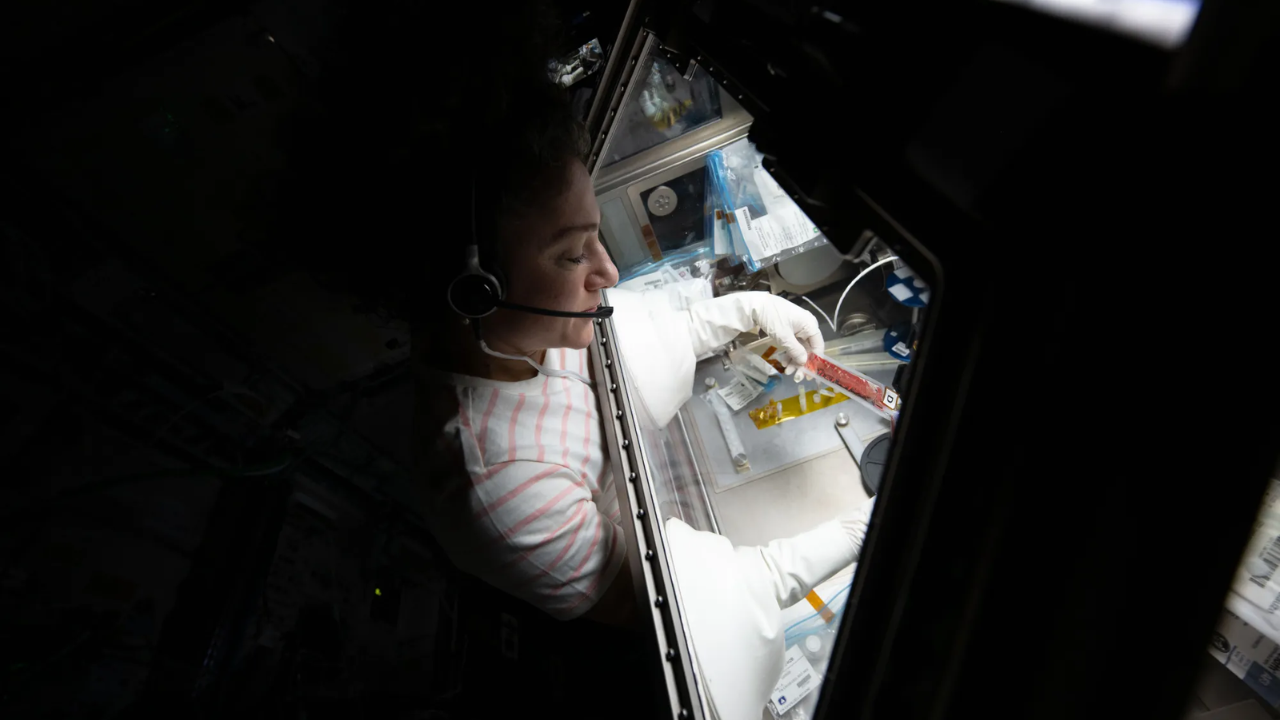
- Dock with the ISS, where overworked astronauts or basic automated fluidics systems manage the culture.
- Wait weeks or months for a return capsule.
- Re-enter the atmosphere (more thermal and mechanical stress).
- Retrieve the payload from a ocean splashdown or desert landing site.
The sheer volume of failure points is staggering. A single stuck valve in an automated orbital bioreactor ruins a million-dollar payload. A two-day launch delay due to weather can cause a cell culture to die in its holding container on the pad.
Even if we achieve fully autonomous orbital factories, the economic math never checks out. The cost per gram of material produced in orbit remains orders of magnitude higher than anything produced on Earth. For high-end electronics or specialized fiber optics, you can occasionally justify the orbital premium because the physical yield is highly valuable and structurally impossible to replicate on Earth. For biologics, you are competing with terrestrial bioreactors that can scale to tens of thousands of liters at a fraction of the cost.
Earthside Innovation is Rendering Orbit Obsolete
The ultimate irony of the space stem cell rush is that the problems space claims to solve are already being fixed on the ground, cheaper and more reliably.
The argument that we need microgravity to build 3D tissues is dying a quiet death. Thanks to advancements in magnetic levitation culture, rotating wall vessels, and acoustic wave biofabrication, terrestrial scientists can now mimic the physical effects of microgravity right in a suburban research park.
By using tuned acoustic fields, we can suspend cells in a three-dimensional matrix without any physical scaffolds. We get the exact same structural benefits of 3D aggregation without the radiation exposure, without the g-force trauma of a rocket launch, and with the ability to walk over to the incubator and check on the culture at 3:00 PM on a Tuesday.
Furthermore, the field of organ-on-a-chip technology has advanced so rapidly that our ability to model human disease states on Earth far exceeds anything we can currently automate in a shoe-box-sized payload container on the ISS. We can simulate fluid shear stress, vascularization, and multi-organ interactions on a microfluidic chip with absolute precision.
Dismantling the Premise: The Wrong Questions
When analyzing the public discourse surrounding this trend, the questions being asked are fundamentally broken.
- Flawed Question: How do we scale up bioreactors to manufacture mass quantities of stem cells in space?
- The Honest Reality: You don't. Scaling up fluid dynamics in microgravity is a nightmare of bubble formation and surface tension anomalies. Terrestrial scaling via vertical bioreactors is structurally superior and economically viable.
- Flawed Question: When will space-grown organs be available for human transplant?
- The Honest Reality: Never, if they are grown in LEO. The regulatory hurdle of proving a tissue mass grown in a high-radiation, unshielded orbital environment is free of oncogenic mutations is an existential roadblock. No sensible clinical trial director will risk it.
To be completely transparent: there is value in sending cells to space if the goal is purely academic. Understanding how microgravity accelerates senescence (aging) can give us clues into the molecular mechanisms of degeneration. It is a fantastic tool for basic discovery science.
But stop branding it as the next frontier of industrial drug manufacturing. Stop telling vulnerable patients that the cure for their terminal illness is waiting on a SpaceX Falcon 9.
The immediate future of medicine is not happening 250 miles above our heads. It is happening in terrestrial labs utilizing advanced biophysics, machine learning-driven protein design, and precise acoustic manipulation.
The space stem cell gold rush is a vanity project born from a marriage of aerospace lobbying and biotech hype. It looks spectacular in a corporate sizzle reel, but it collapses under the weight of basic physics, radiation biology, and supply chain economics. We need to ground our capital, ground our research, and solve the structural mechanics of human biology on the planet where we actually live.