A cargo ship captain navigates the dense fog outside the Port of Rotterdam, blindly trusting a glowing blue screen. A thousand miles away, an automated tractor crawls across an Iowa cornfield, turning earth with millimeter precision without a human hand on the wheel. In Manhattan, an algorithmic trading desk executes four million transactions in the span of a single heartbeat, relying on an invisible timestamp to prevent the global financial system from tearing itself apart at the seams.
None of these people are thinking about Colorado. They should be.
Deep inside a secure, windowless facility, a technician watches a stream of telemetry data ripple across a monitor. To the untrained eye, it is just a wall of numbers—orbital vectors, clock offsets, atmospheric delay coefficients. But to those who understand the mathematics of modern civilization, it is the pulse of the world.
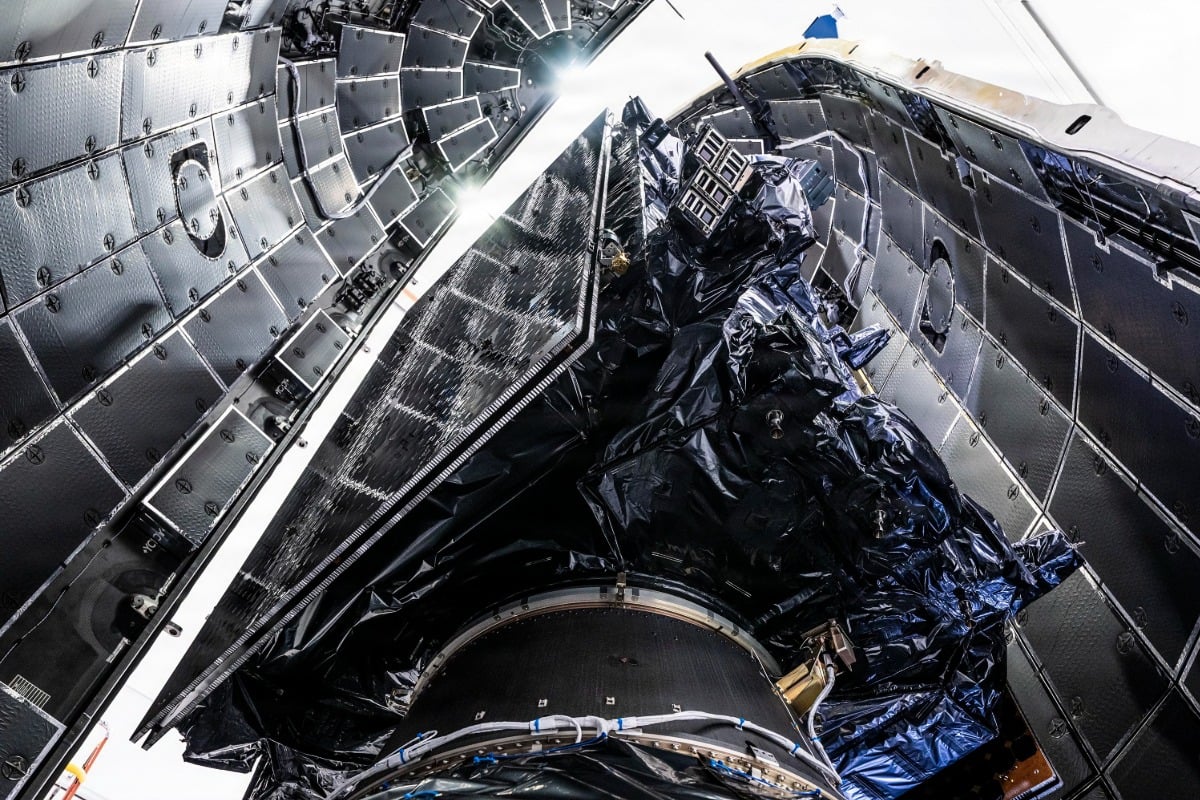
Every second of every day, thirty-one satellites scream through the vacuum of space at thousands of miles per hour. They are constantly falling, constantly screaming a single, beautifully simple message: This is who I am. This is exactly where I am. This is the exact time I said this.
If those clocks drift by even a few millionths of a second, the captain hits the reef. The tractor crushes the crop. The banking system blinds itself. The invisible grid that holds modern life together snaps.
This is the reality behind the recent news that the United States Space Force handed a $105 million contract extension to Lockheed Martin. On paper, it sounds like another dry corporate transaction, a line item in a defense budget that reads like stereo instructions. The press releases talk about sustaining the Global Positioning System operational control segment. They talk about software baselines and engineering support.
But strip away the military acronyms and the corporate jargon, and you find something much more primal. This is a story about the desperate, unending fight to keep the sky from drifting out of alignment with the earth.
The Tyranny of the Microsecond
To understand why a company gets paid nine figures just to keep some computers running, you have to understand the terrifying fragility of distance.
We think of GPS as a map. It is not. It is a clock.
Every satellite carries an atomic clock so precise that it loses less than one second every few million years. When your phone wants to find your location, it doesn't send a signal to space. It just listens. It calculates how long it took for the satellite’s radio signal to travel down through the clouds at the speed of light.
Light travels fast. It covers about one foot in a single nanosecond. If the timing on a satellite is off by just one-millionth of a second, the location data on the ground misses the mark by a thousand feet.
Space is a brutal place to keep time. The satellites are baking in intense solar radiation one minute and freezing in the shadow of the Earth the next. They are subject to the bizarre laws of relativity; because they move so fast and sit so far out of Earth's gravity well, their onboard clocks actually run faster than clocks on the ground.
Left to themselves, the satellites would become useless within hours. They need a nanny. They need an anchor.
That anchor is the ground control system, a network of antennas and aging mainframes scattered across the globe, anchored by a master control station at Schriever Space Force Base. This is the nervous system that Lockheed Martin has been hired to maintain and protect. It is the job of correcting the sky.
The Ghost in the Control Room
Consider a hypothetical engineer named Marcus. He does not wear a uniform, but he has spent the last fifteen years of his life walking into the same secure vault, drinking stale coffee, and staring at the orbital drift of a satellite launched when bill Clinton was still in office.
Marcus knows each satellite like a temperamental child. He knows that Satellite 23 has a clock that tends to run slightly hot when it passes over the Pacific. He knows that a solar flare three days ago means he will have to spend his afternoon calculating new orbital ephemeris data to compensate for the slight drag caused by an expanded atmosphere.
Twice a day, the ground stations upload a fresh set of instructions to every satellite in the constellation. These uploads are called "nav messages." They are essentially the ground telling the sky: You think you are here, but you are actually three inches to the left. Adjust your clock by four nanoseconds.
If Marcus and his team do not do this, the world slowly warps.
The average person thinks of GPS as an convenience for finding the nearest coffee shop. But the real stakes are hidden in plain sight. Telecom networks use the GPS pulse to synchronize the cellular towers that handle your data. Power grids use it to phase-match electricity flowing across continents to prevent catastrophic blackouts. If the ground control system fails, the lights literally go out.
The $105 million deal isn't for building flashy new rockets or launching shiny gold-foil hardware into the ether. It is for the unglamorous, exhausting work of keeping the existing software alive. It is for making sure the legacy systems—some of which rely on code written decades ago—can still talk to the newest satellites joining the fleet.
The Cost of the Invisible
There is a quiet crisis in the world of defense technology. Everyone wants to talk about the next big thing. We celebrate the launch videos, the fire, the smoke, the triumphant roars of engines clearing the pad.
Nobody writes poetry about software maintenance.
But maintenance is where wars are won or lost, and it is where civilization is preserved. The contract extension reflects a hard truth: upgrading the brain of the world's most critical navigation system is like trying to change the spark plugs on a semi-truck while it is barreling down the highway at eighty miles per hour. You cannot turn it off. You cannot hit pause.
Critics often point to these massive, recurring payouts to defense giants as evidence of bureaucratic inertia. Why does it cost over a hundred million dollars just to run a ground system for a few more years?
The answer lies in the terrifying nature of the threat. The ground system isn't just fighting natural drift; it is fighting human malice. Every day, adversaries try to spoof, jam, and hack the signals that dictate global commerce. The code running these ground stations must be a fortress. A single vulnerability could allow a hostile actor to feed false timing data to the constellation, effectively blinding Western military forces and halting commercial aviation across an entire hemisphere.
When you buy a piece of software for your home computer, an error means a frustrating blue screen. When an update fails on the GPS ground control architecture, the consequences are measured in missing ships and crashed airliners.
The Silent Sentinel
We live in an era obsessed with the tangible. We touch our screens, we drive our cars, we look at the skyscrapers rising in our cities. But the most important infrastructure of the twenty-first century is entirely invisible. It is a mathematical grid woven into the air we breathe.
The next time you pull up a map on your phone to find your way through an unfamiliar city, take a moment to look past the screen. Look up at the sky.
You won't see them, but they are there. Thirty-one sentinels, falling forever through the dark, whispering the time to a world that takes them completely for granted. And somewhere in Colorado, a room full of engineers is quietly whispering back, making sure they never lose their way.
The $105 million price tag isn't a receipt for technology. It is the insurance premium we pay to ensure that tomorrow morning, when the world wakes up, the ground beneath our feet stays exactly where we think it is.


