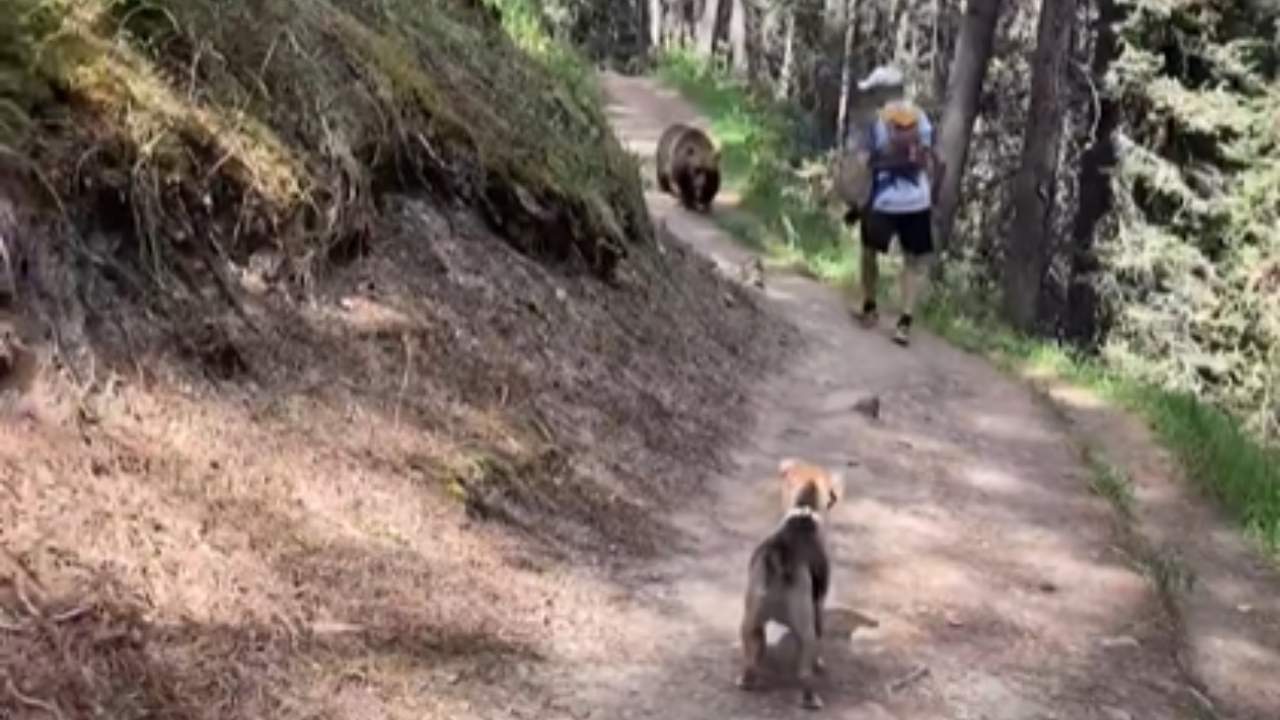
Two hikers in Banff National Park now face serious legal charges after letting their dog off-leash, triggering an encounter with a grizzly bear that followed them for nearly a kilometer.
It's a familiar story for anyone who spends time in Canadian national parks. Yet every summer, hundreds of trail users make the same dangerous mistake. They let their dogs roam free, assuming their pet will defend them or simply recall on command. The reality? An off-leash dog doesn't protect you from a grizzly. It brings the angry bear straight back to your heels.
If you plan to hike in bear country, understanding the mechanics of these wildlife conflicts isn't optional. It's a matter of life, death, and massive fines.
The Real Danger of Off Leash Dogs in Bear Country
Parks Canada wardens have stated time and again that off-leash dogs represent one of the single biggest triggers for defensive aggressive behavior in grizzly bears. Bears naturally view canines as wild competitors or potential threats.
When a dog encounters a grizzly off-leash, a predictable sequence of events unfolds:
- The dog spots the bear and runs up to bark at or harass it.
- The grizzly gets defensive, agitated, and retaliates against the intruder.
- The dog panics and flees straight back to its owner for safety.
- The bear charges right behind the dog, dragging a high-stress confrontation straight to the human.
In the recent Banff incident, court documents show the two hikers were tracked by an agitated grizzly after their loose dog instigated a standoff. Wardens had to step in, secure the area, and issue court summonses. The hikers now face hefty penalties under the Canada National Parks Act.
Courts are cracking down hard. Fines for letting a pet run loose in a national park can reach up to $25,000 under federal legislation, especially when the breach leads to an active wildlife disturbance.
Why Hikers Ignore Leash Laws
Most people don't break park rules out of spite. They break them because of bad assumptions.
I hear the same justifications from trail users constantly. "My dog has great recall." "He stays right on the trail." "It's cruel to keep a big dog on a short rope for ten miles."
Nature doesn't care about your dog's obedience certificate.
Even the best-trained domestic dog reverts to pure instinct when a 400-pound apex predator pops out of the brush. A dog might recall 99 times out of 100 in a local suburban dog park. Add the smell of bear musk, fresh kill sites, or a protective mother with cubs, and that training evaporates in a second.
Bears in regions like Banff, Jasper, and Kananaskis Country are already under intense ecological stress. Human traffic on popular trails forces wildlife into tighter habitat corridors. When you introduce an unrestrained dog into that equation, you ruin the fragile boundary keeping humans and wildlife safe.
What Actually Happens When Parks Canada Lays Charges
When Parks Canada officers cite hikers for unrestrained pets during a bear encounter, it isn't just a simple traffic ticket. It triggers a mandatory court appearance in provincial court.
Judges in Alberta park jurisdictions have zero patience for wildlife harassment. Convictions regularly result in thousands of dollars in mandatory fines, banishment orders from national parks, and in severe cases, the court-ordered destruction of the pet if it poses an ongoing risk.
Worse, these human mistakes carry a death sentence for the bears.
When a grizzly learns to associate humans and dogs with stress or food rewards, it becomes habituated. Habituated bears get bold. They enter campsites, approach groups on trails, and eventually get euthanized by park staff to protect public safety. Every time a hiker lets a dog loose, they put a target on the back of every grizzly in the valley.
How to Stay Safe on Grizzly Trails
You don't need to leave your dog at home when heading into the backcountry, but you do need to follow strict protocols.
First, keep your dog on a physical leash no longer than two meters at all times. Flexi-leads and retractable leashes do not count; they break easily under tension and give your pet way too much slack to start a fight in dense brush.
Second, carry bear spray in an easily accessible location. Stashing it inside your backpack brain or water bottle pocket is useless. You need to be able to unholster, unclip, and deploy the canister within two seconds flat. Keep it on your chest harness or hip belt.
Third, make noise continuously. Talk loudly, clap, or call out every few minutes, especially near rushing water, berry patches, or blind corners. Bear bells are largely ineffective; human voices carry far better and clearly signal to wildlife that people are approaching.
If you spot a grizzly on the trail:
- Keep your dog extremely close and calm them down immediately.
- Grab your bear spray and remove the safety clip.
- Back away slowly while talking in a calm, firm voice.
- Never run. Running triggers a predator's chase instinct, and you cannot outrun a grizzly.
Pack your six-foot leash, clip your bear spray to your sternum strap, and double-check trail advisories on the Parks Canada website before setting foot on the trail.